
Reviewed · MUSEUMS
Paris: Ticket Entrance to Science Experiences Museum
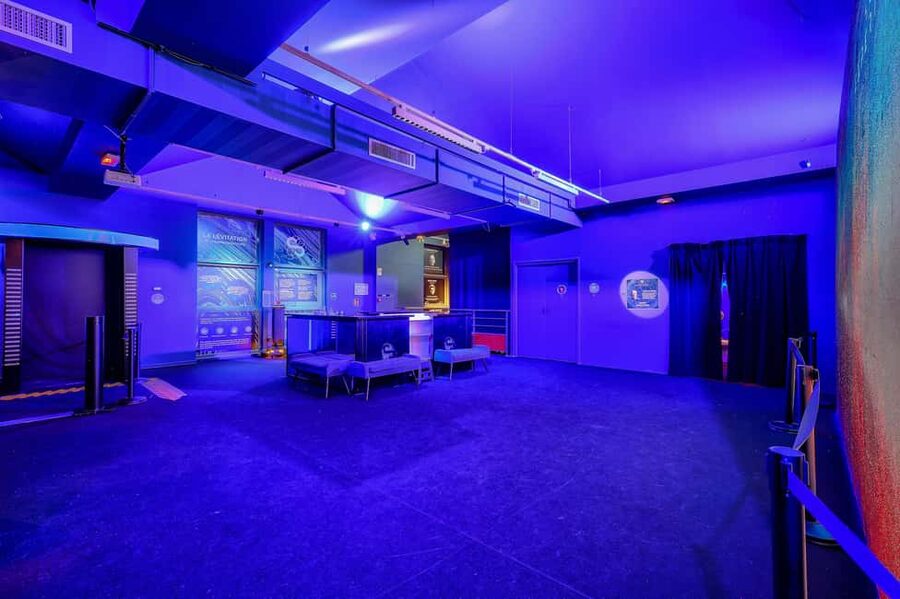
At Bercy Village, Science Experiences turns science into a room-by-room trip from outer space to the ocean depths, the center of Earth and the strange ideas of quantum physics. Its 850-square-meter course uses video mapping, virtual reality and multisensory presentations to make big subjects feel immediate, rather than like another school lesson.
I like two things in particular: the route connects very different scientific themes, and the mix of presentation styles can give children more than one way to engage with an idea. One family with children aged 6 and 11 found it varied and playful, and both children enjoyed it.
The caution is that this is not guaranteed to be hands-on at every turn. Some parts may ask you to listen and watch rather than test things yourself, and reports of malfunctioning screens and groups crossing paths make the experience less dependable than the concept sounds.
At a glance
- A route from space to quantum physics: The course moves from the edges of the universe through the abyss and Earth’s center, ending with topics such as lasers, teleportation and levitation.
- Several kinds of presentation: Virtual reality, video mapping and multisensory presentations are among the methods used to bring science to life.
- A 90-minute visit: The short format can fit into a day in Paris, though it leaves limited time for each theme.
- An instructor is included: The listing identifies an instructor, but gives no name or further detail about their role.
- Some extras cost more: VR simulators and an audio guide are not included in the ticket.
- Quality can be uneven: The course has been praised as varied and child-friendly, but screen failures, crowding between groups and limited hands-on activity are possible concerns.
A 90-minute route through big scientific ideas

Science Experiences is designed as a sequence of rooms, not as one long exhibit on a single subject. The idea is to carry you from one kind of scale to another: from the far reaches of the universe to the depths of the sea, then through Earth and into quantum physics.
That sweep is the museum’s strongest organizing idea. You do not need to arrive with a science background to understand the basic appeal of a journey that moves from outer space to the center of the planet. Each change of subject offers a fresh reset, which can help keep a short visit lively for families.
The advertised duration is 90 minutes. That is enough time for a focused outing, but it also means you should not expect a slow, detailed treatment of every topic. Think of the course as an introduction and a set of prompts, rather than a substitute for a full science museum.
The route is described as moving room to room, with quantum physics at the end. The exact running order and time spent in each space are not specified, so I would treat the outline as a broad guide rather than a timed itinerary. The appeal is the variety, not the promise of an in-depth lesson at every stop.
More museum visits in Paris:
- Paris: Louvre Museum Timed-Entrance Ticket
★ 4.6 · 71,977 reviews - Paris: Orsay Museum Entry Ticket
★ 4.7 · 25,647 reviews - Louvre Museum Masterpieces Guided Tour with Access
★ 4.5 · 12,023 reviews
From the universe to the ocean abyss

The first part of the journey reaches toward the edges of the universe. That opening gives the experience its grand scale: instead of starting with a familiar object in a display case, it asks you to think about a subject far beyond everyday life.
Video mapping and virtual-reality elements are among the tools used throughout the course. These formats can help make large or invisible subjects easier to picture, especially for children who respond better to images and movement than to blocks of text. The stated information does not describe the exact scenes or devices, so expect a visual presentation, not a guaranteed specific simulation.
The next destination is the abyss, a shift from the immense distances of space to the depths of the sea. That contrast is a smart way to keep the route from feeling like one long lecture on astronomy. You move from one difficult-to-imagine environment to another, with presentation styles intended to make the scale more tangible.
There is an important distinction between seeing science presented and experimenting with it yourself. Some people have found the course too passive, with plenty to listen to but too few chances to test things. If your priority is pressing buttons, building models or running experiments at every station, this may not be the right fit.
Through Earth and into quantum physics
After the universe and the abyss, the course turns toward the center of Earth. The subject changes from distant worlds to the planet beneath your feet, extending the sense of a journey through places that are ordinarily out of reach.
The last stretch addresses quantum physics, including lasers, teleportation and levitation. These are attention-grabbing themes, but the supplied description does not say how each one is demonstrated or whether every visitor takes part in a physical activity. Go expecting an introduction to intriguing ideas, not a promise that you will personally teleport anything. The levitation is best approached with the same sensible expectations.
The mix of large-scale topics and abstract physics is one reason this could work well for a family outing. Children can follow the changing themes even if they do not grasp every scientific explanation. A family with children aged 6 and 11 particularly enjoyed the variety and the different ways the course presented ideas.
Still, variety is not the same as depth. The 90-minute length and room-to-room format favour quick encounters. If you or your children want more time to read, ask questions and repeat an activity, the pace may feel brisk.
Immersive effects, with a practical limit
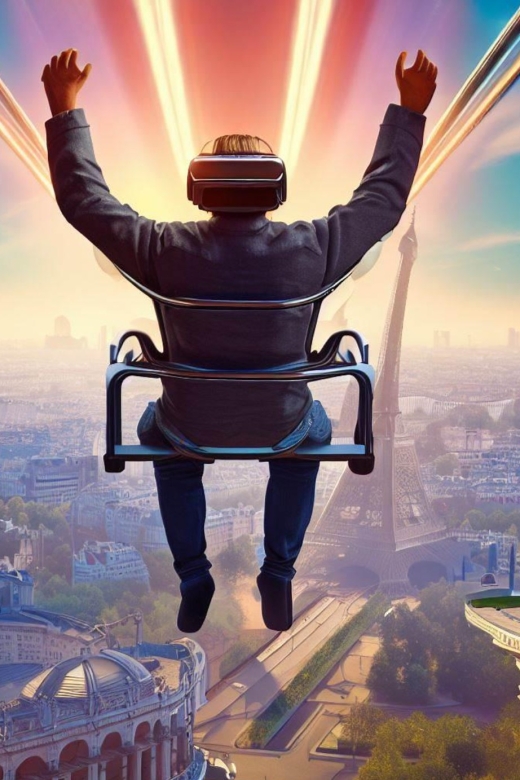
Science Experiences combines virtual reality, video mapping and multisensory or emotional presentations. These are not just decorative extras: they are the museum’s main way of making scientific concepts feel less remote. A visual or sensory presentation can give you an immediate impression before an instructor or display explains what you are seeing.
An instructor is listed as part of the activity, and scientific organizers have been described as invested in their work. No instructor names are provided, and there is not enough information to promise a particular teaching style. You can expect a guided element, but should not book on the assumption that you will have a private lesson or extended one-to-one attention.
The different formats also demand different kinds of attention. In one account, it was difficult to read signs, follow an audio guide and listen to an instructor at the same time. That is useful advice: do not feel obliged to absorb every channel at once. If a room has text and spoken explanation competing for your attention, choose one, then catch the other if time allows.
Some screens and attractions have reportedly not worked, and groups have sometimes crossed paths in the activity spaces. That matters because this course depends heavily on technology and on moving between rooms. A broken screen is not a small detail if the screen is doing much of the explaining.
The course may still be enjoyable when everything is working, but I would keep expectations flexible. The idea is more polished than every part of the reported execution. If you are choosing between this and a traditional science museum, think about whether your family values a themed, audiovisual route or wants reliable, repeatable activities.
More tickets in Paris:
- Disneyland® Paris 1-Day Ticket
★ 4.6 · 49,412 reviews - Paris: Versailles Palace and Gardens Full Access Ticket
★ 4.6 · 41,579 reviews - Paris: Arc de Triomphe Rooftop Tickets
★ 4.6 · 34,264 reviews - Paris: Eiffel Tower Entry Ticket with Optional Summit Access
★ 4.4 · 20,035 reviews
Is it genuinely hands-on?
The answer appears to be: sometimes, but do not assume every room offers an experiment. One family appreciated being able to experience subjects in different ways, while another person found that there was too little to try directly. Those reactions are not necessarily incompatible. The course can vary its presentation methods without every method being hands-on.
That distinction is worth considering before you book. If your child likes watching an explanation, listening to a guide and moving from one theme to another, the format may suit them. If they need to touch, build or operate something in each room to stay interested, the experience could disappoint.
Optional VR simulators are listed as extras, not part of the ticket price. An audio guide is also not included. The course itself uses virtual reality among its stated presentation methods, but that does not mean every simulator or VR option is covered by admission. Check the cost of those add-ons before deciding how much you want to spend.
The value of a short visit
The listed price is $1,178 per person, which is exceptionally high for a 90-minute activity. At that stated price, I would be cautious about booking until you have confirmed the amount and currency at checkout. The supplied details do not explain why the price is so high, and the experience’s short duration makes value especially important to check.
Even at a much lower price, the value depends on what you want from a science visit. You are paying for a themed route that uses immersive presentation, not necessarily for a large number of independent experiments. The course’s range of subjects and audiovisual approach may justify a ticket for someone seeking a compact, guided outing. The extra charges for VR simulators and the audio guide can push the total higher.
If the displayed price is indeed the amount you would pay, I would not recommend treating the ticket as an easy family add-on. Confirm the price and compare it with other activities before committing. The stated option to reserve now and pay later can preserve flexibility, but it does not change the need to verify the final amount.
The visit is wheelchair accessible. The cancellation terms allow a full refund when you cancel at least 24 hours in advance, and the activity offers a reserve-now, pay-later option. Those terms help with planning, but they do not answer questions about the exact room setup or the day’s group size.
Who is most likely to enjoy it?
I would put this high on the list for families who want a short science outing with changing themes and strong visual elements. The positive family experience involving children aged 6 and 11 suggests that the format can work across a range of ages, though it is not a guarantee that every child will respond the same way.
It may also suit adults who enjoy broad scientific ideas and do not mind being led through a sequence of presentations. You can move from the universe to the abyss, then to Earth and quantum physics without having to choose a single subject in advance.
I would hesitate if you are looking for a fully hands-on workshop, a quiet reading-focused exhibition or a long visit with lots of time at each station. The reported issues with equipment and groups crossing paths also make it a less certain choice if you need a tightly organized experience.
Should you book Science Experiences?
Book it if you want a compact, themed introduction to science and your group enjoys visual presentations, changing subjects and a guided format. Its journey from space to quantum physics is an appealing idea, and the variety can hold children’s interest.
Pause before booking if practical experiments are your main reason for going, or if the stated $1,178 per-person price is the amount you see when reserving. Confirm the total and check what the ticket covers, especially if you want a VR simulator or audio guide. The concept is imaginative, but the short visit, optional add-ons and reports of technical and crowd-flow problems call for realistic expectations.
FAQ

Where is Science Experiences?
It is at Bercy Village in the Île-de-France region of France.
How long does the visit take?
The stated duration is 90 minutes.
What subjects does the course cover?
The route goes from the edges of the universe to the depths of the abyss and the center of Earth, then finishes with quantum physics themes.
What quantum physics topics are included?
The listed topics include lasers, teleportation and levitation.
What presentation methods does the course use?
The course describes virtual reality, video mapping, and multisensory and emotional presentations.
Is an instructor included?
An instructor is listed as part of the activity. No instructor name is provided.
Are VR simulators included in the ticket?
No. VR simulators are listed as options to pay for on site.
Is the audio guide included?
No. The audio guide is listed as an option to pay for on site.
Is the museum wheelchair accessible?
Yes, the activity is listed as wheelchair accessible.
Can I cancel for a refund?
Yes. You can cancel at least 24 hours in advance for a full refund.
Recently reviewed in Paris
- Secret Food Tours Notre Dame – The Heart of Paris★ 4.8 · 32 reviews
- Secret Square Paris : Parisian Strip-Tease Cabaret Ticket★ 4.3 · 50 reviews
- Paris: Secret Food of Le Marais Walking and Tasting Tour★ 4.6 · 16 reviews
- Paris: Montmartre Food Tasting Walking Tour with Secret Dish★ 4.8 · 107 reviews
- Paris: Saint-Germain-Des-Près Guided Walking Tour★ 4.6 · 8 reviews
- Sacré-Cœur de Montmartre Guided Tour★ 5.0 · 3 reviews
- Romantic photo shooting on a private boat in Paris★ 5.0 · 3 reviews
- Running Tours in Paris for intermediate to advanced runners★ 5.0 · 6 reviews
Museums, compared.


Louvre Museum Masterpieces Guided Tour with Access
Read our review →
Louvre Museum Entry Ticket With Host and River Cruise
Read our review →
Les Invalides: Napoleon’s Tomb & Army Museum Entry
Read our review →
Louvre Museum – Exclusive Guided Tour (Entry Included)
Read our review →
Louvre Museum Hosted Entry and Mona Lisa Audioguide
Read our review →
Louvre Museum Tour Mona Lisa & Iconic Masterpieces
Read our review →Browse the lists this tour appears in