
Reviewed · PARIS
Paris: Panthéon Admission Ticket
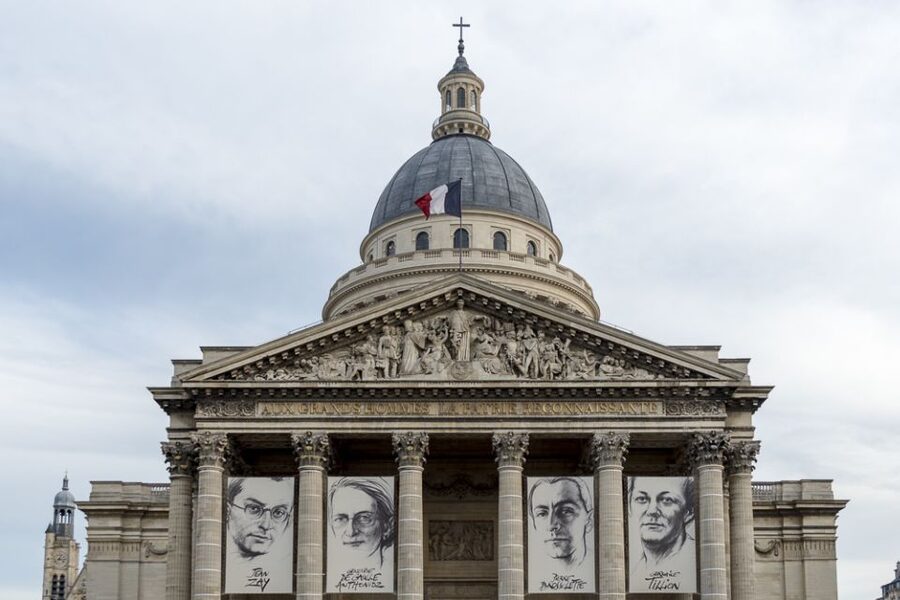
The Panthéon is a church turned national mausoleum, and that change of purpose gives the building its unusual force. Above ground, Soufflot’s soaring architecture and monumental art make the scale clear; below, the crypt holds more than 70 figures who shaped French life. You can explore with an included booklet, without keeping pace with a group.
I like the freedom to spend time where your interest takes you, and the chance to connect names such as Voltaire, Marie Curie and Victor Hugo with the history of the place. The crypt and the Foucault pendulum give the visit two very different focal points. One consideration: the crypt is more moving than showy, and a quick walk-through can leave much of the story unread.
Key points
- A church with a changing role: Built as Sainte-Geneviève, the building became the Panthéon in 1791 and shifted between religious and patriotic use in the 19th century.
- More than 70 people in the crypt: Find the tombs of Voltaire, Rousseau, Émile Zola, Alexandre Dumas, Pierre and Marie Curie, and many others.
- Look for the pendulum: Foucault’s experiment gives the grand interior a scientific point of interest.
- Plan for the upper-floor views: The restored upper floors are open for city views from April to October.
- Explore at your own pace: Your ticket is valid for one day, and an information booklet is included. An audio guide costs extra.
- Check the free-entry rules: Visitors under 18 and EU citizens under 26 can enter free with photo ID, but must first show it at the ticketing station.
Start with Soufflot’s monumental church
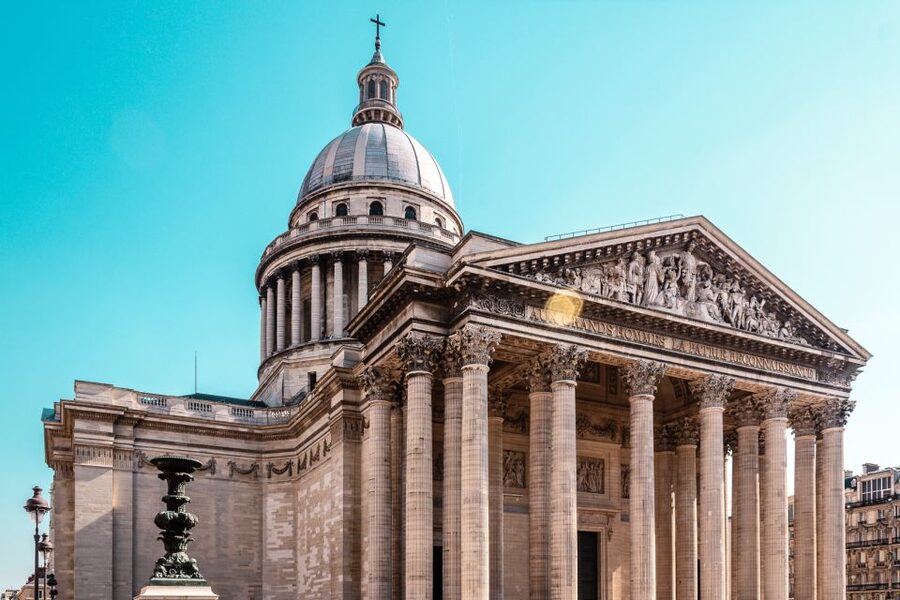
The Panthéon began as the royal Church of Sainte-Geneviève. Louis XV wanted a church dedicated to Paris’s patron saint, and architect Jacques-Germain Soufflot created a building intended to glorify the monarchy through its scale and design. Today, its columned exterior and immense interior still make that original ambition hard to miss.
A display about Soufflot follows his career and the work that led to this building. It’s worth taking a moment with it before moving through the main space: the Panthéon is not just a grand shell, but the result of one architect’s attempt to bring monumental form to a royal commission.
The building’s purpose changed with France’s politics. It was deconsecrated during the French Revolution in 1791 and renamed the Panthéon. In the turbulent 19th century, it shifted between religious and patriotic roles. That back-and-forth is part of what makes a self-guided visit rewarding: the same walls have carried very different meanings.
Take time with the paintings, sculptures and pendulum
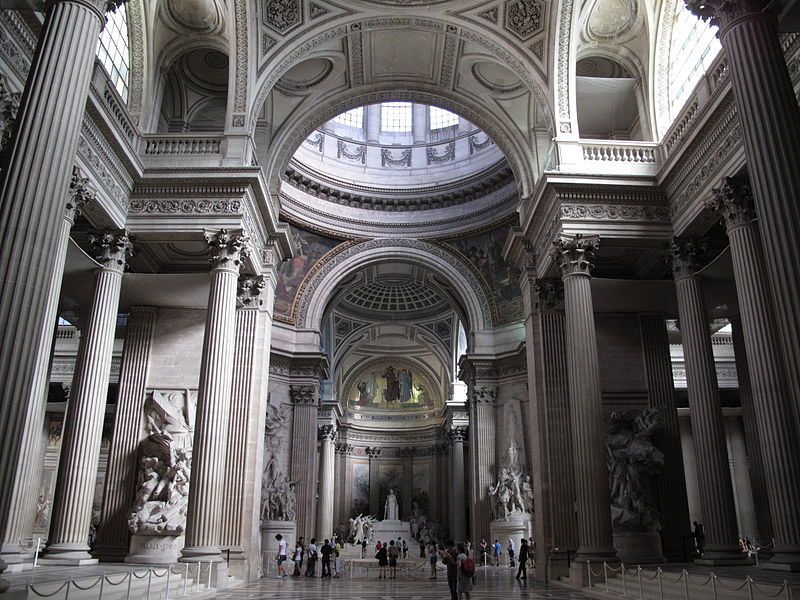
Inside, give yourself a little time to look up and around before heading straight for the crypt. The dome, monumental paintings and sculptures are a large part of the visit, and the scale can take a moment to register. The art commemorates notable figures and events, though some visitors may find the decorative themes repetitive after a while.
One of the most memorable details is the Foucault pendulum display. It connects the building’s solemn civic role with a scientific experiment, and it’s worth checking its reading when you arrive and again before you leave. That simple comparison can make the demonstration more engaging than a passing glance.
An information booklet is included and available online or at the entrance. If you prefer a spoken explanation, an audio guide is available at the monument for €3, payable there. It can help you follow the route and understand what you are seeing, though the devices may take a little patience to operate. Guided tours are also available in the afternoon, subject to availability, but a live guide is not included with this ticket.
More tickets in Paris:
- Paris: Louvre Museum Timed-Entrance Ticket
★ 4.6 · 71,977 reviews - Disneyland® Paris 1-Day Ticket
★ 4.6 · 49,412 reviews - Paris: Versailles Palace and Gardens Full Access Ticket
★ 4.6 · 41,579 reviews
Visit the crypt for the people behind the monument
The crypt is the visit’s strongest link between grand architecture and individual lives. Since Victor Hugo’s death in 1885, the Panthéon has served as the resting place of writers, scientists, generals, clergy and politicians. More than 70 people are buried here, including Voltaire, Jean-Jacques Rousseau, Émile Zola, Alexandre Dumas, Pierre and Marie Curie.
You may come looking for one familiar name, but leave time to read about others. The range of people represented helps explain how France has chosen to honor its public figures across different eras and fields. The tombs themselves are not necessarily the most elaborate part of the building, and the crypt can feel less spectacular than the great space above. Its value lies more in the stories and names than in ornate displays.
That quieter mood suits the setting. You’re moving among the people whom the country has chosen to remember, rather than through a conventional gallery of objects. If you arrive with a short list of names, use it as a starting point, not a reason to hurry out once you have found them.
Make room for the upper-floor views
From April to October, the recently restored upper floors offer views across Paris. If you’re visiting in that season, check whether they are open during your visit and allow time for them. The city view provides a different perspective from the one you get inside the monument, where the focus stays on architecture, commemoration and history.
The upper levels are not available year-round, so don’t plan your visit around them in winter. The main building and crypt still make a worthwhile visit outside the viewing season, but the seasonal access adds a useful extra for anyone who wants to pair the interior with a look across the city.
How long to allow, and how to get more from the visit
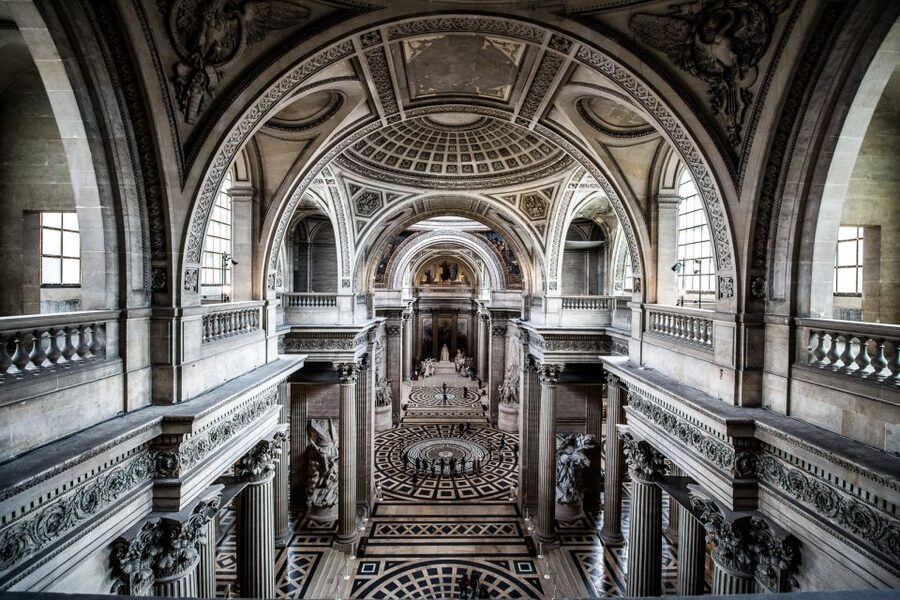
You could move through the Panthéon quickly, but that’s not the best way to see it. Some people may be finished in around 10 minutes; a more considered visit can take about an hour, especially if you read the displays, study the art, pause at the pendulum and explore the crypt. If you want to absorb the building rather than simply tick it off, leave a comfortable hour.
The ticket is valid for one day and can be used on any date and at any time, so it offers flexibility rather than a set tour schedule. Booking ahead can make entry smoother, particularly when there is a ticket queue, but it doesn’t turn the visit into a guided experience. You choose the pace and the order in which to explore.
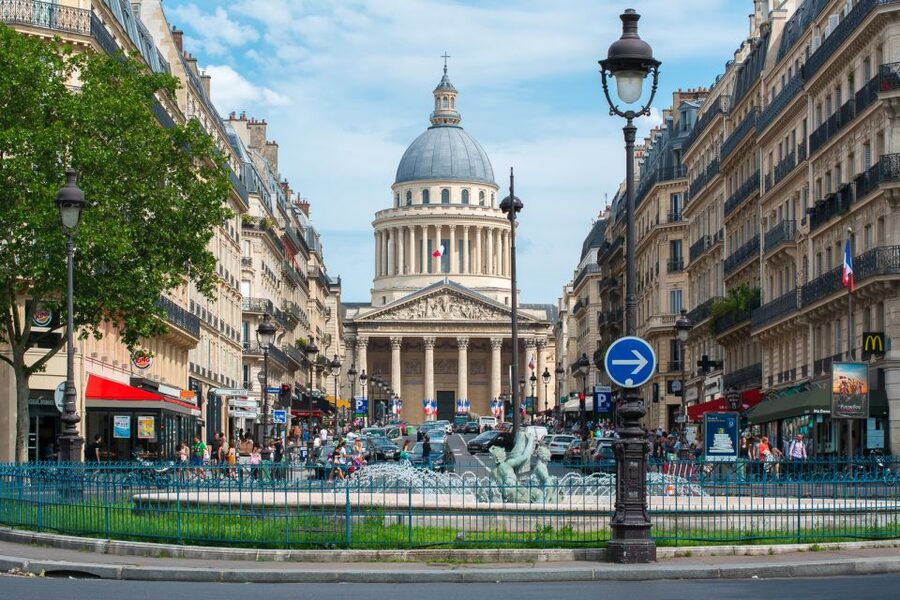
The Panthéon is in Place du Panthéon in the 5th arrondissement. It’s easy to combine with a walk around the surrounding area, including nearby Luxembourg Park. The neighborhood itself can make the visit feel like part of a day out rather than a stand-alone stop, though the monument deserves enough time to be more than a quick photo break.
If you would rather spend the day differently:
- Paris: 1-Hour Seine Cruise departing from the Eiffel Tower
★ 4.4 · 77,472 reviews - Paris: Arc de Triomphe Rooftop Tickets
★ 4.6 · 34,264 reviews - Paris: Orsay Museum Entry Ticket
★ 4.7 · 25,647 reviews - Paris: Evening River Cruise with Music
★ 4.4 · 22,721 reviews
Is the $15 ticket good value?
At about $15 per person, the ticket is a reasonable buy if you plan to explore the monument rather than make a brief pass through the nave. You’re paying for access to a major work of French architecture, its art and displays, the crypt, and, from April to October, the restored upper floors with city views. The included booklet helps you make sense of the visit without requiring an additional purchase.
The audio guide is an optional extra at €3, paid directly at the monument. If you want more context and a guided route through the building, that modest extra may be worthwhile. If you’re content to read at your own pace, start with the booklet and decide whether you need more explanation.
There are important free-entry exceptions. Admission is free for visitors under 18 and EU citizens under 26, with photo ID. You must show your ID at the ticketing station before going to the monument entrance. Free admission also applies on the first Sunday of January, February, March, November and December, and during European Heritage Days on the third weekend of September. Check those rules before paying for a ticket.
Practical details before you go
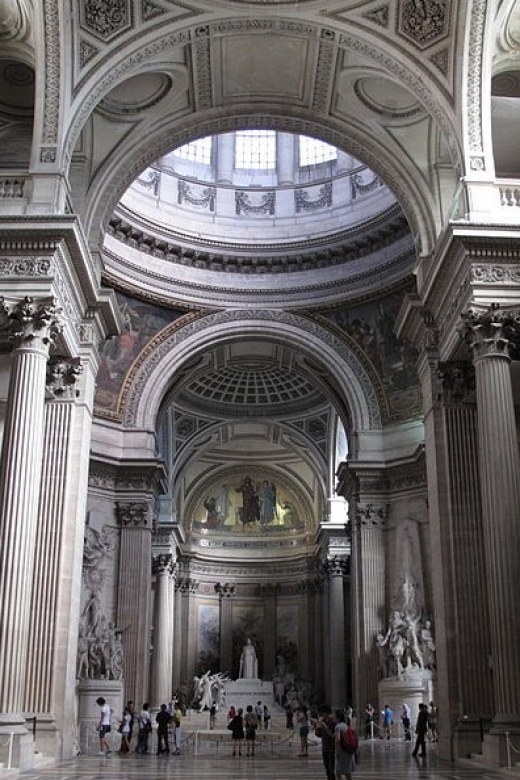
Bring a passport or ID card, and leave large bags and luggage elsewhere, as they are not allowed. The last admission is 45 minutes before closing, so arriving near closing time can leave too little room to see the building properly. On December 24 and 31, the Panthéon closes at 4:00 PM.
The monument is closed on January 1, May 1 and December 25. On June 5, it opens at noon. Check the current opening details before setting out, especially around those dates.
The site is wheelchair accessible, but the access described is limited: an exterior ramp gives access to part of the nave. If you need access beyond that area, confirm the arrangements before your visit. Also note that the ticket is non-refundable, so check your plans and the date before booking.
Who should book this visit?
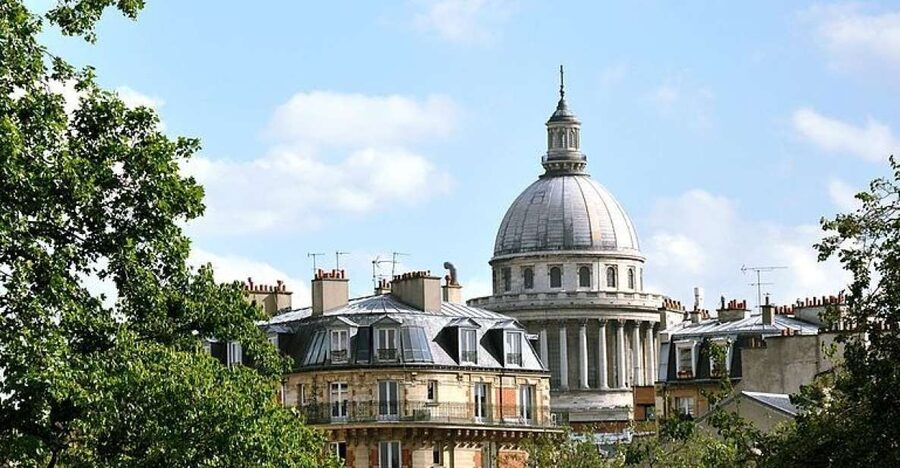
This ticket suits you if you like architecture, French history, notable writers and scientists, or places that reward an unhurried look. It’s also a good choice if you want flexibility: there’s no fixed start time to keep up with, and you can concentrate on the art, the pendulum, the crypt or the seasonal views according to your interests.
If you only want a quick look at a famous building, the experience may feel short for the price. The crypt is not a showy spectacle, and some of the decorative art may feel repetitive. But if you give the Panthéon time to tell its story, the shift from royal church to national resting place makes the visit more than an architectural stop.
FAQ
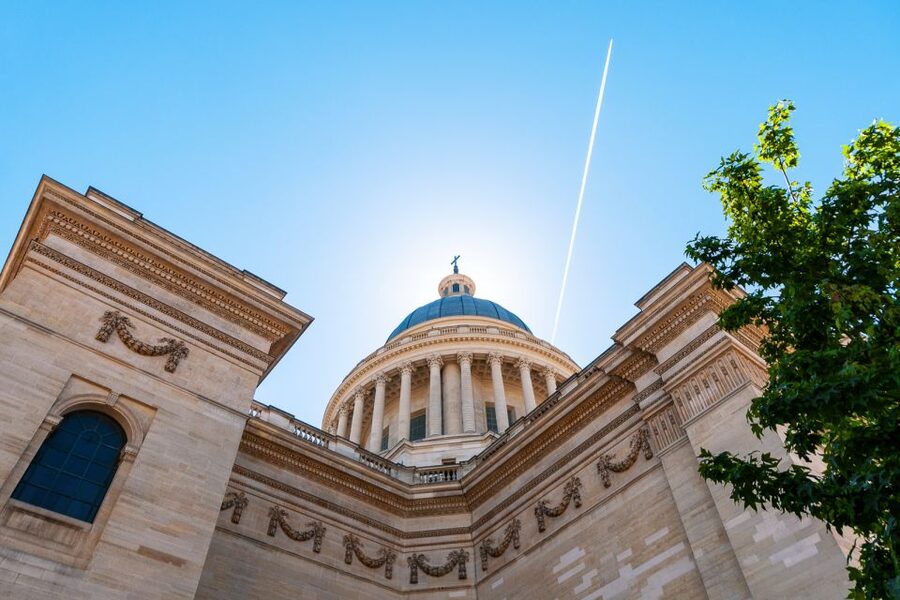
How much does the Panthéon admission ticket cost?
The listed price is $15 per person. The audio guide is an optional extra, costing €3 at the monument.
How long does a visit take?
A quick visit may take about 10 minutes, but allow around an hour if you want time for the main interior, displays, pendulum and crypt.
Is a guide included?
A self-guided visit and an information booklet are included. An audio guide is available for an extra fee, and an afternoon guided tour may be available subject to availability. A live guide is not included with the ticket.
When can I use the ticket?
The ticket is valid for one day and can be used on any date and at any time.
Is the crypt included?
Yes. The crypt is part of the Panthéon visit and contains the tombs of more than 70 notable French figures.
When are the upper floors open?
The restored upper floors, which offer views across Paris, are open from April to October.
Who can enter for free?
Visitors under 18 and EU citizens under 26 can enter free with photo ID. They must show the ID at the ticketing station before going to the entrance. Free entry also applies on the first Sunday of January, February, March, November and December, and during European Heritage Days on the third weekend of September.
Is the Panthéon wheelchair accessible?
It has an exterior ramp for disabled access to part of the nave. This does not indicate access to every area of the monument.
Recently reviewed in Paris
- Private Paris WWII History Tour: Occupation & Resistance★ 4.4 · 3 reviews
- Private Highlights of Paris Bike Tour★ 4.9 · 12 reviews
- Paris: Louvre Museum Highlights Small-Group Guided Tour★ 4.8 · 157 reviews
- Private Orsay Museum Tour: 2h Highlights w/ Monet & Van Gogh★ 5.0 · 4 reviews
- Private Mont Saint-Michel trip from Paris Calvados tasting★ 5.0 · 4 reviews
- Private Giverny Monet’s House & Gardens Trip from Paris★ 4.9 · 11 reviews
- Private Guided Tour, The Louvre by night !★ 4.2 · 30 reviews
- Highlights of Paris: Private 6-Hour Vintage 2CV Tour★ 3.9 · 19 reviews