

Reviewed · MUSEUMS
Paris: Orangerie Museum Skip-the-Line Entry and Guided Tour
Monet’s Water Lilies are the heart of this visit: they surround you in the Orangerie’s famous oval rooms, where the paintings reward a slow look. I like that the tour pairs this quiet, memorable setting with a guide who can explain how French art changed around it.
I also like the small group limit of eight and the walk through the Tuileries Gardens to the museum. One consideration: the tour costs $128 per person, and two hours is a brisk introduction, not time to study every work at length. The semi-private option also involves a moderate amount of walking and is not suitable for people with mobility impairments.
- Monet’s Water Lilies fill two oval rooms, giving you time to take in the paintings as a connected work.
- Skip-the-line entry takes the queue at the museum entrance out of the plan.
- A guide puts the art in context, from Impressionism to later artists such as Picasso and Matisse.
- The group is capped at eight per guide, with private and small-group options available.
- The tour starts with a stroll through the Tuileries, on the way to a building once used to store oranges for the royal family.
- Check the option details before booking: the meeting point can vary, and temporary exhibitions are not included.
A walk through the Tuileries to the old Orangerie
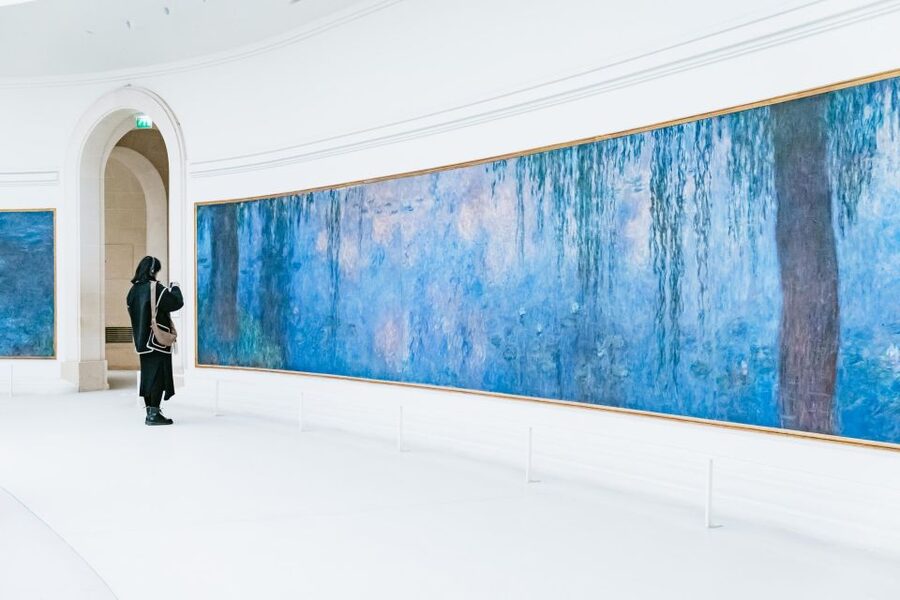
The museum sits in the Tuileries Gardens, so the visit begins with a pleasant walk through one of central Paris’s best-known green spaces. The Orangerie was built to shelter orange trees in winter for the royal household. That practical past makes a fitting contrast with the building’s present role as home to some of France’s most celebrated modern art.
The exact meeting point depends on the option you book, so check your confirmation rather than assuming you should meet at the museum door. The tour ends back at that same meeting point. Wear clothing suited to the weather: the tour runs rain or shine, and the garden walk is part of the outing.
Skip-the-line entry is useful when the museum entrance is busy. It does not mean you can ignore the meeting time or walk straight to the paintings without your guide. Arrive at the specified place on time, and bring a passport or ID card, as requested.
The oval rooms and Monet’s Water Lilies
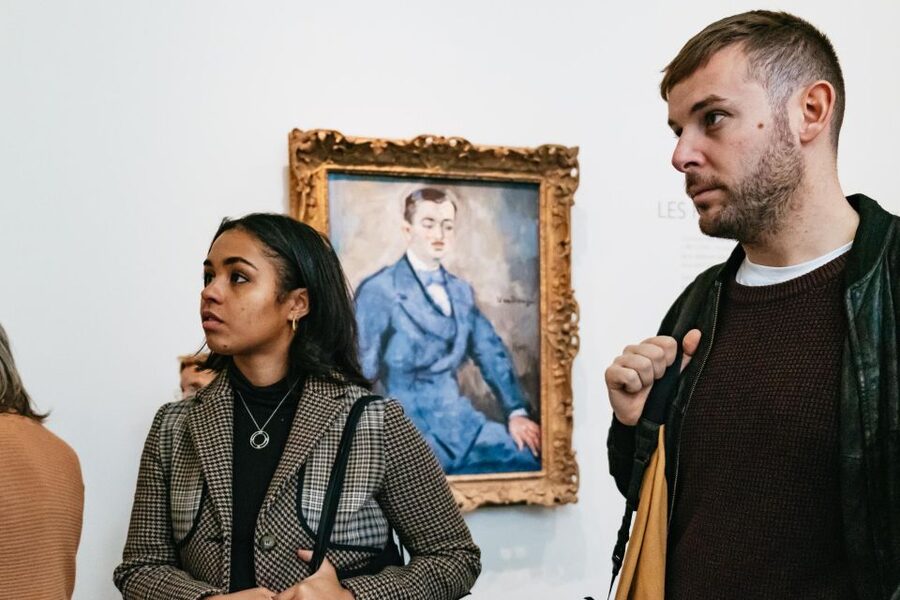
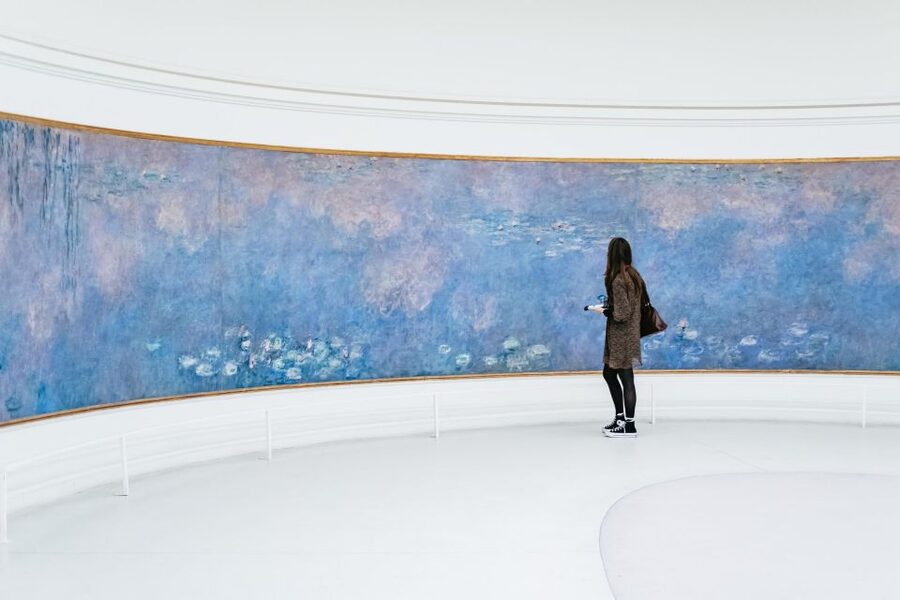
The main event is Monet’s Water Lilies, displayed in two oval rooms designed around the paintings. The broad panels wrap around the walls, making the rooms feel less like a row of framed pictures and more like a place to pause and look. If you can, let your eyes adjust and give the paintings a few quiet moments before moving on.
A guide can help you see how Monet’s brushwork, color, and changing light work together across the panels. One guide, Hugo, has used a recording of Clair de lune while visitors looked at the paintings. That musical touch is not guaranteed on every tour, but it hints at how an art historian can shape a visit around the mood and setting of the work.
Some rooms have rules that require quiet or restrict speaking. That may limit how much the guide can explain in the moment, so expect some interpretation to happen elsewhere in the museum. The quiet is part of the experience, not a flaw: this is a room where looking matters as much as listening.
More museum visits in Paris:
- Paris: Louvre Museum Timed-Entrance Ticket
★ 4.6 · 71,977 reviews - Paris: Orsay Museum Entry Ticket
★ 4.7 · 25,647 reviews - Louvre Museum Masterpieces Guided Tour with Access
★ 4.5 · 12,023 reviews
How Impressionism leads to modern art
The tour traces French art from the 19th century into the early 20th century. The point is not simply to tick off famous names. A guide can show you how painters began to challenge established ideas about technique and subject, and how later artists took those changes in new directions.
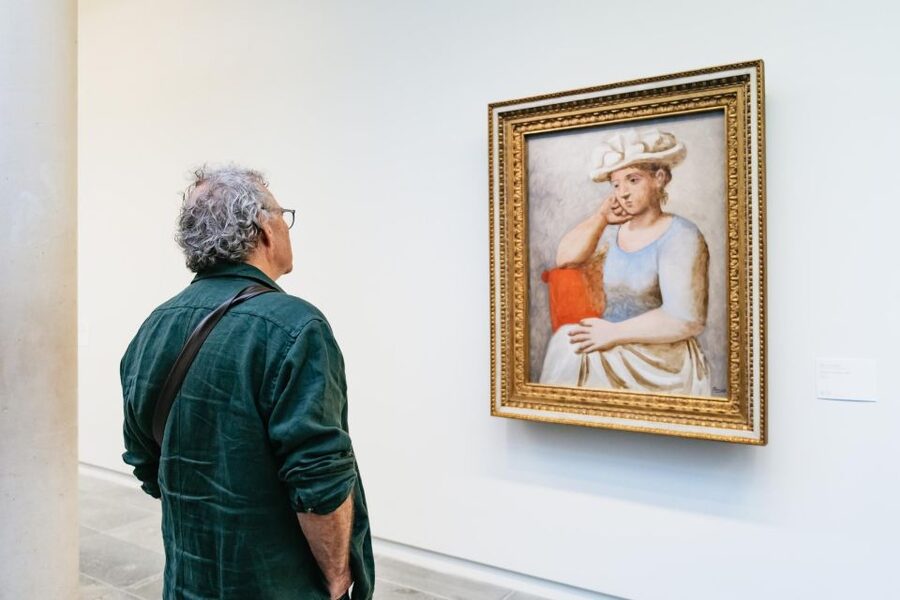
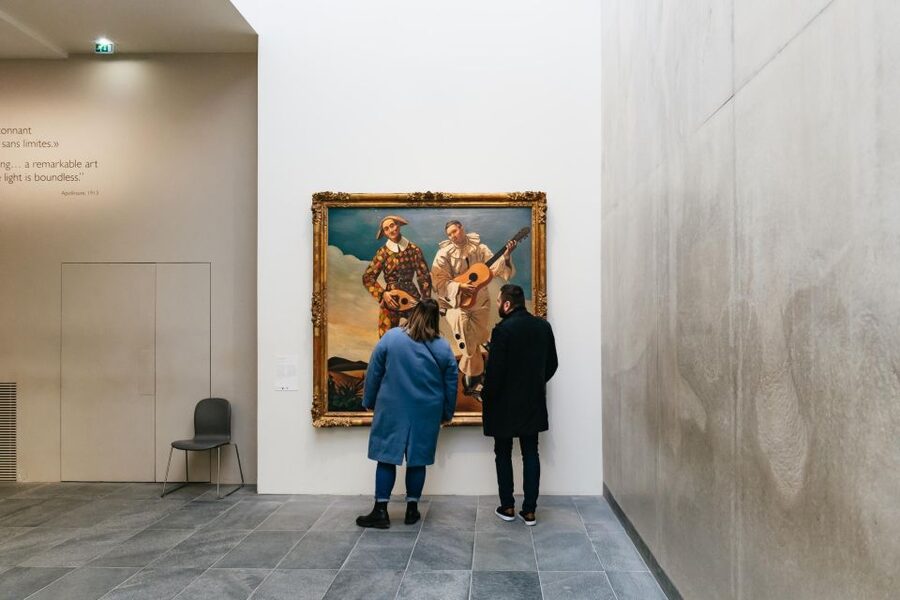
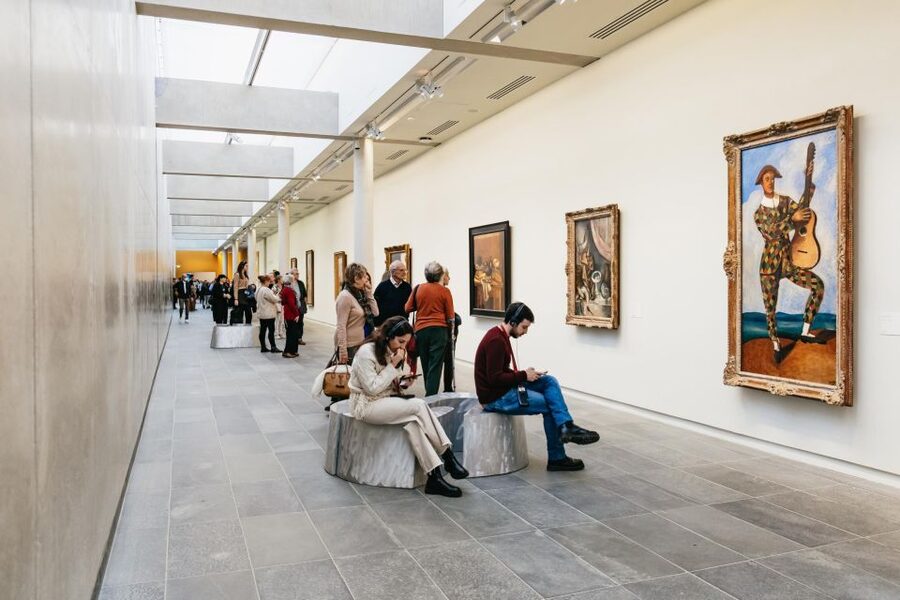
You’ll encounter works by Renoir, Cezanne, Matisse, Picasso, Modigliani, and Utrillo, among others. The route and the works on view can vary, since collections change over the year. Temporary exhibitions are not included, so consider this tour a guided introduction to the permanent collection rather than a ticket to everything in the building.
Cezanne’s fruit and flowers offer a chance to look at how a familiar subject can become a study in form and paint. Matisse’s portraits bring a different kind of visual drama, while Picasso’s depictions of nude models show how one artist’s approach could shift over time. A guide helps connect these changes instead of leaving you to guess why the rooms sit together.
What an art historian adds
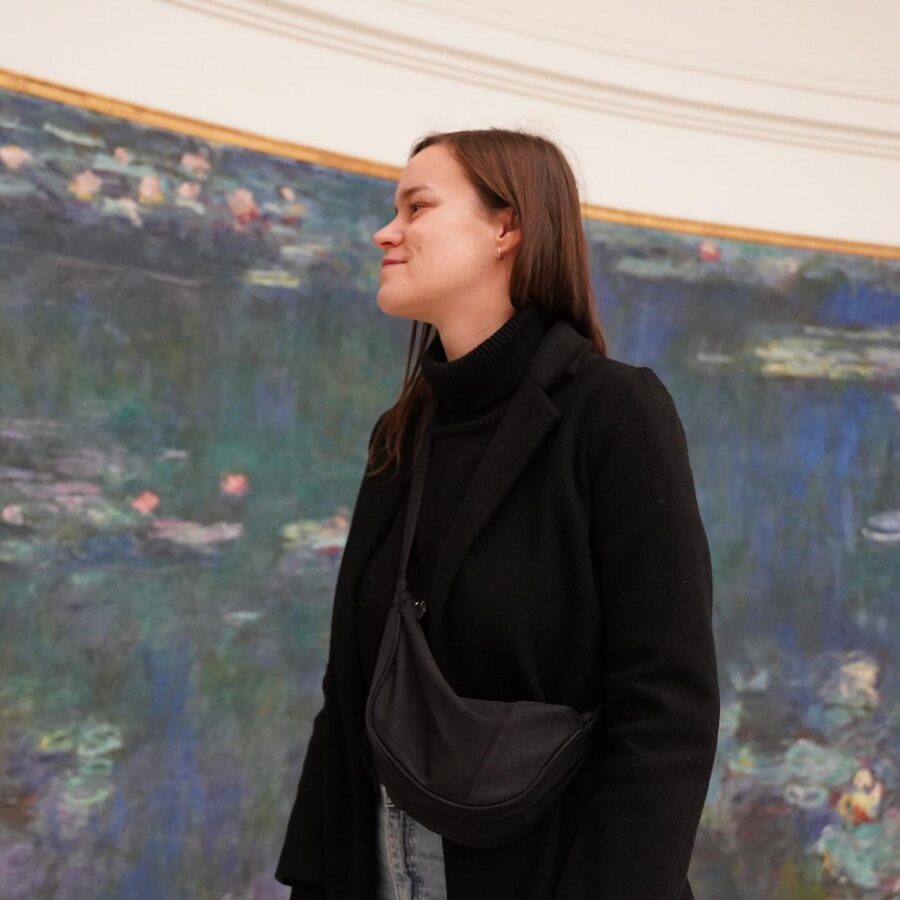
A short visit to a museum can turn into a name-and-date sprint. An art historian helps you slow down and make sense of what you are seeing: the artists’ methods, the conditions of their time, and the role of patrons in shaping what art was made and shown. That context can make a painting feel less like a famous object behind a barrier and more like a response to its moment.
The guides associated with this tour include Hugo, Malaika, Barbara, Sunday, Belen, and Lily, as well as a guide identified as Z. Your assigned guide may differ, so treat those names as examples, not a promise. The common thread in the tour’s design is specialist interpretation and room for questions, especially valuable if you want more than a quick walk past the highlights.
The approach can also work well for families. Barbara has drawn a nine-year-old into the paintings and the artists’ lives, a useful reminder that a good guide can make art approachable without turning the visit into a lecture. If you’re bringing a child, consider whether two hours of museum attention suits them, and ask the provider about the format that best fits your group.
Two hours, eight people, and the pace of the visit

Two hours is enough for a focused look at the Water Lilies and selected works across the collection. It is not enough to linger at every painting or cover every room in depth. I see that as a sensible trade-off: the guide gives you a thread to follow, while the time limit leaves the rest of the museum for another visit.
The maximum group size is eight people per guide, which can make it easier to hear explanations and ask questions than in a large tour group. You can choose a private or small-group option, though the exact arrangements depend on what you book. The semi-private tour requires at least two participants to run; if that minimum is not met, an alternative date or a full refund is offered.
Some walking is involved. The semi-private tour is not suitable for people with mobility impairments, and the provider asks anyone with mobility needs to contact them about requirements. Large bags and luggage are not allowed, so leave bulky items elsewhere before arriving.
More skip-the-line entries in Paris:
- Versailles: Skip-the-Line Tour of Palace with Gardens Access
★ 4.7 · 9,778 reviews - Versailles: Skip-the-Line Guided Palace Tour and Full Access
★ 4.6 · 5,214 reviews - Louvre Museum: Skip-the-Line Small Group Guided Tour
★ 4.6 · 3,960 reviews - From Paris: Versailles Skip-the-Line Tour & Gardens Access
★ 4.7 · 3,011 reviews
Is $128 a fair price?
At $128 per person, this is a premium museum visit. The fee includes the entrance ticket, skip-the-line entry, an art historian guide, and the two-hour tour. You are paying not just for access to the rooms, but for someone to connect the works and make a short visit count.
The value depends on how you like to see art. If you enjoy asking questions, want help understanding the shift from Impressionism to later modern painting, or have limited time in Paris, guided entry can be worthwhile. If you prefer to wander at your own speed, or already know the collection well, you may be happier with an independent visit. The tour price alone does not tell you how much you save compared with buying entry separately, so compare the options available for your date.
There are limits to what the price covers. Temporary exhibitions are excluded, and the two-hour format cannot offer a full survey of every artist or room. Book it for a guided look at Monet and selected works, not as an all-day museum pass.
Practical details to know before you go
Starting times depend on availability, and the meeting point can vary with the option booked. Check both details before setting out. The tour is offered in French, English, Russian, Italian, Spanish, and German.
The museum can occasionally close rooms or change opening arrangements without warning. If opening is delayed by more than an hour from the tour’s start, an appropriate alternative is provided. The tour provider does not offer a refund or discount in that situation, so keep some flexibility in your plans.
You can cancel up to 24 hours in advance for a full refund. A reserve-now, pay-later option is also available, which can be handy if your Paris schedule is still taking shape. Those terms are useful, but they do not replace checking the precise meeting point, time, and group format before you book.
Who should book this Orangerie tour?
I’d choose this tour if Monet’s Water Lilies are high on your Paris list and you want an expert to explain the art around them. It suits first-time visitors to the Orangerie, art lovers who enjoy context, and anyone who would rather spend two focused hours than navigate the collection alone. The small group cap is another plus if you value a more personal pace.
Think twice if you need a fully accessible route, want to see every gallery at leisure, or are mainly interested in temporary exhibitions. The semi-private tour involves moderate walking, the museum’s room rules can limit talking, and the ticket does not include temporary shows.
For most visitors who want a clear, guided introduction to Monet and the French art that followed, the tour is a good use of two hours. Book it if the guide’s explanations matter as much to you as the paintings. Go on your own if you’d rather set your own pace and let the rooms speak for themselves.
FAQ
How long is the tour?
The tour lasts two hours. Starting times vary, so check availability for your preferred date.
What is included in the price?
The price includes skip-the-line entrance to the Orangerie Museum, the entrance fee, an art historian guide, and a museum tour.
Are temporary exhibitions included?
No. Temporary exhibitions are not included in the tour.
How many people are in the group?
The tour has a maximum of eight people per guide. Private and small-group options are available.
Which languages are offered?
Guides are available in French, English, Russian, Italian, Spanish, and German.
Where does the tour start and end?
The meeting point varies depending on the option booked. The tour ends back at its meeting point.
Is the tour suitable for people with mobility impairments?
The semi-private tour involves a moderate amount of walking and is not suitable for people with mobility impairments. Contact the activity provider about mobility requirements.
What should I bring, and what is not allowed?
Bring a passport or ID card and clothing suited to the weather. Luggage and large bags are not allowed.
Recently reviewed in Paris
- Private Highlights of Paris Bike Tour★ 4.9 · 12 reviews
- Private Paris WWII History Tour: Occupation & Resistance★ 4.4 · 3 reviews
- Paris: Louvre Museum Highlights Small-Group Guided Tour★ 4.8 · 157 reviews
- Private Orsay Museum Tour: 2h Highlights w/ Monet & Van Gogh★ 5.0 · 4 reviews
- Private Mont Saint-Michel trip from Paris Calvados tasting★ 5.0 · 4 reviews
- Highlights of Paris: Private 6-Hour Vintage 2CV Tour★ 3.9 · 19 reviews
- Private Giverny Monet’s House & Gardens Trip from Paris★ 4.9 · 11 reviews
- Private Guided Tour, The Louvre by night !★ 4.2 · 30 reviews
Museums, compared.


Louvre Museum Masterpieces Guided Tour with Access
Read our review →
Louvre Museum Entry Ticket With Host and River Cruise
Read our review →
Les Invalides: Napoleon’s Tomb & Army Museum Entry
Read our review →
Louvre Museum – Exclusive Guided Tour (Entry Included)
Read our review →
Louvre Museum Hosted Entry and Mona Lisa Audioguide
Read our review →
Louvre Museum Tour Mona Lisa & Iconic Masterpieces
Read our review →Browse the lists this tour appears in