
Reviewed · MUSÉE D'ORSAY TOURS
Paris: Musée d’Orsay A Private Tour – rebels passion colour
The Musée d’Orsay is easy to admire and surprisingly easy to find overwhelming. This two-hour private tour gives the art a story, tracing 19th-century rule breaking from the rival styles of Delacroix and Ingres to the individuality of Van Gogh and Gauguin.
I like two things in particular: the guide is an Irish artist and specialist decorator, so you get an artist’s perspective, and the tour links Impressionist paintings to the public that first rejected them. Damien’s small audio receivers are another practical plus, helping you hear even when the galleries are noisy.
One point to plan for: the €16 museum ticket is not included in the $141-per-person tour price. Buy admission separately, and check availability early in high season.
Key points
- A story that runs from the 1840s to Van Gogh and Gauguin: The route sets up the clash between Delacroix and Ingres before following later artistic rebels.
- A guide with an artist’s eye: Damien is an Irish artist, specialist decorator and Paris museum guide of ten years.
- Private, but with a six-person limit: The small group gives you room to follow the discussion and ask questions.
- Bring a separate museum ticket: Admission costs €16, with free entry for children under 18 with ID and EU students under 25.
- Headphones help in busy rooms: Audio receivers are supplied, and their compact design has been appreciated for being easy to wear.
- Meet outside at the Rhino sculpture: Damien wears a guide badge; the tour is in English and lasts two hours.
A guided route through the arguments of 19th-century art
This tour is less about ticking off famous names than understanding why their work caused a stir. Damien frames the Musée d’Orsay visit as a passage through artistic rebellion: first, the established powers of the 1840s; later, painters who pushed against the rules; finally, the fiercely individual work associated with Van Gogh and Gauguin.
That structure is useful in a museum where the sheer number of paintings can blur together. Instead of seeing one gallery after another as a parade of canvases, you get a thread to follow: how artists challenged accepted ideas, how their work was received, and why it later became admired around the world.
The tour is private and limited to six people. That cap matters. You can keep close to the guide, hear the explanation and ask a question without needing to compete with a large group. The format also suits people who want an informed visit but prefer a conversation to a lecture.
Damien brings a particular mix of experience. He is an Irish artist and specialist decorator, and has worked as a Paris museum guide for ten years. That background gives him a way to talk about both the making of art and the choices artists make. You are not simply getting a list of dates and names; the aim is to look at paintings with an artist’s attention to how they work.
More Orsay visits in Paris:
- Paris: Orsay Museum Entry Ticket
★ 4.7 · 25,647 reviews - Paris: Orsay Museum Entry Ticket and Digital Audio Guide App
★ 4.4 · 3,170 reviews - Paris in a Day: Louvre or Orsay, Eiffel Tower, City Walk & Cruise
★ 5.0 · 1,956 reviews
Starting with Delacroix and Ingres
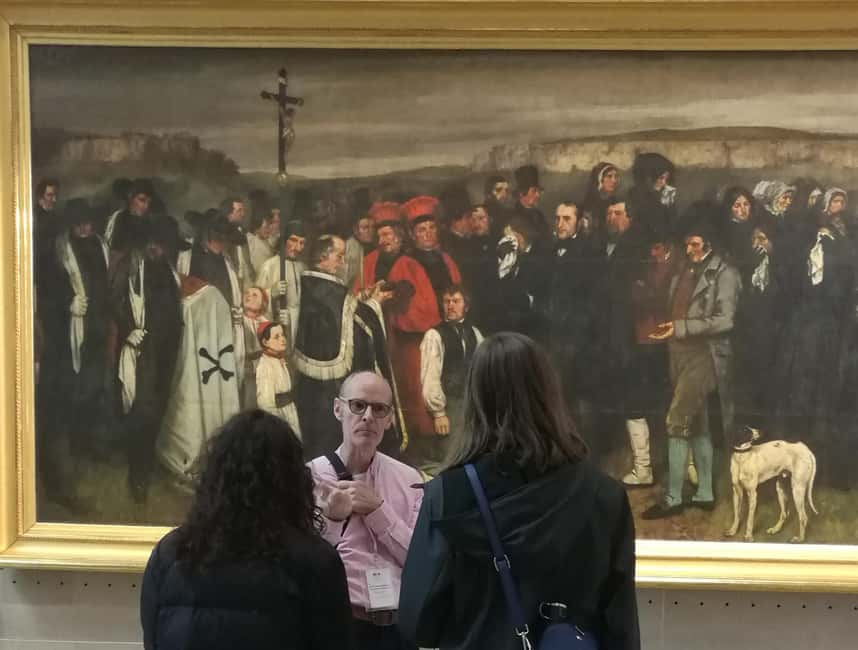
The story begins in the Salons of the 1840s, when two influential masters, Delacroix and Ingres, represented opposing artistic approaches. Their contrast gives the tour a clear starting point: before following the rebels, you first see the artistic world they were pushing against.
This opening is helpful even if you have little art-history background. It sets up the idea that artistic change does not happen in a vacuum. New approaches make more sense when you know what was accepted before them, and why a painting might have unsettled the people who first saw it.
Expect the discussion to focus on the changing rules of French art rather than on a long catalogue of works. The supplied route does not promise a fixed list of individual paintings, so I would not book expecting a checklist of specific masterpieces. The value lies in Damien’s connections between artists and their moment.
Following Courbet, Manet, Monet and Cézanne
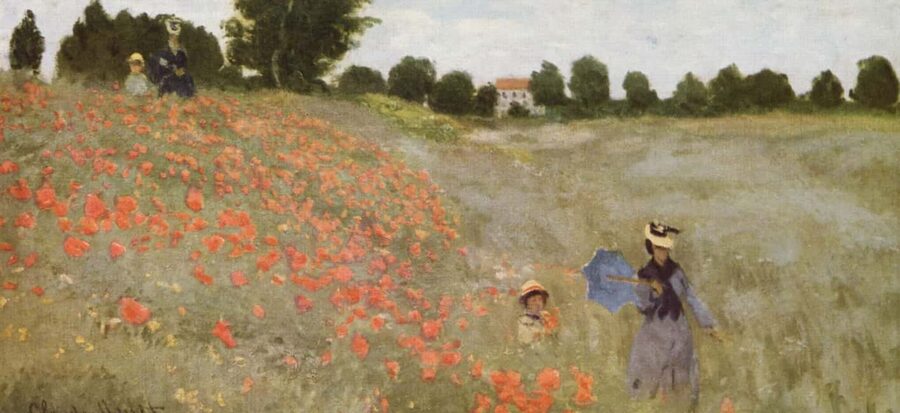
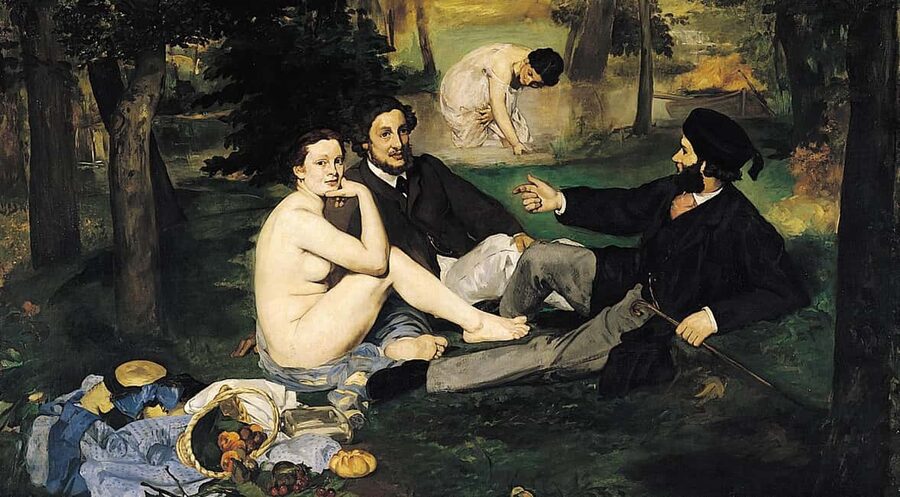
From the Salon era, the tour moves toward rule breakers including Courbet, Manet, Monet and Cézanne. Their names mark major shifts in 19th-century art, but the useful part is how Damien puts those shifts in context. You can ask what made an artist’s choices seem radical at the time, rather than treating modern art as something that appeared fully formed.
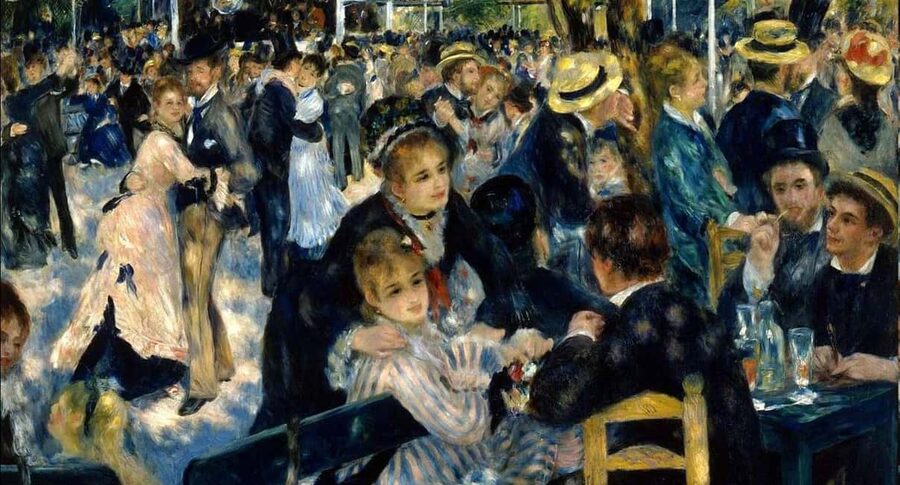
The tour also explains the Impressionist revolution and its uneasy first reception in France. The paintings that are now admired across the world were not always welcomed by the public. That change in opinion is a good reminder that art history is not a simple march toward universal approval. What later generations prize can look strange, improper or unfinished to the people encountering it first.
You will get more from these rooms if you are willing to look slowly. A guided explanation can help you notice decisions you might otherwise pass by, then connect them to the larger story. One attendee who had visited the museum without a guide found the second visit with Damien much more revealing, because he pointed out details that had gone unnoticed before. That is the practical case for taking a guide here: not just more information, but a better way to look.
Understanding the Impressionist break
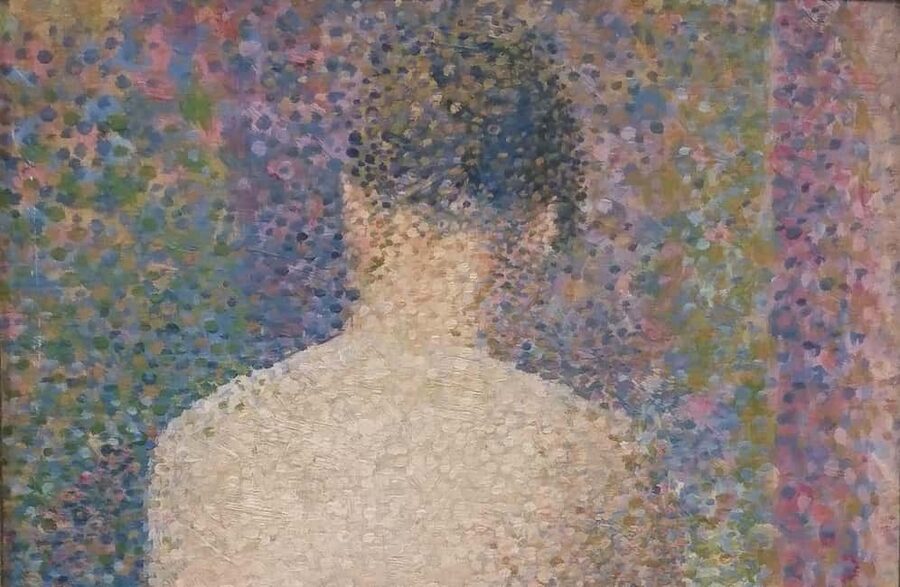
The Impressionist section is the heart of the tour’s promise. Damien explains why the movement mattered in its own time and why its work was initially rejected by the French public. That context can change how you see familiar paintings. Instead of assuming these works were immediately celebrated, you get to consider the gap between what artists attempted and what audiences were ready to accept.
The subject is especially valuable if you already know the names but not the stakes. Monet, for example, can be more than a famous name on a wall when you understand the broader change in artistic expectations around him. The tour promises this context, though it does not specify a particular painting-by-painting route.
If you are new to art museums, this section may be the moment when the Orsay starts to feel manageable. Damien’s role is to make the choices and changes legible, not to test you on terminology. You can listen, look and ask questions without needing to arrive with a degree in art history.
More private tours in Paris:
- Louvre Museum Timed Entry Ticket – Optional Private Guide
★ 4.0 · 940 reviews - Paris Private Louvre Museum, Must See, 1H30 Tour.
★ 4.0 · 914 reviews - Paris Louvre: 2-Hour Private Tour for Groups or Families
★ 4.6 · 639 reviews - Paris Kids and Families Private Louvre Tour
★ 5.0 · 430 reviews
Ending with Van Gogh and Gauguin
The route ends with the individuality of Van Gogh and Gauguin, described as tempestuous friends. That is a fitting closing point for a tour about rebellion. By this stage, the focus has moved from the established standards of the 1840s toward artists whose personal approaches became central to their identity.
The ending also gives the route a sense of progression. You begin with competing masters and finish with artists whose work is associated with a more personal vision. The tour does not just jump between well-known painters; it follows a broad change in how artists claimed space for their own ideas.
If Van Gogh or Gauguin is the main reason you want to visit, keep in mind that this is not described as a single-artist tour. Their work forms the endpoint of a wider account of 19th-century art. That wider frame is a strength if you want context, but less ideal if you only want an extended session focused on one painter.
The audio receivers and small-group advantage

Headphones and audio receivers are supplied. That may sound like a minor detail, but it can make a real difference in a crowded museum. One person who took the tour found the equipment notably compact and easy to use, with Damien easy to hear even when other people were nearby.
The group is private and capped at six. For a museum visit, this is a useful middle ground: more personal than a large scheduled group, without the scale of a full-day private guide arrangement. You can ask for clarification, and the guide can keep the conversation close to the group.
The two-hour limit is both an advantage and a constraint. It gives you a focused visit rather than an exhausting museum marathon, but you should not expect to cover every corner of the Musée d’Orsay. Go in ready to follow the tour’s themes, and save extra time for your own look around if you want to linger afterward.
What the price covers, and what it does not
The tour costs $141 per person, and museum admission is separate. The stated ticket price is €16, so include that in your budget unless you qualify for free entry or have a Paris Museum Pass. Children under 18 enter free with ID, and EU students under 25 also enter free.
At $141 per person, this is not a low-cost way to enter the museum. You are paying for a private, English-language, artist-led two-hour visit, not simply a ticket and a basic orientation. The value depends on how much you want interpretation. If you would happily spend hours reading labels and tracing the artists’ connections yourself, the extra cost may not be worthwhile. If a guide’s perspective helps you make sense of a major collection, the focused format can justify the premium.
Damien’s direct contact by WhatsApp or text is useful if you need to confirm availability, especially when asking less than 24 hours before the scheduled start. High-season ticket availability can be limited, so arrange museum entry early. A practical tip is that a ticket for a temporary exhibition is also valid for entry to the museum, according to the tour information.
The meeting point is by the sculpture of the Rhino outside the museum. Damien wears a guide badge, so look for him there rather than heading inside to search. Wear comfortable shoes. The activity is listed as wheelchair accessible, but if you need to confirm a particular access detail, contact the guide before booking.
Who should book this Musée d’Orsay tour
I would choose this tour if you want to understand the arguments behind 19th-century French art, not just see its famous names. It is especially suited to first-time Orsay visitors who find large museums daunting, people who enjoy discussing how art is made, and anyone who wants a compact visit with a clear beginning and end.
It also works well for a small private group that values the chance to ask questions. The English-language format and supplied audio equipment help keep the visit clear, while Damien’s background as an artist and decorator gives the discussion a useful practical angle.
It may not be the best fit if you want to set your own pace throughout the museum, focus exclusively on one painter, or keep extra costs down. Babies under one year are not considered suitable for the activity. Admission is also separate, so check your ticket situation before you commit.
Book it if you want an artist-led explanation of how French art moved from the Salon era to Impressionism and beyond. Skip it if you prefer an unstructured museum visit or mainly need a ticket. For the best value, secure your museum admission first, then use the two hours to follow the story rather than trying to see everything.
FAQ
How long is the tour?
The private tour lasts two hours.
What is the meeting point?
Meet by the sculpture of the Rhino outside the Musée d’Orsay. Damien wears a guide badge.
Is the museum ticket included in the tour price?
No. The museum ticket is separate and is listed at €16. Tickets can be obtained through the museum’s website.
Do children have to pay for museum admission?
Children under 18 enter free with ID.
Can EU students enter for free?
Yes. EU students under 25 get free museum entry.
What language is the tour in?
The live guide speaks English.
How many people can join the private group?
The tour is limited to six people.
Are headphones provided?
Yes. Headphones and audio receivers are supplied during the tour.
Is the tour wheelchair accessible, and can babies join?
The activity is listed as wheelchair accessible. Babies under one year are not suitable for the tour.
Recently reviewed in Paris
- Private Paris WWII History Tour: Occupation & Resistance★ 4.4 · 3 reviews
- Private Highlights of Paris Bike Tour★ 4.9 · 12 reviews
- Paris: Louvre Museum Highlights Small-Group Guided Tour★ 4.8 · 157 reviews
- Private Orsay Museum Tour: 2h Highlights w/ Monet & Van Gogh★ 5.0 · 4 reviews
- Private Mont Saint-Michel trip from Paris Calvados tasting★ 5.0 · 4 reviews
- Highlights of Paris: Private 6-Hour Vintage 2CV Tour★ 3.9 · 19 reviews
- Private Giverny Monet’s House & Gardens Trip from Paris★ 4.9 · 11 reviews
- Private Guided Tour, The Louvre by night !★ 4.2 · 30 reviews
Musée d'Orsay Tours, compared.
Orsay Museum Entry Ticket and Digital Audio Guide App
Read our review →
Paris in a Day: Louvre or Orsay, Eiffel Tower, City Walk & Cruise
Read our review →
Musée d’Orsay Entry Ticket and Seine River Cruise
Read our review →
Musée d’Orsay Skip-the-Line Tour with Expert Guide
Read our review →
The Musée d’Orsay Guided Tour Orsay Museum Semi-Private 6ppl Max
Read our review →
Orsay Museum – Exclusive Guided Tour (Reserved Entry Included)
Read our review →Browse the lists this tour appears in