

Reviewed · LOUVRE TOURS
Murders and Mysteries of the Louvre Museum
The Louvre’s past is not all royal portraits and polished marble. On this two-hour tour, you’ll hear about the fortress beneath the museum, old rituals in the ancient collections, and the betrayals and murders tied to the palace’s history, while seeing major works such as the Mona Lisa and Venus de Milo.
I like two things in particular: the small group, capped at eight, gives you a better chance to hear and ask questions than a large museum tour, and the guide pairs famous works with lesser-known corners and stories. The ticket also lets you stay in the Louvre after the tour to explore at your own pace.
One consideration: a small group does not make a crowded gallery quiet. Some visitors have found a guide’s soft voice or English difficult to follow in the museum’s noise, so stay close and speak up if you miss something. The theme may also vary in emphasis from guide to guide.
- Start beneath the Pyramid: Meet at the Statue of Louis XIV in front of the Louvre Pyramid.
- See major collections in two hours: The route includes medieval remains, Egyptian art, the Venus de Milo, crown jewels, French masterpieces and the Mona Lisa.
- Hear the Louvre’s darker stories: Expect accounts of magic, old rituals, scandal, betrayal and murder alongside the art.
- Keep the group small: No more than eight participants join each tour.
- Skip the ticket line, not security: Museum entry is included, but everyone still passes through the security check.
- Stay after the guided visit: Your museum ticket allows you to continue exploring once the two-hour tour ends.
A Louvre tour with a darker thread
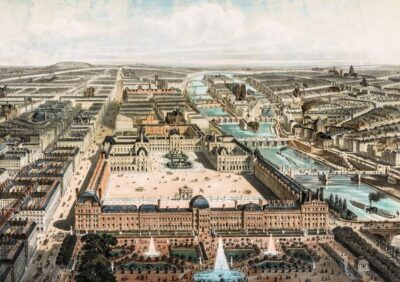
The Louvre can feel like several museums stacked together: a medieval fortress, a former royal residence and a vast collection of art gathered across centuries. This tour uses its unsettling stories as a thread through that sprawl. Rather than treating each gallery as a separate stop, your guide connects artworks and objects to magic, ritual, violence and the palace’s political past.
That angle can make a familiar museum feel newly legible. You still see celebrated works, but you also get prompts to look closely at what a scene depicts, what an object meant, or what a royal collection says about power. The unusual stories are a lens, not a substitute for the art.
The experience lasts two hours, so think of it as a guided introduction, not a full Louvre visit. The museum is enormous, and no short tour can cover it all. The advantage is focus: a guide chooses a route and provides context while you move between important collections and lesser-known areas.
Meeting under the glass Pyramid

The meeting point is the Statue of Louis XIV in front of the Louvre Pyramid, at the museum on Rue de Rivoli. Your voucher gives the precise details, so check it before you set off. The tour information also describes meeting beneath the Pyramid after the security check but before the ticketed entrance. Follow the instructions on your voucher if the wording seems unclear.
Allow time to find the group and get through security. Skip-the-line access applies to the ticket queue, not the security queue, so you may still have to wait outside for screening. The entrance fee is included in the tour price, which means you do not need to buy a separate Louvre ticket for this visit.
Bring a passport or ID card. Large bags and luggage are not allowed, and items larger than 55 by 35 by 20 centimeters cannot enter the museum. Travel light: a bulky bag can cause trouble at the door and is an awkward companion in crowded galleries.
More Louvre visits in Paris:
- Paris: Louvre Museum Timed-Entrance Ticket
★ 4.6 · 71,977 reviews - Paris: Louvre Guided Tour with Reserved Access & Boat Cruise
★ 4.3 · 16,353 reviews - Louvre Museum Masterpieces Guided Tour with Access
★ 4.5 · 12,023 reviews
Fortress walls beneath the palace
The Louvre began as a medieval fortress before becoming a royal residence and, later, a museum. Seeing its medieval remains gives the building a different scale and purpose. You are not simply walking through grand halls; you are also looking at evidence of an older defensive structure beneath the polished public rooms.
This stop helps explain why the Louvre’s story is part of the tour, not just background. Royal power, shifting loyalties and palace life all belong to the same place as the art. Your guide links those changes to stories of betrayal, scandal and murder, giving the museum’s architecture a human edge.
The tour’s theme is broad, so the exact stories and their emphasis may differ with the guide. If you want a tightly scripted crime-history walk, this may not be that. The route also aims to cover major highlights, so the darker history sits alongside art interpretation rather than taking over every minute.
Ancient objects, magic and ritual
The Egyptian collection offers a different kind of mystery. Here, your guide introduces ancient beliefs, magic and rituals that can be difficult to read from objects alone. Context matters: without it, a gallery of antiquities can become a procession of cases; with it, you have a reason to ask what people believed and how they marked the world around them.
The tour also looks at dark events depicted in some of the museum’s iconic works. That can give you a fresh way to study familiar images, paying attention to the action, symbols and choices artists made. The subject matter may be grim, but the aim is to bring the art to life, not simply to point out gore.
If you are visiting with children or prefer a lighter museum outing, consider whether stories of murder and disturbing events suit your group. The supplied details do not set an age limit or describe how graphic the discussion gets, so ask the provider if that matters to you.
Venus de Milo and the art of looking closer
The Venus de Milo is one of the tour’s named stops, and the guide’s job is to help you do more than recognize it from pictures. A famous sculpture can be so familiar that you pass it without really looking. A guided visit gives you a chance to pause and consider what makes the work compelling, while hearing the unusual stories that the tour brings to the collection.
The same approach applies to French masterpieces. One useful part of a good museum guide is the connection between artists, techniques and works that might otherwise seem unrelated. The tour can include that kind of art context as well as the darker theme, though the balance depends on the guide.
This is one reason the group size matters. With a maximum of eight people, you have a better chance to ask a question or stay close to the guide than you would in a large group. Still, the Louvre is a busy public museum. Keep the group in sight, and do not hesitate to ask the guide to repeat a point if nearby noise swallows it.
More museum visits in Paris:
- Paris: Orsay Museum Entry Ticket
★ 4.7 · 25,647 reviews - Paris: Louvre Museum Entry Ticket With Host and River Cruise
★ 4.6 · 9,926 reviews - Les Invalides: Napoleon’s Tomb & Army Museum Entry
★ 4.6 · 9,185 reviews - Louvre Museum – Exclusive Guided Tour (Entry Included)
★ 5.0 · 6,296 reviews
Crown jewels and royal ambition
The crown jewelry collection brings the Louvre’s royal past into sharper view. Jewelry is beautiful, but it is also a record of status and authority. In a tour that links the palace to scandal and political intrigue, these objects make a useful counterpoint to the stories of conflict and betrayal.
You will not have unlimited time at each stop. Two hours means the guide has to keep moving, and a highlight tour is best for seeing a range of collections rather than lingering over every object. If the jewels catch your eye, note where they are so you can return after the guided portion.
That after-tour freedom adds real value. Once the tour ends, you can stay in the museum and revisit a gallery, look for a work you did not have time to study, or continue to another collection on your own. The tour does not need to be your whole Louvre day.
The Mona Lisa, seen with fresh questions
The Mona Lisa is part of the route, but the visit is not only about getting close to the famous painting. Your guide invites you to consider her enigmatic smile from a new perspective and place the work within a broader conversation about art and interpretation.
Expect a crowded viewing area. The tour information does not promise a quiet or prolonged stop, and the painting’s fame means that you may have to look around other people. A guide can give you context, but you should keep your expectations practical: this is a brief encounter in a busy museum, not private time with the painting.
I like that the Mona Lisa appears within a broader route instead of serving as the sole goal. You get the recognizable centerpiece, then move on to collections and stories that are less likely to be on every first-time visitor’s checklist.
How the guide shapes the experience
The guide is the main reason to book this tour rather than simply enter the Louvre with a map. Strong guides have made a marked difference by explaining artistic techniques, relationships between artists and lesser-known works, while also keeping the group moving among major highlights. A friendly, engaging manner helps too, especially in a museum that can be overwhelming on your own.
There is a practical catch: the galleries can be loud, and a soft voice is hard to follow. One participant found that difficulty hearing the guide affected the experience, and keeping a group together in crowds can take effort. Stay near the guide, ask for repetition when needed, and make sure you can hear before the group moves on.
The tour is offered in English and French. If language clarity is important to you, confirm your selected language when booking. The operator is Meeting the French, but no individual guide names are provided, so you cannot request a particular guide based on the information here.
The theme can also land differently depending on the guide. The tour promises strange and mysterious stories, but one visitor felt the discussion leaned toward a handful of gory paintings without enough intrigue. If you are booking mainly for the murder-and-mystery angle, ask how the guide balances those stories with the museum’s history and art.
Is $200 fair value for two hours?
At $200 per person, this is a premium-priced museum visit. The fee includes museum entry and a two-hour guided tour in a group of no more than eight. You are paying for a guide to select a route, put works in context and connect the art to the Louvre’s unusual past, not simply for admission.
The value depends on how you like to visit museums. If you want a quick, structured introduction and expect to continue exploring afterward, the ticket and guide can make the cost worthwhile. If you prefer to move slowly, choose every stop yourself or spend hours with a few paintings, you may get more from a standard museum visit and independent research.
The strongest case for the price is the combination of famous highlights and overlooked areas, with a focused story tying them together. The weakest case is the limited duration: two hours goes quickly, and the experience depends on clear delivery from the guide. The small group helps, but it cannot guarantee quiet galleries or a particular style of storytelling.
Is this Louvre tour right for you?
Book it if you have limited time, want orientation before exploring alone, or enjoy art with a dose of palace intrigue. It suits first-time visitors who would rather have someone choose a route than face the Louvre’s scale without a plan. The mix of medieval remains, ancient collections, royal objects and famous paintings gives you a broad sample.
Think twice if you want a slow, specialized art-history seminar or a guaranteed dramatic crime narrative. The tour covers many subjects in two hours, and the guide’s style shapes the balance. For the best chance of getting value, arrive ready to listen, stay close in busy rooms and save time afterward for the works you want to revisit.
FAQ
How long is the tour?
The guided tour lasts two hours. Afterward, your ticket allows you to stay in the Louvre and explore on your own.
Where is the meeting point?
Meet at the Statue of Louis XIV in front of the Louvre Pyramid, at the Louvre Museum on Rue de Rivoli. Check your voucher for the precise meeting instructions.
Is museum entry included?
Yes. The museum entrance fee is included in the ticket price.
Does skip-the-line access include the security check?
No. Skip-the-line access covers the ticket queue, but you still need to pass through the security check.
What languages are offered?
The tour is offered in English and French.
What should I bring, and what bags are allowed?
Bring a passport or ID card. Luggage and large bags are not allowed, and items exceeding 55 by 35 by 20 centimeters cannot enter the museum.
Recently reviewed in Paris
- Private Paris WWII History Tour: Occupation & Resistance★ 4.4 · 3 reviews
- Private Highlights of Paris Bike Tour★ 4.9 · 12 reviews
- Paris: Louvre Museum Highlights Small-Group Guided Tour★ 4.8 · 157 reviews
- Private Orsay Museum Tour: 2h Highlights w/ Monet & Van Gogh★ 5.0 · 4 reviews
- Private Mont Saint-Michel trip from Paris Calvados tasting★ 5.0 · 4 reviews
- Private Giverny Monet’s House & Gardens Trip from Paris★ 4.9 · 11 reviews
- Private Guided Tour, The Louvre by night !★ 4.2 · 30 reviews
- Highlights of Paris: Private 6-Hour Vintage 2CV Tour★ 3.9 · 19 reviews
Louvre Tours, compared.

Louvre Guided Tour with Reserved Access & Boat Cruise
Read our review →
Louvre Museum Masterpieces Guided Tour with Access
Read our review →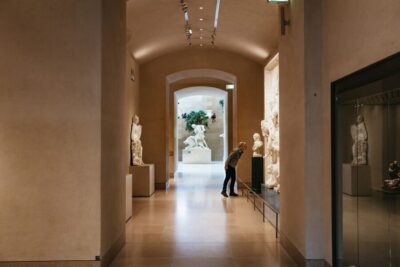
Louvre Museum Entry Ticket With Host and River Cruise
Read our review →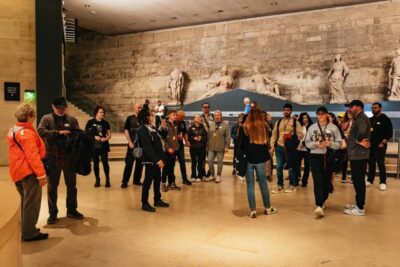
Priority Access Louvre with Host -Direct to Mona Lisa
Read our review →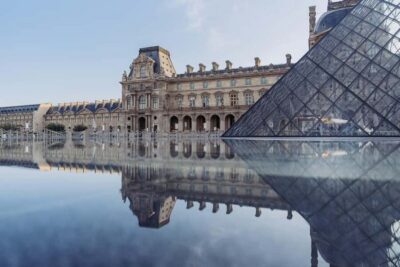
Mona Lisa & Louvre Masterpieces Tour with Reserved Access
Read our review →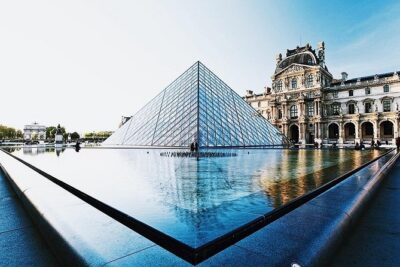
Louvre Museum – Exclusive Guided Tour (Entry Included)
Read our review →
Louvre Reserved Ticket and River Cruise Combo
Read our review →Browse the lists this tour appears in