
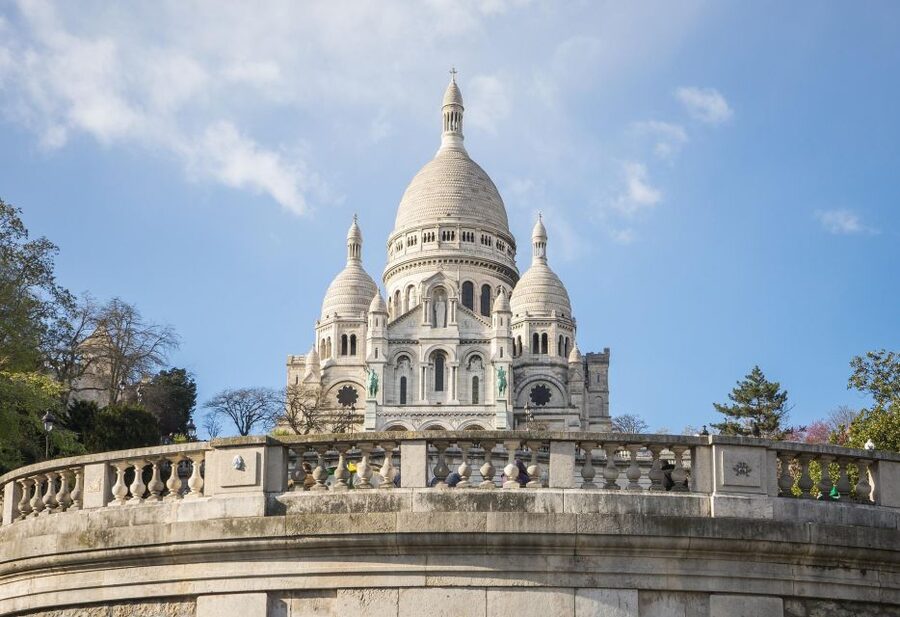
Reviewed · MONTMARTRE TOURS
Montmartre Walking Tour in English
Montmartre’s story runs from a grisly medieval legend to the cafés and cabarets that drew artists such as Van Gogh, Picasso, and Toulouse-Lautrec. This 150-minute walk links that past to familiar sights including the Moulin Rouge and the café from Amélie.
I like two things in particular: the mix of artistic history and everyday neighborhood streets, and the chance to hear the stories behind places you might otherwise pass without understanding. Guides have included Eva, whose storytelling was described as humorous and passionate, and Raj, who was praised for sharing plenty of information.
One consideration: this is a pay-what-you-wish tour, not a standard $31 guided walk. The $31 is a small online booking fee, and you choose what to pay the guide. The pace may also feel measured if you prefer less commentary and more walking.
- Start at Metro Blanche: Meet outside the station’s only exit and look for the yellow umbrella.
- Follow the artists’ trail: The route includes Van Gogh’s house and studios associated with Picasso and Modigliani.
- Look for Montmartre’s older village life: A vineyard and one of Paris’s oldest cabarets connect the neighborhood to its less urban past.
- See the Moulin Rouge: The famous cabaret links the hill’s nightlife to its artistic reputation.
- Plan for a full walk: The tour lasts 150 minutes and runs in English, rain or shine.
Montmartre’s village past, not just its postcard views
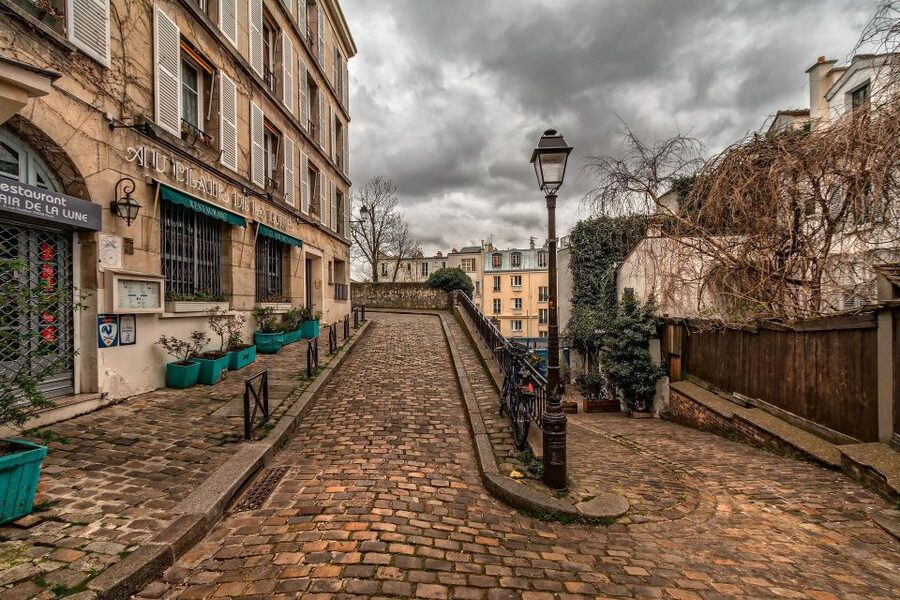
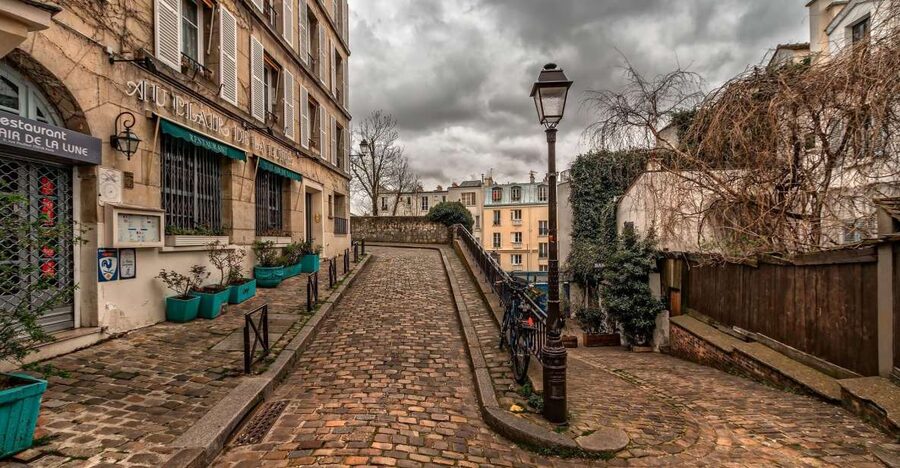
Montmartre is easy to mistake for a pretty backdrop: steep lanes, ivy-covered façades, cafés, and winding streets. But the neighborhood’s appeal makes more sense when you know it was once a village on the hill, surrounded by vineyards, orchards, and gardens, rather than part of the city’s dense center.
The name comes from Mons Martyrum, or Hill of Martyrs. Its best-known origin story concerns Saint Denis, Paris’s first bishop. According to legend, Roman authorities beheaded him for refusing to renounce his faith. He then picked up his head and walked down the hill before finally collapsing. It is a grim tale, and very much a legend, but it gives the hill a long memory that predates its bohemian fame.
Montmartre also had a practical side. As many as 13 windmills once ground grain on the slopes. Only two survived, and mills remain an emblem of the area. The tour’s historical thread helps explain why the neighborhood’s identity is not just about painters and nightlife: it grew from a working village, then changed as Paris expanded and artists and entertainment businesses arrived.
From low rents to artists’ studios
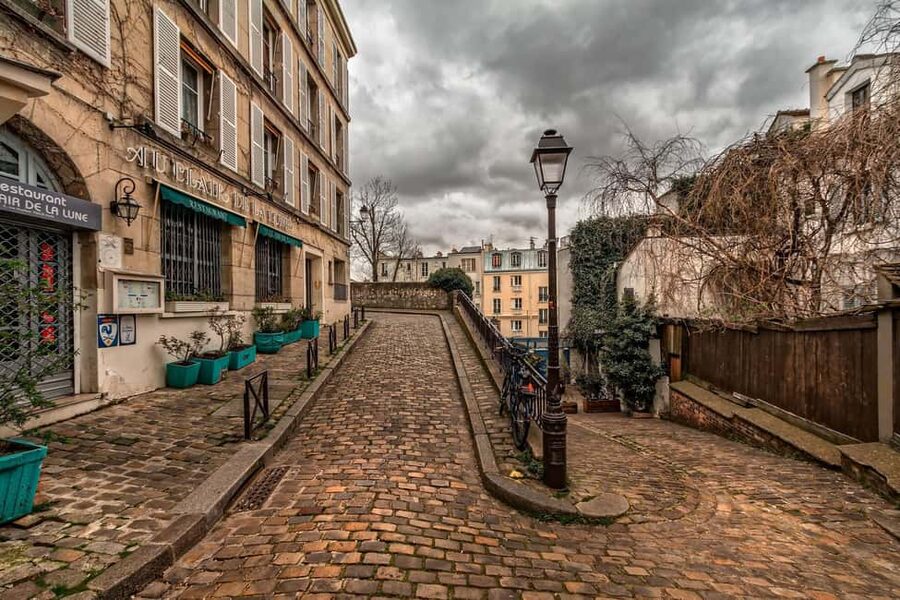
In the 19th century, Montmartre offered cheap wine, inexpensive rents, and a relaxed atmosphere. Those conditions drew artists from many places, and the neighborhood became a meeting point for painters, writers, performers, and people looking for a less formal life than the city center offered.
The names associated with Montmartre are a roll call of modern art: Monet, Renoir, Van Gogh, Picasso, Modigliani, Matisse, Degas, and Toulouse-Lautrec. The tour highlights Van Gogh’s house and studios linked with Picasso and Modigliani. These places are useful anchors for the story, even if you should not assume that the walk includes entry to private homes or studio interiors. The experience is a guided street walk, not a museum visit.
I find this sort of neighborhood history most valuable when it connects famous names to the actual streets they inhabited. A list of artists is easy to read anywhere; a guide can place their lives within Montmartre’s character, its low-cost rooms, cafés, and shifting social scene. The provided tour information does not spell out exactly what the guide says at each stop, so expect a historical narrative rather than a scripted list of detailed biographical facts.
More Montmartre tours in Paris:
- Montmartre Hidden Gems and Scenic Highlights Walking Tour
★ 5.0 · 2,684 reviews - Montmartre Hill French Gourmet Food and Wine Tasting Walking Tour
★ 5.0 · 2,588 reviews - Paris: Montmartre Cheese, Wine & Pastry Guided Walking Tour
★ 4.8 · 2,255 reviews
Café des Deux Moulins and the pull of movie Montmartre
Café des Deux Moulins is best known internationally from the film Amélie. Its place on the route gives you a clear example of how Montmartre’s image has grown beyond painting and cabaret. Today, people come looking for places familiar from films as well as for the neighborhood’s older artistic associations.
That can be a fun stop if you enjoy seeing a real street address connected to a movie. It can also feel less special if you expect a quiet, untouched local café scene. The tour identifies the café as a highlight, but it does not promise a meal, a drink, or time inside. Treat it as a landmark and a chance to understand how film has added another layer to Montmartre’s popularity.
The useful question to ask yourself is what you want from the stop. If you like tracing the settings of a favorite film, you will appreciate the connection. If you are mainly after painting history, the Van Gogh and studio references may matter more.
A vineyard and an old cabaret on the hill
Montmartre’s vineyard is a reminder of the landscape that preceded the neighborhood’s urban transformation. It helps make the old village story tangible: before cafés and artists’ quarters became its calling cards, this hill had gardens, orchards, and cultivated slopes. The tour also includes an old cabaret, connecting that rural past to the nightlife that later helped define the area.
The itinerary describes this as the vineyard and the oldest cabaret in Paris, but it does not specify whether you go inside either place. Expect to see and hear about them from the route rather than assume an interior visit. That distinction matters when you are comparing a walking tour with a ticketed attraction.
The cabaret history is also part of a larger question: which came first, the artists or the entertainment scene? Montmartre’s cafés, dance halls, and cabarets, including Le Chat Noir and the Moulin Rouge, offered places to gather and perform. Artists were drawn to the area’s low rents and easygoing mood, while the nightlife fed its reputation for rule-breaking. The two strands grew together.
Moulin Rouge and the neighborhood’s nightlife
The Moulin Rouge is the most famous name on the highlights list, and a natural endpoint for a walk through Montmartre’s entertainment history. Its cancan dancers became a symbol of the era, and Toulouse-Lautrec is among the artists most closely associated with the neighborhood’s cabaret culture.
The tour does not advertise a show or entry to the Moulin Rouge. You should expect to see the landmark and hear how cabarets helped shape Montmartre, not to go inside for a performance. That is still worthwhile: the building gives the story a memorable focal point, and the guide can tie it to the cafés, dance halls, and artistic community that made the district famous.
The contrast is part of the fun. A few minutes’ walk can take you from a quiet, crooked lane to the bright reputation of a celebrated cabaret. Montmartre’s charm lies in those changes of mood, though the famous sights also draw plenty of people. If you want a completely secluded stroll, this is not the right corner of Paris to expect one.
More walking tours in Paris:
- Paris Top Sights Half Day Walking Tour with a Fun Guide
★ 5.0 · 2,893 reviews - Paris Île de la Cité and Notre-Dame Walking Tour With Crypt
★ 5.0 · 2,272 reviews - Paris in a Day: Louvre or Orsay, Eiffel Tower, City Walk & Cruise
★ 5.0 · 1,956 reviews - Paris: Montmartre Highlights Walking Tour with a Local Guide
★ 4.9 · 1,668 reviews
What the 150-minute walk feels like
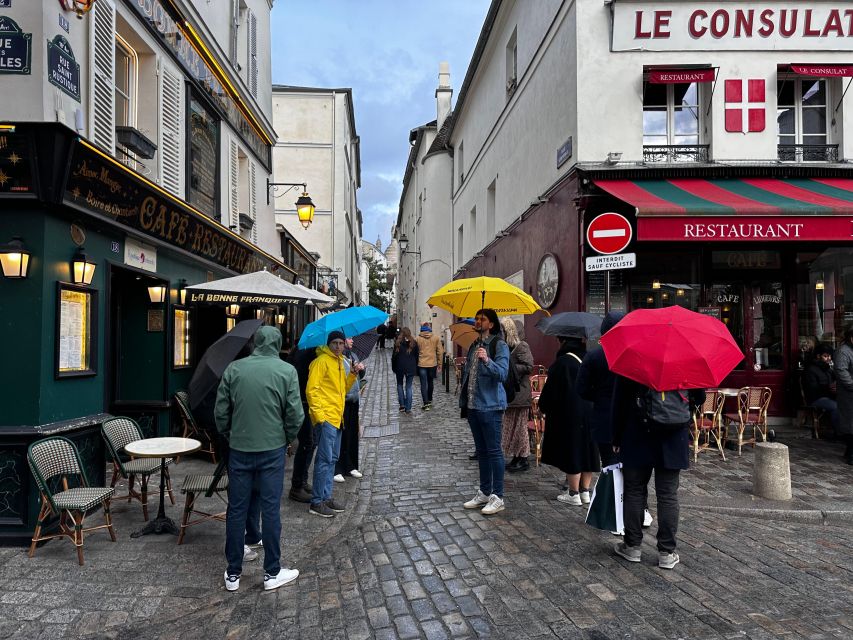
Two and a half hours is enough time for a broad introduction to the hill and its stories, but it is still a walking tour, not a slow afternoon with long café stops. The route is built around a narrative: the medieval legend, village life, mills, the arrival of artists, and the cabaret era. That structure helps the landmarks feel connected rather than like a checklist.
The pace may depend on the guide and the group. One participant wished for faster walking and less explanation, while the overall feedback particularly praised guides for being informed, interesting, friendly, patient, and engaging. That is a useful trade-off to consider. If you enjoy context and anecdotes, the talk is part of the value. If you want to cover ground quickly, a self-guided walk may suit you better.
Guides have included Eva and Raj. Eva was singled out for bringing Montmartre’s history to life with humor and passion; Raj was praised for sharing plenty of useful information. Guide assignments can vary, so do not book expecting a particular person unless the operator confirms that detail.
Is $31 good value for this tour?
The stated $31 per person is not the full cost of a conventional guided tour. It is a small online booking fee for a general pay-what-you-wish walk, and you decide how much to pay the guide afterward. Keep that distinction in mind when setting your budget. The final amount is partly your choice, but the guide’s payment is separate from the booking fee.
Value depends on what you want. If you are comfortable paying the guide an amount that reflects the time and work involved, this format offers a flexible way to get a local introduction without paying a fixed tour price upfront. The guide’s narrative is the main benefit: it links the hill’s legends, artists, village traces, and cabarets in a single outing.
There is no hotel pickup or drop-off included, and the meeting point is at Metro Blanche. That keeps the arrangement simple, but you need to get yourself to the start and plan your onward journey. The tour runs in English and lasts 150 minutes. You can reserve now and pay the booking fee later, and cancellation is available up to 24 hours in advance for a full refund.
Weather, meeting point, and sensible expectations
The tour goes ahead in rain or cold weather, with cover sought when conditions call for it. Dress for the forecast and for a walk through Montmartre’s sloping streets. No specific footwear rules are provided, but comfortable walking shoes are a sensible choice for a 150-minute outing.
Meet in front of Metro Blanche, at the station’s only exit, and look for the yellow umbrella. That clear marker helps you identify the group, but allow enough time to reach the station and find the meeting spot. The tour does not include pickup from your hotel.
Keep expectations practical. The listed highlights include places to see and discuss, not a promise of access to every building. The experience is best understood as a guided orientation to Montmartre’s stories and streets, with recognizable landmarks along the way.
Who should book this Montmartre walk?
I would choose this tour if you want an organized introduction to Montmartre and enjoy hearing how a place changed over time. It suits first-time visitors who want to connect the Moulin Rouge, Van Gogh, Picasso, the vineyard, and Amélie into one neighborhood story rather than visit each point without context.
It is also a good fit if you enjoy a guide who talks through the history at a thoughtful pace. The strong praise for warmth, humor, patience, and interesting explanations suggests that the quality of the narration is central to the experience. If you value that sort of human context, it may be worth more to you than a fast walk with a map.
I would think twice if you want a short, brisk route with minimal commentary, or if you expect paid admission and interior visits to the featured places. The tour is outdoors, lasts two and a half hours, and uses a pay-what-you-wish model with a separate booking fee. Book it for the stories and the walk through the neighborhood, and treat the famous landmarks as stops along the way rather than attractions with guaranteed entry.
FAQ
How long is the Montmartre walking tour?
The tour lasts 150 minutes, or two and a half hours.
What language is the tour in?
The live tour guide speaks English.
Where is the meeting point?
Meet in front of Metro Blanche, at its only exit, and look for the yellow umbrella.
What places are included among the highlights?
Highlights include Café des Deux Moulins, known from Amélie, Van Gogh’s house, studios associated with Picasso and Modigliani, a vineyard, an old cabaret, and the Moulin Rouge.
Is the $31 price the full tour payment?
No. The $31 is a small online booking fee. This is a pay-what-you-wish tour, and you decide what to pay the guide.
Is hotel pickup included?
No. Hotel pickup and drop-off are not included.
Does the tour run in bad weather, and can I cancel?
The tour runs rain or shine, with cover sought if it rains or gets cold. You can cancel up to 24 hours in advance for a full refund.
Recently reviewed in Paris
- Private Paris WWII History Tour: Occupation & Resistance★ 4.4 · 3 reviews
- Private Highlights of Paris Bike Tour★ 4.9 · 12 reviews
- Paris: Louvre Museum Highlights Small-Group Guided Tour★ 4.8 · 157 reviews
- Private Orsay Museum Tour: 2h Highlights w/ Monet & Van Gogh★ 5.0 · 4 reviews
- Private Mont Saint-Michel trip from Paris Calvados tasting★ 5.0 · 4 reviews
- Highlights of Paris: Private 6-Hour Vintage 2CV Tour★ 3.9 · 19 reviews
- Private Giverny Monet’s House & Gardens Trip from Paris★ 4.9 · 11 reviews
- Private Guided Tour, The Louvre by night !★ 4.2 · 30 reviews
Montmartre Tours, compared.

Montmartre Hidden Gems and Scenic Highlights Walking Tour
Read our review →
Montmartre Hill French Gourmet Food and Wine Tasting Walking Tour
Read our review →
Montmartre Cheese, Wine & Pastry Guided Walking Tour
Read our review →
Montmartre Highlights Walking Tour with a Local Guide
Read our review →
Sacré-Coeur and Montmartre Tour with Expert Guide
Read our review →
Private Montmartre Food Tour with Wine, Cheese & Pastries
Read our review →
Paris Montmartre Food Tour – A Full French Meal by Do Eat Better
Read our review →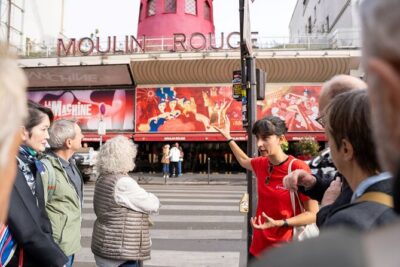
Hidden Montmartre: Paris’ Secret Streets Walking Tour
Read our review →Browse the lists this tour appears in