
Reviewed · PARIS COOKING CLASSES
Paris: Croissant Baking Class with a Chef
The best part of this Paris baking class is that you do the work yourself: mixing and handling dough, folding it into layers, shaping crescents, and tasting the warm results. I like the small group of up to eight, which leaves room for individual help, and the chef’s mix of practical technique with the reasons behind it.
One thing to know before booking: croissant dough takes muscle to roll, and the process includes resting time. The class lasts three hours, so it suits you best if you’re happy to spend a good part of a morning or afternoon at the workbench.
At a glance
- Small class, personal help: The group is limited to eight, with the chef guiding you through each stage.
- A real pastry skill: Learn folding and shaping, plus how butter and proofing affect the finished croissant.
- English instruction: Chef Léo leads the class, and Maria has also taught sessions.
- Warm pastries to taste: You sample pastries made during class, with a recipe to take home.
- A workout for your arms: Rolling the dough requires physical effort, so it is not a sit-back-and-watch activity.
- Optional colour: Selected sessions offer a bi-colour croissant class, with the ingredients and instruction included if you choose that option.
A small bakery kitchen, not a demonstration hall
Studio Pâtisserie meets at a building with a gray storefront, near Metro Line 2’s Rome station and Line 3’s Villiers station. That gives you a straightforward public-transport approach, though you should check the exact meeting instructions before setting out.
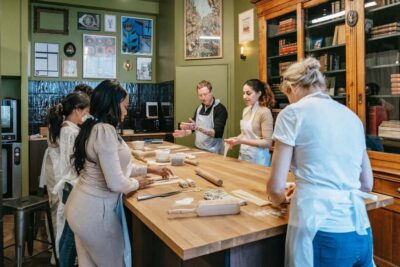
Inside, the class is built around a shared workstation and professional-grade kitchen tools. With a maximum of eight participants, you are not simply watching a chef work from across a room. You handle the dough and can ask questions as you go.
The instructor is Chef Léo, while Maria has led classes too. The teaching style described in class accounts is lively and patient, with the chef checking that people understand both what to do and why. That matters with croissants: the steps can look simple in a demonstration, but small differences in handling and timing affect the result.
Instruction is in English. You do not need to arrive as an experienced baker, and the class has suited beginners as well as people who already enjoy baking. If you have never made laminated dough, the close guidance is useful; if you have, the chef’s tips on technique and dough handling may still give you something to take home.
More cooking classes in Paris:
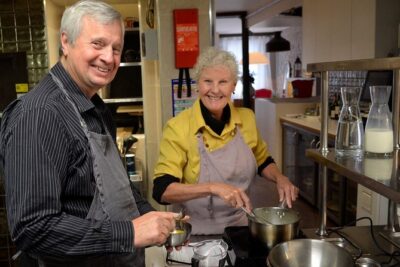
- Paris Cooking Class and Lunch with Wine plus Market Visit Option
★ 5.0 · 1,024 reviews - Paris Croissant Small-Group Baking Class with a Chef
★ 5.0 · 910 reviews - Paris: Macaron Class at Galeries Lafayette
★ 4.3 · 905 reviews
From dough to flaky layers
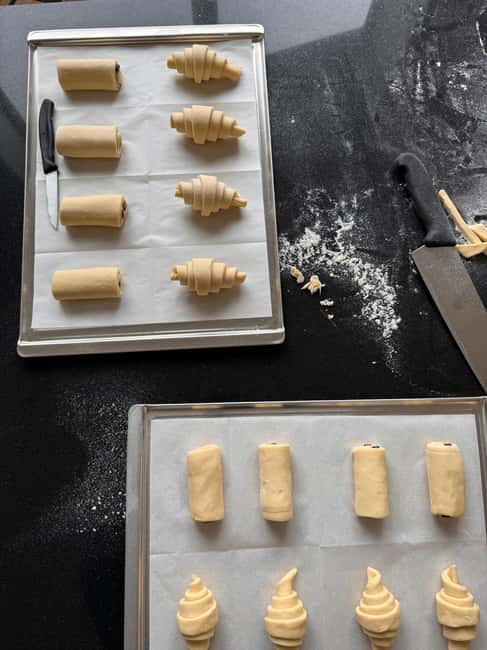
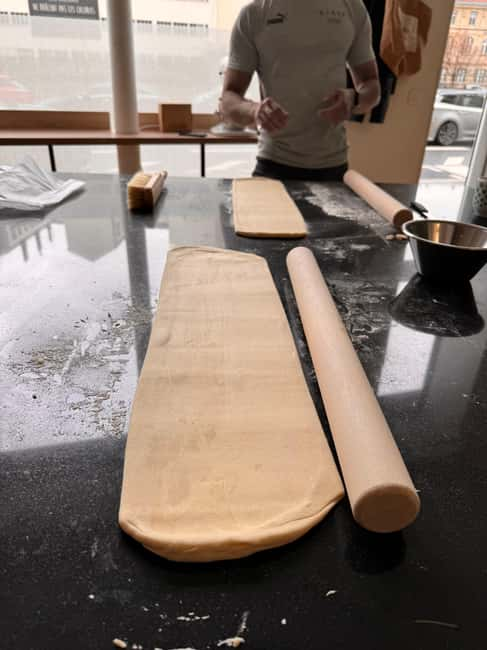
The session starts with the dough, the foundation for everything that follows. You work through its preparation with the chef rather than skipping straight to the satisfying part, shaping the crescents. That hands-on start helps you understand why croissants need care, not just a good recipe.
Next comes folding. This is the defining craft of the class: the dough is folded in a precise way to build the thin layers that bake into a flaky pastry. The chef guides each stage and can correct your approach as you work, a practical advantage over trying to learn from a recipe alone.
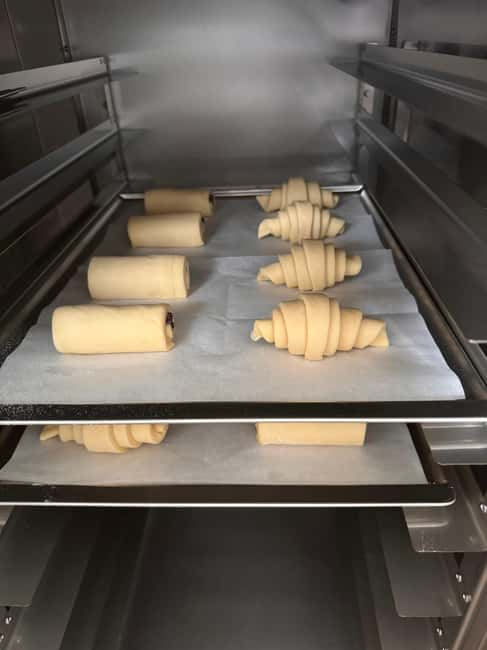
Croissant dough needs to rest and rise between steps. That means the class is not three hours of nonstop rolling, and there may be pauses while the dough rests. The waiting is part of the process, not wasted time: it gives the dough time to develop and lets the chef explain what is happening.
During those pauses, you hear about the science behind the pastry, including the role of butter quality and proofing. This is the kind of detail that helps you make sense of a recipe later. At home, you can follow instructions more confidently when you know what a step is meant to achieve.
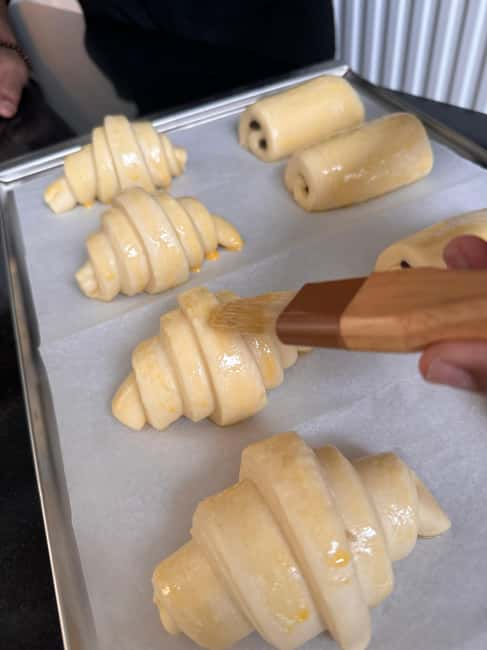
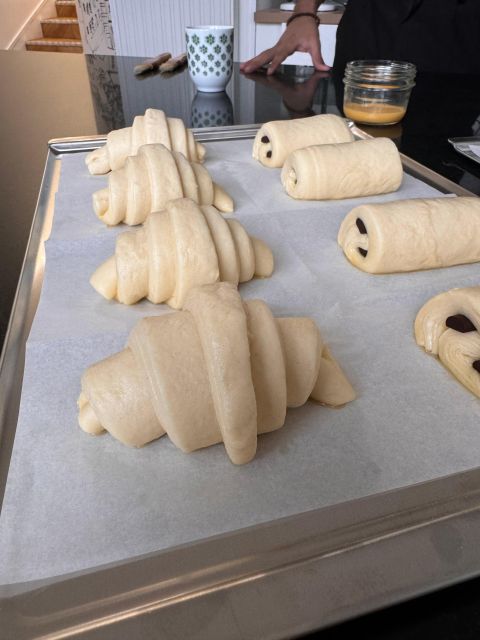
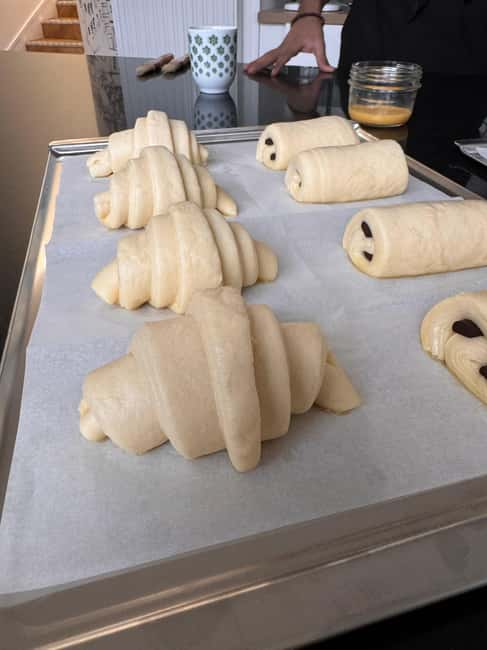
The final stages bring the dough back to the bench. You cut, roll, and shape it into the familiar crescent form, with the chef watching and offering tips. This is where the pieces start to look like croissants, but shaping takes some practice. Do not expect every pastry to come out identical. The point is to learn the movements and see how your work changes the finished bake.
Butter, chocolate, or bi-colour
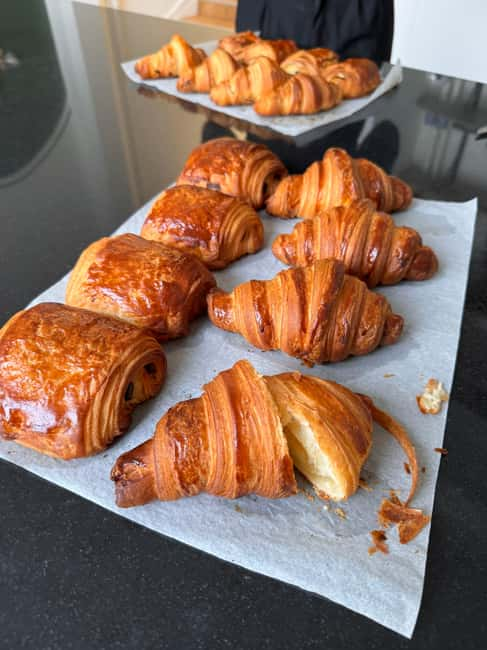
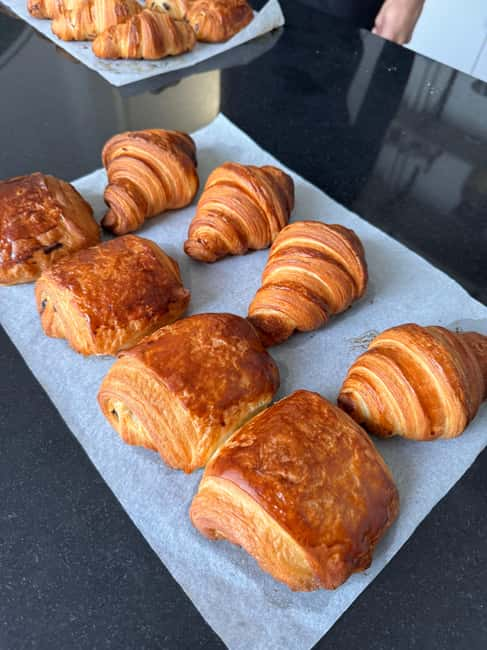
The standard class focuses on croissants, and some sessions also make pain au chocolat. Class participants have described making a mix of butter croissants and chocolate pastries, sometimes eight pieces per person. The precise amount and mix are not promised as a set number, so treat any extras as a welcome bonus rather than a guaranteed take-home count.
You will have ample opportunity to sample freshly baked pastries made during the class. Eating one warm from the oven is a fine reward for the kneading and rolling, and it lets you judge the texture you have just worked to create. Depending on the session’s output, you may also have pastries left to take away.
On selected days, you can book the bi-colour croissant option. It adds the method of incorporating colour into the dough, along with the ingredients for that version. It is aimed at experienced bakers and curious enthusiasts alike, but check that the option is available on your chosen date before booking.
What you take away besides pastry
The recipe is included, giving you a reference when you want to try the process at home. Just keep expectations realistic: a recipe cannot reproduce the chef’s hands-on corrections or the professional equipment in the studio. The class gives you a better starting point, not a guarantee that your first home batch will match a Paris bakery.
The most useful takeaways may be the small cues: how the dough should feel, how to approach a fold, and why proofing deserves attention. Those are harder to learn from written instructions, and they are the kind of details a small class can make room for.
You also leave with a clearer sense of the time and effort behind a croissant. A pastry that looks effortless in a bakery case depends on careful handling and patience. That makes the next one you order in Paris taste a little more interesting, even if you never bake another at home.
More hands-on workshops in Paris:
- Fragonard Paris: Mini Perfume Workshop
★ 4.5 · 1,924 reviews - Paris: 2-Hour Perfume Creation Workshop
★ 4.8 · 731 reviews - Paris: French Croissant Baking Class with a Chef
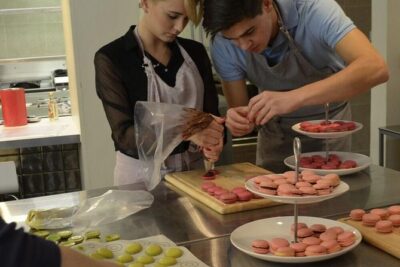
★ 4.9 · 712 reviews - Paris Cooking Class: Learn How to Make Macarons
★ 5.0 · 634 reviews
Is $140 a fair price?
At $140 per person, this is a substantial spend for a three-hour activity. The price includes the chef’s instruction, ingredients, use of professional kitchen equipment, the recipe, and tasting the pastries you make. You are paying for a practical lesson and a memorable food experience, rather than simply buying a pastry-making demonstration.
The small group is a meaningful part of the value. With no more than eight people, the instructor can interact with each participant and help when a fold or shaping step feels uncertain. That personal attention is especially useful for a hands-on skill where it is easy to repeat a mistake if no one catches it.
It is a better fit for someone who wants to learn than for someone seeking the cheapest breakfast in Paris. You could buy excellent pastries for far less, but you would not get to make them or understand the process. If you enjoy cooking, baking, or food culture, the class offers a good balance of instruction, participation, and something delicious at the end.
Who will enjoy this class most
This is a strong choice for couples, friends, solo visitors, and families with older children who like doing things together. The small group can make it feel social without turning the session into a crowd, and the shared work gives you plenty to talk about beyond the usual sightseeing.
It also suits mixed-experience groups. A keen home baker can focus on technique, while a beginner can learn the process from the start. The class is not limited to people who already know their way around a kitchen.
There are age and effort limits to keep in mind. Children under 15 are not suitable, and anyone under 17 must attend with a paying adult. The dough requires physical strength to roll, so consider that before booking for someone who may find sustained kneading or rolling difficult.
Practical details before you go
Plan for three hours, and allow a little breathing room around the class rather than scheduling a tight connection afterward. Resting dough creates natural pauses, but the session still has a full sequence of preparation, folding, shaping, baking, and tasting.
The meeting point is Studio Pâtisserie, at the building with a gray storefront. Rome on Metro Line 2 and Villiers on Line 3 are the nearest stations. Instruction is in English, and the kitchen tools and ingredients are provided.
You can reserve now and pay later, and cancellation is free up to 24 hours in advance for a full refund. If the bi-colour option interests you, make sure it is offered on your selected day. The class is hands-on, so wear something you are comfortable working in, and arrive ready to use your arms.
Should you book it?
Book this class if you want more than a pastry stop and are curious about how croissants are made. The small group, close instruction, and chance to taste your work make it a particularly appealing food activity, while the practical explanations give you skills to try again at home.
Skip it if you have limited time, do not enjoy kitchen work, or want a low-effort activity. Three hours and some strenuous rolling are part of the deal. For food lovers who are willing to get their hands involved, though, this is a memorable way to spend part of a Paris day.
FAQ
How long is the croissant class?
The class lasts three hours. The dough rests during parts of the process, so the work is broken up rather than continuous.
Where does the class meet?
It meets at Studio Pâtisserie, in the building with a gray-colored storefront.
Which metro stations are nearby?
The nearest stations are Rome on Metro Line 2 and Villiers on Metro Line 3.
Is the class taught in English?
Yes. The instructor language is English.
How many people are in the group?
The class is limited to eight participants.
Who teaches the class?
Chef Léo is listed as the instructor. Maria has also taught sessions.
Are ingredients and equipment included?
Yes. Ingredients and professional-grade kitchen equipment and tools are included.
Can children attend?
Children under 15 are not suitable for the class. Anyone under 17 must be accompanied by a paying adult.
Is the bi-colour croissant class always available?
No. The bi-colour option is available on selected days, so check availability for your chosen date.
Recently reviewed in Paris
- Private Paris WWII History Tour: Occupation & Resistance★ 4.4 · 3 reviews
- Private Highlights of Paris Bike Tour★ 4.9 · 12 reviews
- Paris: Louvre Museum Highlights Small-Group Guided Tour★ 4.8 · 157 reviews
- Private Orsay Museum Tour: 2h Highlights w/ Monet & Van Gogh★ 5.0 · 4 reviews
- Private Mont Saint-Michel trip from Paris Calvados tasting★ 5.0 · 4 reviews
- Highlights of Paris: Private 6-Hour Vintage 2CV Tour★ 3.9 · 19 reviews
- Private Giverny Monet’s House & Gardens Trip from Paris★ 4.9 · 11 reviews
- Private Guided Tour, The Louvre by night !★ 4.2 · 30 reviews
Paris Cooking Classes, compared.
Paris Cooking Class and Lunch with Wine plus Market Visit Option
Read our review →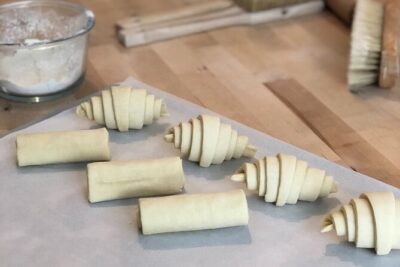
Paris Croissant Small-Group Baking Class with a Chef
Read our review →
Paris Cooking Class: Learn How to Make Macarons
Read our review →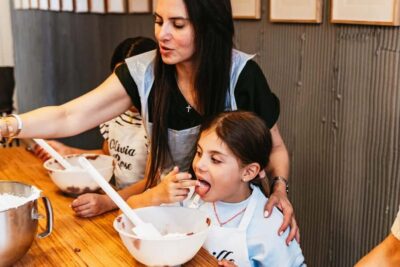
A Morning in Paris Food Tour: Croissants, Baguettes & Chocolate
Read our review →
Paris Evening Cooking Class French Dinner and Market Visit Option
Read our review →Browse the lists this tour appears in