

Reviewed · SAINTE-CHAPELLE TOURS
Paris: Conciergerie Ticket with Histopad
The Conciergerie puts you inside a building that changed from 14th-century royal palace to prison during one of France’s most turbulent periods. Its medieval halls and prison spaces make the past feel close, not safely tucked away in a museum case.
I like two things in particular: the chance to see the Salle des Gens d’Armes, Europe’s largest remaining medieval hall, and the Histopad’s 3D reconstruction of Marie Antoinette’s cell. The audio guide also comes in nine languages, giving you a useful way to make sense of what you’re seeing.
The main consideration is that this is self-guided, and finding your way through the visit may take a little patience. The ticket does not include nearby Sainte-Chapelle, and the Histopad is distributed only until 4:15 PM.
Key points to know
- A royal palace turned prison: The Conciergerie began as a royal residence before becoming a prison after the royal family moved elsewhere.
- A vast medieval hall: The Salle des Gens d’Armes is the largest remaining medieval hall in Europe.
- A close look at Marie Antoinette’s confinement: Visit the chapel that was once her prison cell, and use the Histopad’s 3D recreation to picture the space as it was.
- A self-guided visit: An audio guide is included in nine languages; the Histopad offers a separate augmented-reality layer in seven.
- A modest ticket price: At $15 per person, it can be a worthwhile history-focused stop, especially if you make time for the medieval and revolutionary sections.
- Check the clock: The last entry is 30 minutes before closing, and Histopads are distributed until 4:15 PM.
From royal palace to revolutionary prison
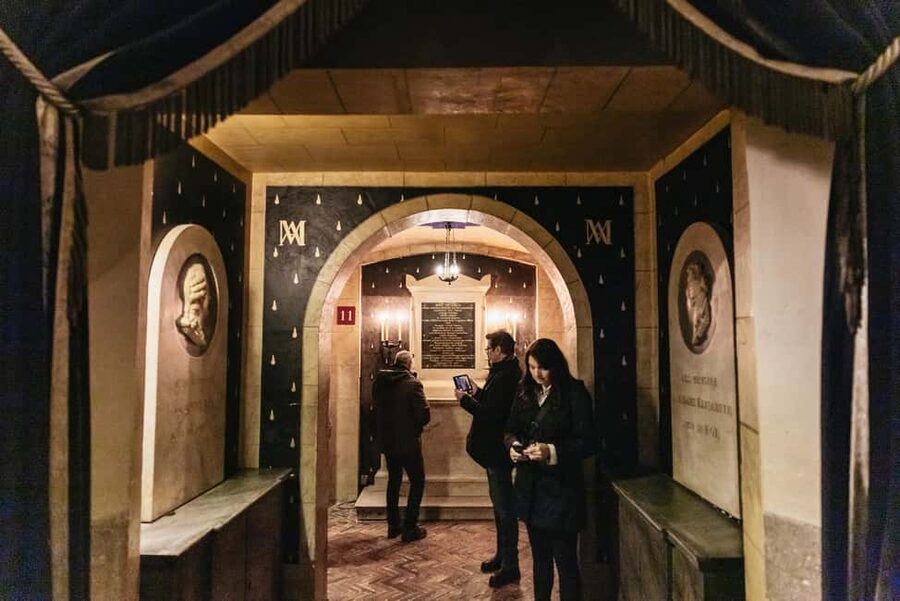
The Conciergerie’s story is its strongest argument for a visit. Built as a royal palace in the 14th century, it later took on a very different role when the royal family moved its residence. During the French Revolution, it became a prison remembered as the antechamber to the guillotine.
That shift gives the building two distinct sides. You can look at the scale and structure of a medieval royal complex, then consider how its rooms were repurposed for confinement. The change is not just a date in a history book. It is built into the place itself.
The Conciergerie is not a general overview of all French history, and you should not expect a guided walk with a live expert. Instead, you move through the site on your own, using the audio guide and, if you choose, the Histopad to add context. That freedom suits visitors who like to linger, but it puts more responsibility on you to keep track of the route.
I would arrive with a simple plan: look first at the building’s medieval spaces, then give the prison areas and Marie Antoinette’s story time of their own. If you rush from room to room, you may see the landmarks without connecting them to the building’s changing purpose.
More Sainte-Chapelle visits in Paris:
- Paris: Sainte-Chapelle and Conciergerie Combined Tickets
★ 4.5 · 8,580 reviews - Paris: Sainte Chapelle Entry Ticket
★ 4.5 · 8,439 reviews - Paris: Sainte-Chapelle, Conciergerie, Notre Dame Guided Tour
★ 4.8 · 727 reviews
The Salle des Gens d’Armes
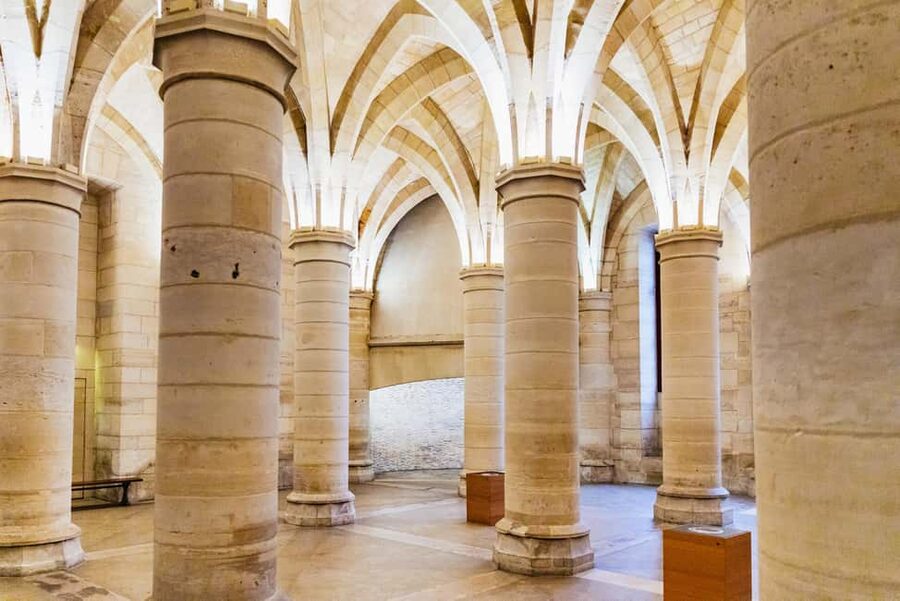
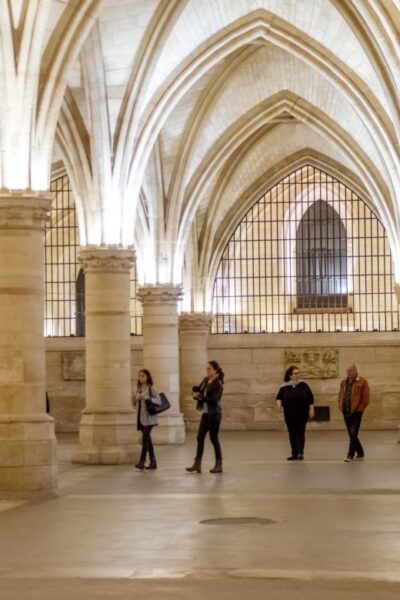
The Salle des Gens d’Armes is a natural place to pause. It is described as the largest remaining medieval hall in Europe, a distinction that makes its scale part of the visit rather than just a background detail. Take a moment to look across the room and imagine the building when it served as a royal palace.
This is the kind of space that can make a visit feel worthwhile even before you reach the more famous revolutionary history. The hall gives you a sense of the Conciergerie as a major medieval building, not simply as the prison associated with the Revolution. That broader context helps explain why the site’s later use feels so stark.
The hall is also a good place to get oriented. A practical weakness of a self-guided visit is that the route may not always be obvious. If you find yourself unsure where to go next, use the audio guide and signage to re-establish your bearings rather than hurrying through the next room.
Cells, chapel and Marie Antoinette
The prison spaces are the emotional center of the visit. You can see cells associated with criminals and spaces connected with heroes of the French Revolution. The contrast between the building’s royal beginnings and its later life as a place of confinement gives these rooms particular weight.
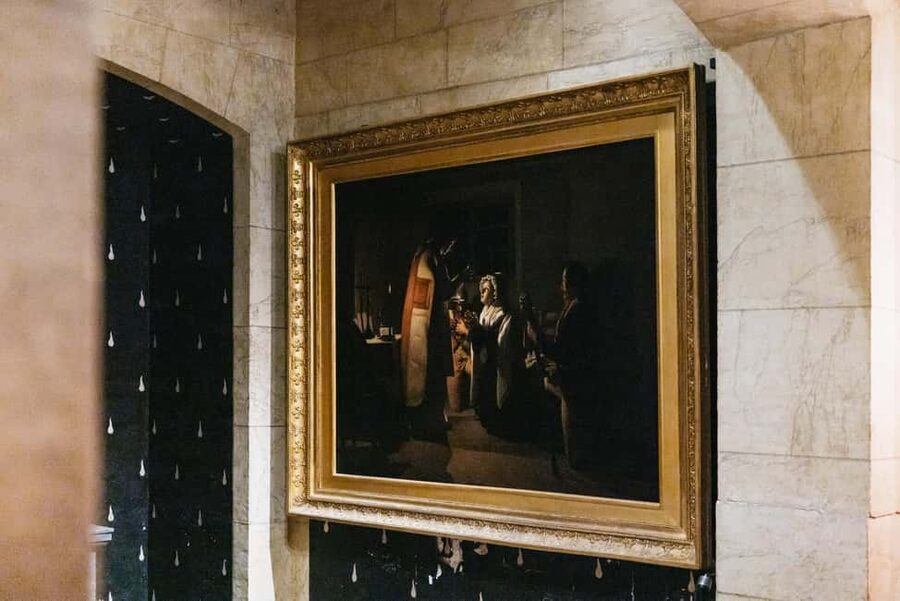
The chapel is especially significant because it was once the prison cell where Marie Antoinette was held. It is a compact detail with a large story behind it: the room’s religious use and its history as a place of confinement occupy the same space. Take time to notice that double meaning rather than treating it as just another stop.
The Histopad offers a 3D reproduction of Marie Antoinette’s cell. This can help you picture spaces and arrangements that are no longer visible in the same form. Augmented reality is most useful here as a way to compare the present room with an earlier version, not as a substitute for looking at the real architecture around you.
The device also lets you explore medieval rooms and spaces that have disappeared. That is a useful feature in a building whose appearance and function changed over time. Still, the Histopad is optional, and the audio guide is already included. If you prefer to keep your visit simple, you can focus on the actual rooms and use the audio guide for context.
Audio guide or Histopad?

The included audio guide is available in Chinese, English, French, German, Italian, Spanish, Japanese, Korean and Portuguese. It gives you a way to follow the history in your preferred language while moving at your own pace. Since this is not a live guided tour, the audio guide is the main tool for explaining what you are seeing.
The Histopad is a separate, more visual aid. Its 3D reconstruction of Marie Antoinette’s cell is available in French, English, German, Spanish, Italian, Japanese and Chinese. The audio guide has two additional language options, Korean and Portuguese, so check which tool matters more to you if language access is a deciding factor.
I would choose the Histopad if you are curious about how rooms once looked, or if a visual reconstruction helps you follow historic spaces. If you mainly want spoken context, the audio guide may be enough. You do not need to use both devices in every room to get value from the visit.
One timing detail matters: Histopads are distributed until 4:15 PM. The site’s last entry is 30 minutes before closing, but that does not mean you can count on receiving a Histopad at the very end of the day. If the augmented-reality feature is important to you, arrive early enough to collect it.
More tickets in Paris:
- Paris: Louvre Museum Timed-Entrance Ticket
★ 4.6 · 71,977 reviews - Disneyland® Paris 1-Day Ticket
★ 4.6 · 49,412 reviews - Paris: Versailles Palace and Gardens Full Access Ticket
★ 4.6 · 41,579 reviews - Paris: Arc de Triomphe Rooftop Tickets
★ 4.6 · 34,264 reviews
Making sense of the route
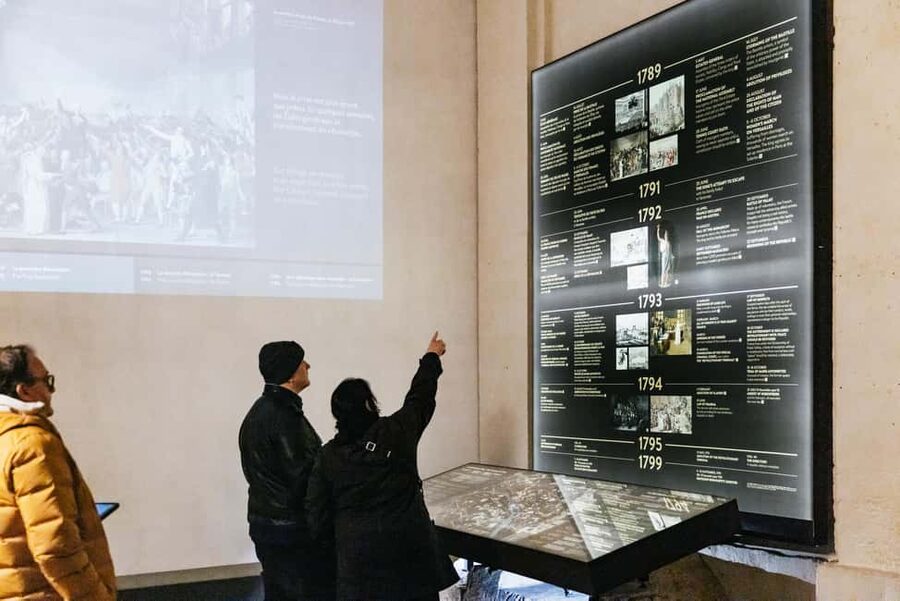
This is a self-guided visit, so you set the pace. That is a benefit if you like to spend extra time in the hall or pause over the prison story. It can be less convenient if you expect a guide to lead you from room to room and explain how each stop fits together.
The route may not feel obvious at every turn. I would keep the audio guide handy and allow time to look for the next point rather than assuming the visit follows a simple straight line. The experience is more rewarding when you can focus on the rooms instead of worrying about whether you missed a turn.
A sensible approach is to begin with the medieval character of the building, take in the Salle des Gens d’Armes, and then concentrate on the prison areas and Marie Antoinette’s chapel. Treat that as a way to organize your attention, not a guaranteed official route. The information available does not promise a specific sequence through the rooms.
The ticket is valid for one day, but that does not mean the visit itself lasts all day. The length depends on how much time you spend with the audio guide, the Histopad and the historic spaces. Give yourself enough time to read and listen, especially if you want to explore the augmented-reality features rather than make a quick circuit.
What $15 gets you
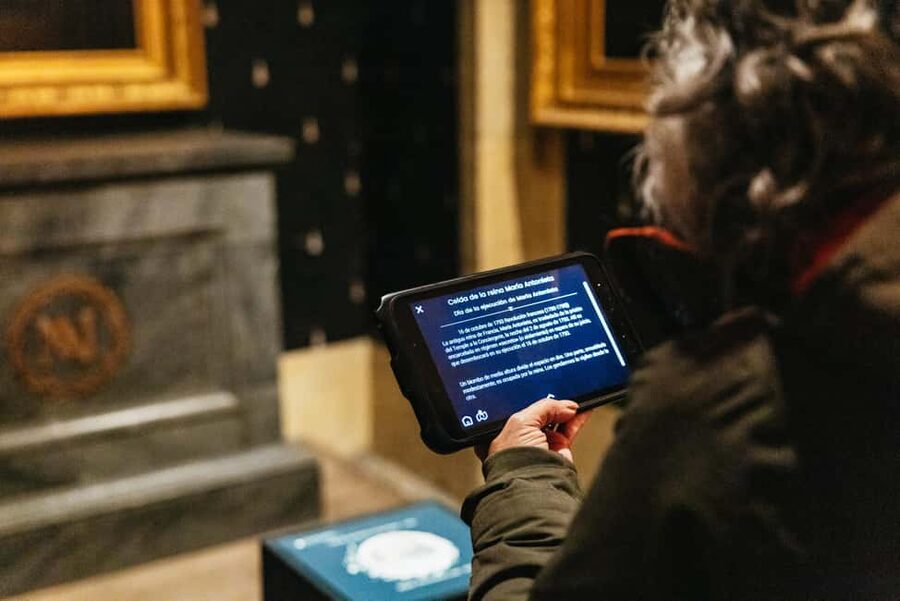
At $15 per person, the ticket includes entrance and a self-guided visit. The audio guide is included, and the Histopad provides an additional visual layer, including the 3D reproduction of Marie Antoinette’s cell. For a visitor interested in medieval architecture and revolutionary history, that is a solid amount of interpretation for a fairly modest price.
Value depends on your interests. If you want a short look at a historic building and are not inclined to use an audio guide, the visit may feel less substantial. If you enjoy understanding how a site changed over time, the combination of palace, prison, medieval hall and revolutionary-era spaces gives you more to think about than a single famous room.
Remember that the ticket does not include Sainte-Chapelle, even though it is also on Île de la Cité. Plan for it as a separate visit and ticket if it is on your list. Transportation is not included either, so make your own way to the Conciergerie at 2 Boulevard du Palais, 75001 Paris.
The price is also worth checking against your eligibility. Admission is free for visitors under 18 and EU citizens under 26 with photo ID, but those visitors still need a ticket issued on site. Free entry is also offered on the first Sunday of January, February, March, November and December, as well as during European Heritage Days, held on the third weekend of September.
Practical details before you go
Bring a passport or ID card. Luggage and large bags are not allowed, so do not plan to arrive with a suitcase or bulky day bag. The Conciergerie is closed on May 1 and December 25.
The last entrance is 30 minutes before closing time. If you want the Histopad, keep its earlier distribution cutoff of 4:15 PM in mind. Check the available starting times before setting out, since the ticket’s one-day validity does not mean entry is available at any hour.
The visit is best for people who enjoy history at their own pace and are comfortable navigating without a live guide. It can also work well for families or younger visitors who can use the free-admission rules, though the subject matter is serious and centers on imprisonment and revolution. The Histopad may help make the vanished spaces easier to picture, but the historical setting remains the main attraction.
Should you book the Conciergerie ticket?
I would book this if you want to see the place where medieval royal life and revolutionary imprisonment meet, and you are happy to explore independently. The Salle des Gens d’Armes and Marie Antoinette’s former cell give the visit clear highlights, while the audio guide and Histopad help fill in the story.
Think twice if you need a live guide to keep the route clear, or if you have only a few minutes to spare. Allow enough time to make sense of the rooms, arrive before the Histopad cutoff if you want to use it, and remember that Sainte-Chapelle requires a separate ticket. At $15, it is a good-value stop for history-minded visitors who give it more than a hurried glance.
FAQ
Is the visit guided?
No live guide is specified. The visit is self-guided, and an audio guide is included in Chinese, English, French, German, Italian, Spanish, Japanese, Korean and Portuguese.
What does the ticket include?
It includes entrance and a self-guided visit. A Histopad with a 3D reproduction of Marie Antoinette’s cell is available in French, English, German, Spanish, Italian, Japanese and Chinese.
Is Sainte-Chapelle included?
No. The ticket does not include entrance to Sainte-Chapelle.
When are Histopads distributed?
Histopads are distributed to visitors until 4:15 PM. The last entrance to the Conciergerie is 30 minutes before closing.
Who can enter for free?
Admission is free for visitors under 18 and EU citizens under 26 with photo ID. A ticket is still required and is issued on site. Free entry is also available on the first Sunday of January, February, March, November and December, and during European Heritage Days on the third weekend of September.
What should I bring, and what is not allowed?
Bring a passport or ID card. Luggage and large bags are not allowed.
Recently reviewed in Paris
- Private Paris WWII History Tour: Occupation & Resistance★ 4.4 · 3 reviews
- Private Highlights of Paris Bike Tour★ 4.9 · 12 reviews
- Paris: Louvre Museum Highlights Small-Group Guided Tour★ 4.8 · 157 reviews
- Private Orsay Museum Tour: 2h Highlights w/ Monet & Van Gogh★ 5.0 · 4 reviews
- Private Mont Saint-Michel trip from Paris Calvados tasting★ 5.0 · 4 reviews
- Highlights of Paris: Private 6-Hour Vintage 2CV Tour★ 3.9 · 19 reviews
- Private Giverny Monet’s House & Gardens Trip from Paris★ 4.9 · 11 reviews
- Private Guided Tour, The Louvre by night !★ 4.2 · 30 reviews
Sainte-Chapelle Tours, compared.
Sainte-Chapelle and Conciergerie Combined Tickets
Read our review →

Sainte-Chapelle, Conciergerie, Notre Dame Guided Tour
Read our review →
Notre Dame Outdoor Tour with Sainte-Chapelle / Crypt.
Read our review →
Notre Dame Outdoor Walking Tour and Entrance to Sainte Chapelle
Read our review →
Notre Dame Exterior Walking Tour with Sainte Chapelle
Read our review →
Ile de la Cité Walking Tour with Sainte-Chapelle
Read our review →
Notre Dame Outside Tour and Sainte Chapelle Ticket
Read our review →Browse the lists this tour appears in