
Reviewed · MUSEUMS
Paris: Centre Pompidou Skip-the-Line Guided Museum Tour
The Centre Pompidou is a museum that puts its inner workings on the outside, then fills its galleries with art that can be puzzling without a little context. This 2.5-hour guided visit connects the building’s unusual design to the story of modern art, from Picasso and Matisse to Warhol and newer movements.
I like two things in particular: the small group, capped at eight, gives you room to ask questions, and the guide helps make sense of movements that can feel like a jumble of names and styles. The rooftop panorama is a fine bonus after time in the galleries.
The main consideration is price: at $371 per person, this is a costly museum visit. It makes most sense if you want a guide to explain the art, not simply a fast route through the collection. Also, the semi-private option requires at least two participants and is not suitable for people with mobility impairments.
Key points
- Start outside with the building itself: Learn how architect Renzo Piano designed the Pompidou as an inside-out structure, with its services and color-coded elements exposed.
- Follow modern art across movements: The route links works by Picasso, Matisse, Dalí, Duchamp, Warhol, and others to Cubism, Fauvism, Dada, Pop Art, and more.
- A guide makes the difference: The tour is designed to put artists and styles into social context, rather than leave you to decode the galleries alone.
- Finish above the city: The rooftop offers a distinct Paris view and a change of pace after the museum rooms.
- Know what your ticket covers: Museum entry and skip-the-line access are included, but temporary exhibitions, food, and drinks are not.
- Check mobility and bag rules before you go: Large bags are not allowed, and wheelchair access for tours must be requested.
Begin with the Pompidou’s inside-out design
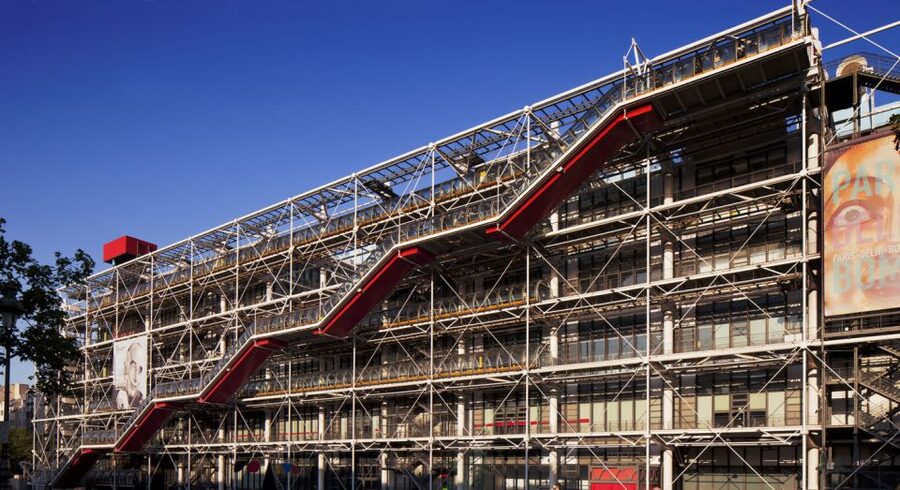
Meet your guide by the blue parking sign at the corner of Rue Beaubourg and Rue Rambuteau. The tour begins outdoors, with the building’s appearance serving as the first lesson. Designed by Renzo Piano, the Centre Pompidou was conceived as an inside-out structure, a striking break from the more traditional museum exterior you might expect.
That opening matters. Rather than treating the architecture as a photo stop before the “real” visit, the guide uses it to introduce the museum’s origins and its place in the story of modern design. The exterior is colorful and deliberately unconventional, and hearing why the building looks the way it does gives you a useful frame for the art inside.
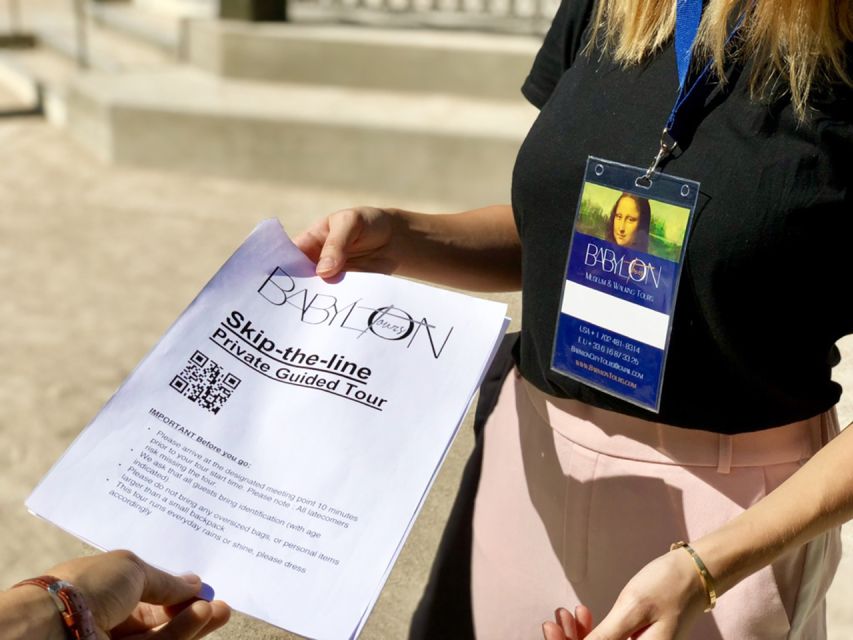
This is also a practical time to get oriented and ask questions before entering the galleries. You meet outside, so arrive at the stated corner and look for the blue parking sign. If you have an urgent issue on the day, the guide’s contact details are sent by email from Babylon Tours, sometimes to the spam folder.
More museum visits in Paris:
- Paris: Louvre Museum Timed-Entrance Ticket
★ 4.6 · 71,977 reviews - Paris: Orsay Museum Entry Ticket
★ 4.7 · 25,647 reviews - Louvre Museum Masterpieces Guided Tour with Access
★ 4.5 · 12,023 reviews
Trace modern art through the collection
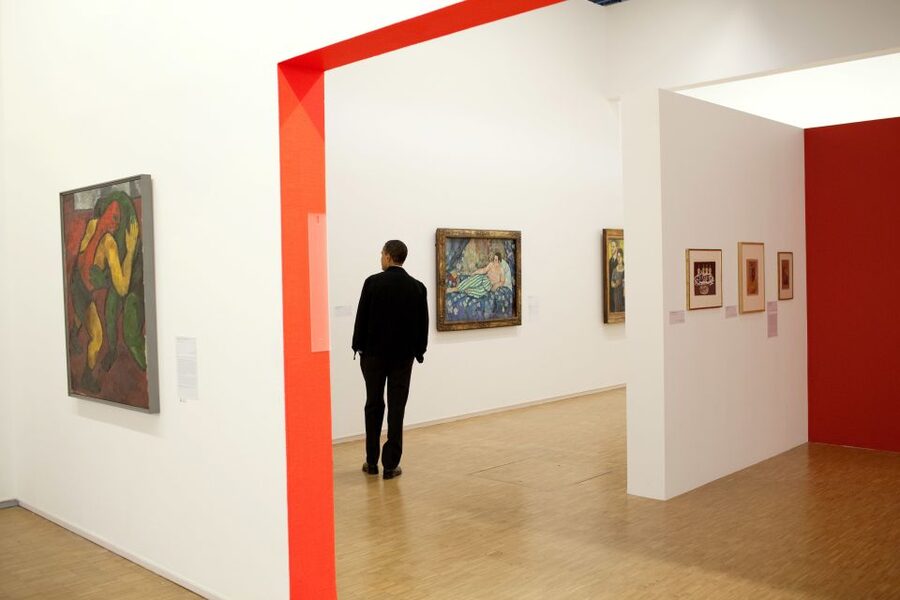
Inside, the focus is the Musée National d’Art Moderne, whose collection contains nearly 3,200 works. The tour does not promise that you will see every important piece, nor should it: in 2.5 hours, the useful goal is to understand how artists responded to one another and to the world around them.
The guide uses familiar names as anchor points. In front of a Picasso, you discuss Cubism; a Matisse helps explain Fauvism. These examples give you a way to read the art, even if you are new to its vocabulary. Instead of simply ticking off famous paintings, you can begin to notice how artists changed their approach to form, color, and subject.
The route also connects the World Wars to changes in art. Dada, for example, is presented as a response to the gore and upheaval of World War I, with chaos and dark humor at its center. That context can make work that first appears nonsensical feel more legible. It does not require you to like every piece. It gives you a reason to look again.
Surrealism brings Salvador Dalí into view, while Marcel Duchamp appears among the artists associated with modern art’s shifting boundaries. A guided explanation is especially useful here: these works often invite questions about what counts as art and who gets to decide. The tour offers a broad overview rather than an exhaustive account, which is a sensible trade-off for a short visit.
Connect movements to artists you may already know
The tour moves beyond the early modern movements to explore Bauhaus and Abstract Expressionism, with works by international artists including Georgia O’Keeffe, Jackson Pollock, and Piet Mondrian. Seeing artists from different backgrounds in the same museum helps you understand modern art as a conversation across borders, not just a sequence of French schools.
Pop Art brings Andy Warhol into the picture. His work gives the guide a chance to explain how popular culture and familiar images entered the art world. If you have mostly encountered these names in books or reproductions, the museum setting adds scale and presence, while the guide helps you focus on what makes each artist’s approach distinct.
The collection also includes beloved French artists, so the visit is not only a survey of international names. That balance is useful if you want both the broad story and a sense of the museum’s national character. Still, collections can vary through the year. You should treat the named artists and movements as a guide to the tour’s themes, not a guarantee that every specific work will be on display.
One of the tour’s strongest features is the guide’s role as interpreter. Dunya, Belen, and Tanya are among the guides who have led it. The comments about Tanya especially point to an approach that links art and artists to social context, while Dunya and Belen are also credited with helping explain modern and contemporary art. Your assigned guide may be different, but the tour’s format is built around that kind of explanation.
Step into contemporary art without expecting easy answers
The later galleries bring the story toward contemporary art, including movements such as Fluxus and Minimalism. The point is not to declare that every recent work is easy to understand. It is to give you some tools for asking better questions: what is the artist emphasizing, what has been left out, and how does the work challenge older ideas about art?
A featured example is Dubuffet’s Winter Garden installation. An installation asks you to consider a work as an environment or spatial experience, not just an object on a wall. That change in scale and format can make the visit feel quite different from looking at paintings in a row.
Some museum spaces are designated silent rooms, where talking is not allowed. This is worth knowing if you expect the guide to speak continuously throughout the visit. The tour may need to pause its explanation in these areas, so take the opportunity to look quietly and then raise questions when conversation is permitted.
A collection of nearly 3,200 works cannot be covered in full during a 2.5-hour tour. The guide’s job is to choose a path through it and show how key movements fit together. If you want a complete inventory or a long, specialist discussion of one artist, this will be too brief. If you want a clear first map of modern and contemporary art, the overview is the point.
More skip-the-line entries in Paris:
- Versailles: Skip-the-Line Tour of Palace with Gardens Access
★ 4.7 · 9,778 reviews - Versailles: Skip-the-Line Guided Palace Tour and Full Access
★ 4.6 · 5,214 reviews - Louvre Museum: Skip-the-Line Small Group Guided Tour
★ 4.6 · 3,960 reviews - From Paris: Versailles Skip-the-Line Tour & Gardens Access
★ 4.7 · 3,011 reviews
End with a rooftop view of Paris
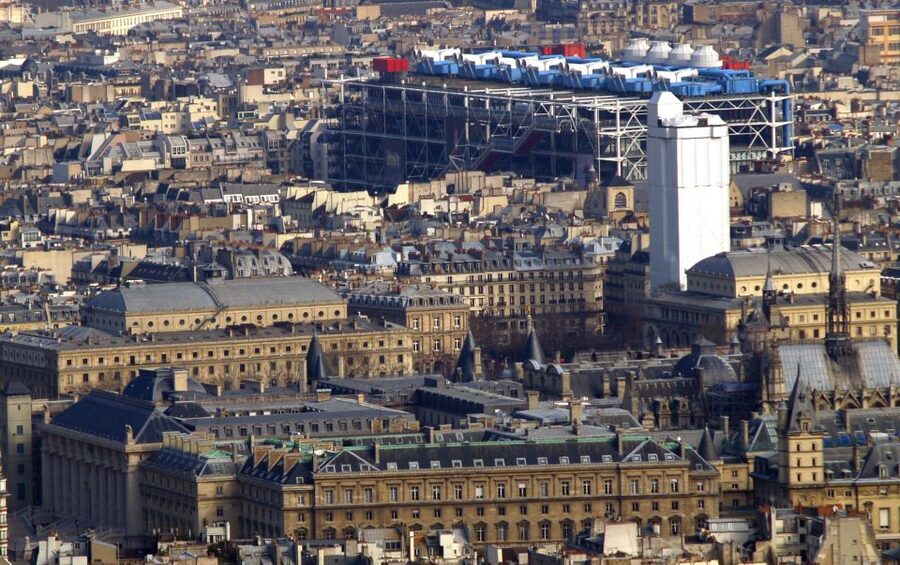
The tour concludes on the museum’s roof, where you can take in a panorama of Paris. After the close attention required in the galleries, this is a welcome shift: you leave the art rooms and see the city from above.
The view is a distinct part of the experience, but it is not a substitute for a separate sightseeing tour. Its value is in finishing the museum visit with a wider sense of place. You have spent time with art shaped by changing societies and artistic ideas, then look out over the city that holds the museum.
The activity ends back at the meeting point. There is no hotel pickup or drop-off, so plan your own route to and from the museum. Food and drinks are also not included.
Decide if the guided visit is worth the price
At $371 per person, this is an expensive way to see a museum. The cost is easier to justify if you value guided interpretation, a group of no more than eight, skip-the-line entry, and a structured route through a large collection. The guide’s explanations are the central product; the ticket and rooftop view support that experience.
If you are comfortable reading wall labels and choosing your own route, you may prefer to visit independently. You would miss the guided connections among the building, art movements, and historical events, but you would have more control over how long you spend with each work. If you are curious about modern art but often find it hard to know what you are looking at, a guide can make the collection feel much more approachable.
The small group is a meaningful advantage over a large coach-style visit. With a maximum of eight, you have a better chance to ask a question or follow up on an idea. It is still a group tour, not a private conversation. A private option is available for people who want a more personalized experience.
For accessibility, read the terms carefully and contact the provider before booking. The activity information describes the museum as wheelchair accessible, but also says the semi-private tour is not suitable for people with mobility impairments and that wheelchair-suitable tours are available upon request only. Do not assume the standard tour fits your needs without confirming.
Bring a valid photo ID, such as a passport or ID card, and leave large bags or suitcases elsewhere. The museum does not allow them. The tour is in English, lasts 2.5 hours, and starting times depend on availability. Temporary exhibitions are not included, and occasional museum closures can affect the schedule.
Cancellation is free up to 24 hours before the tour, and a reserve-now, pay-later option is offered. The semi-private tour needs at least two participants to run; if the minimum is not met, an alternative date or full refund is offered. Full names, a mobile number, and an email address are requested so the operator can reach you during your trip.
Should you book this Pompidou tour?
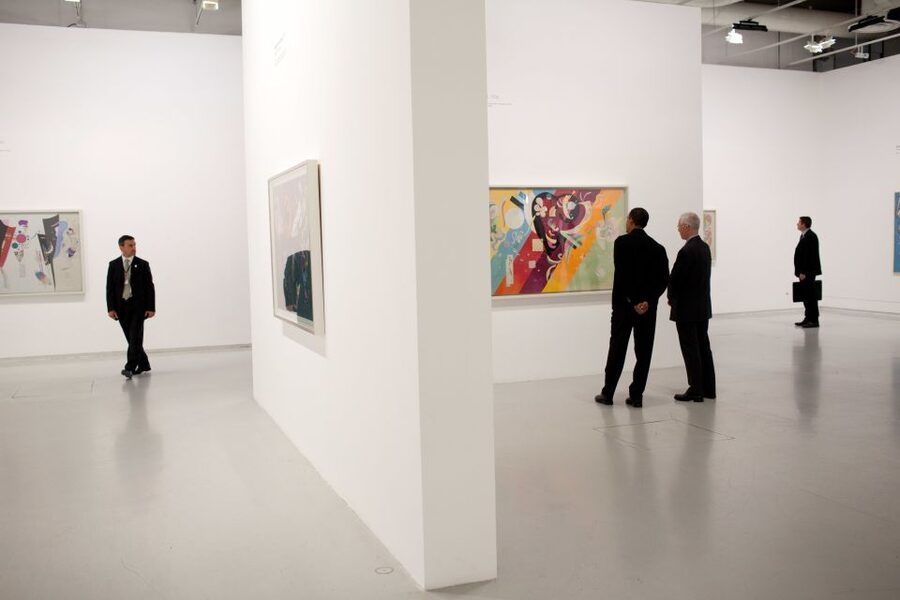
Book it if you want a compact, guided introduction to modern and contemporary art, and if the cost fits your budget. The strongest reasons are the small group, the guide’s social and historical context, and the chance to connect major movements with works by artists such as Picasso, Dalí, Matisse, and Warhol. Skip it if you prefer to explore at your own pace or mainly want access to the building and rooftop. For a first visit to the collection, especially if modern art leaves you with more questions than answers, the guided format has a clear purpose.
FAQ
How long is the Centre Pompidou tour?
The tour lasts 2.5 hours. Starting times vary, so check availability for the date you want.
What is the meeting point?
Meet your guide by the blue parking sign on the corner of Rue Beaubourg and Rue Rambuteau. The activity ends back at that meeting point.
Is skip-the-line entry included?
Yes. Museum entrance and skip-the-line access are included, along with the professional guide and museum tour.
Which language is the tour in?
The tour is conducted in English.
Are temporary exhibitions included?
No. Temporary exhibitions are not included in the tour.
Can I bring a large bag or suitcase?
No. Large bags and suitcases are not allowed in the museum. Bring a valid photo ID, such as a passport or ID card.
Is the tour suitable for wheelchair users?
Wheelchair-suitable tours are available upon request only. The semi-private option is not suitable for people with mobility impairments, so contact the provider before booking to confirm what can be arranged.
Recently reviewed in Paris
- Private Paris WWII History Tour: Occupation & Resistance★ 4.4 · 3 reviews
- Private Highlights of Paris Bike Tour★ 4.9 · 12 reviews
- Private Mont Saint-Michel trip from Paris Calvados tasting★ 5.0 · 4 reviews
- Paris: Louvre Museum Highlights Small-Group Guided Tour★ 4.8 · 157 reviews
- Private Orsay Museum Tour: 2h Highlights w/ Monet & Van Gogh★ 5.0 · 4 reviews
- Highlights of Paris: Private 6-Hour Vintage 2CV Tour★ 3.9 · 19 reviews
- Private Giverny Monet’s House & Gardens Trip from Paris★ 4.9 · 11 reviews
- Private Guided Tour, The Louvre by night !★ 4.2 · 30 reviews
Museums, compared.

Louvre Museum Masterpieces Guided Tour with Access
Read our review →
Louvre Museum Entry Ticket With Host and River Cruise
Read our review →
Les Invalides: Napoleon’s Tomb & Army Museum Entry
Read our review →
Louvre Museum – Exclusive Guided Tour (Entry Included)
Read our review →
Louvre Museum Hosted Entry and Mona Lisa Audioguide
Read our review →
Louvre Museum Tour Mona Lisa & Iconic Masterpieces
Read our review →Browse the lists this tour appears in