
Reviewed · PARIS COOKING CLASSES
Paris: Bread and Croissant-Making Class
A Paris bakery is a good place to learn why a proper baguette is more than flour, water, and a hot oven. At Le Petit Mitron, baker Didier shares the craft behind a crisp crust and tender center, then shows you how to shape croissants and make the bakery’s own La Parisse baguette.
I like two things in particular: you get to work with dough in a real family-run boulangerie, and the class mixes practical technique with stories about French bread and baking. One consideration is the price, $258 per person for two hours. That is a serious outlay for a short class, so it makes most sense if you want more than a quick bakery visit and will value the hands-on lesson and recipes at home.
At a Glance
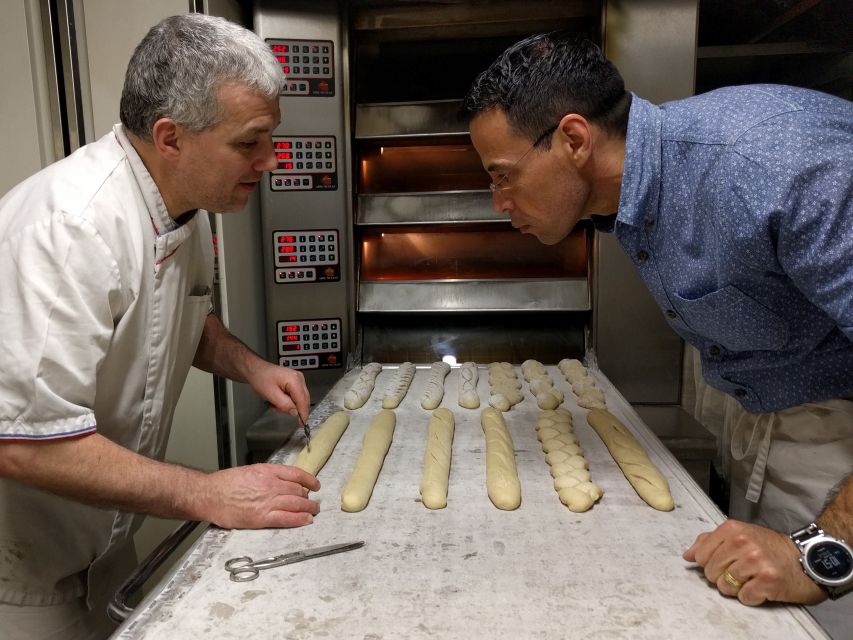
- Two baguettes, not just a demonstration: Learn about a classic French baguette and La Parisse, the bakery’s own version.
- Croissants are part of the class: You learn to make and shape them alongside the bread.
- A working family bakery: The baker’s father and grandfather were bakers too, and family techniques inform the lesson.
- Small group, eight people maximum: That cap gives the instructor room to involve each person.
- Tasting is part of the appeal: Expect to sample bread and croissants made during the class.
- Recipes go home by email: You leave with guidance for trying the techniques in your own kitchen.
Inside Le Petit Mitron on Rue Oberkampf
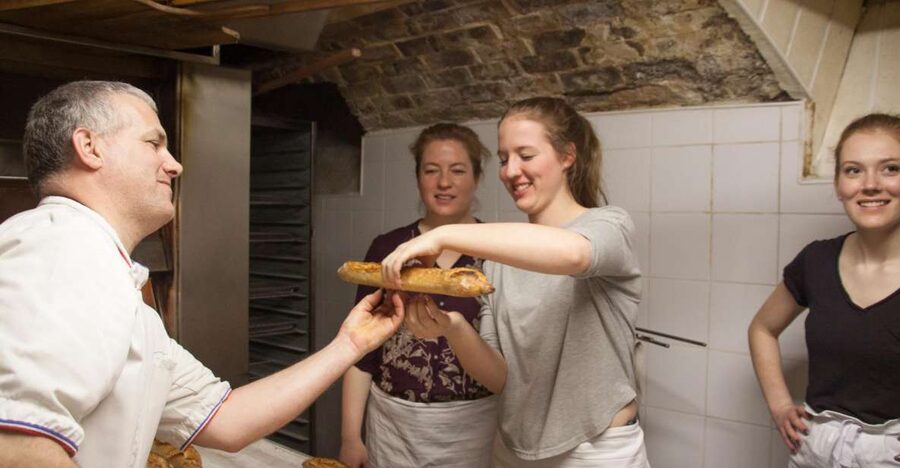
The meeting point is Le Petit Mitron, at 8 rue Oberkampf in Paris’s 11th arrondissement. The class takes place in the bakery, rather than in a detached teaching kitchen, so you are learning where the baker’s daily work happens. That setting is part of the point: flour, dough, tools, and finished loaves are not props brought in for a demonstration.
The bakery is family-run, and Didier’s father and grandfather were bakers before him. That lineage gives the lesson a personal frame. You are not only following a recipe; you are hearing how a craft gets passed on and which small choices matter to the finished loaf.
The group is limited to eight participants. That is a useful size for a practical class: you can see the demonstration without being lost in a crowd, and there is a better chance to handle the dough and ask questions. The exact amount of individual work can vary, so do not expect a private lesson unless your date happens to have no other bookings.
Instruction is offered in English, French, Japanese, and Spanish. Some sessions use an interpreter, and past classes have included interpreters such as Luis, Luce, and Elsa. The specific person can vary, but interpretation matters here: bread-making terms and hand movements are easier to follow when you understand both the explanation and the demonstration.
More cooking classes in Paris:
- Paris Cooking Class and Lunch with Wine plus Market Visit Option
★ 5.0 · 1,024 reviews - Paris Croissant Small-Group Baking Class with a Chef
★ 5.0 · 910 reviews - Paris: Macaron Class at Galeries Lafayette
★ 4.3 · 905 reviews
From Flour to Baguette
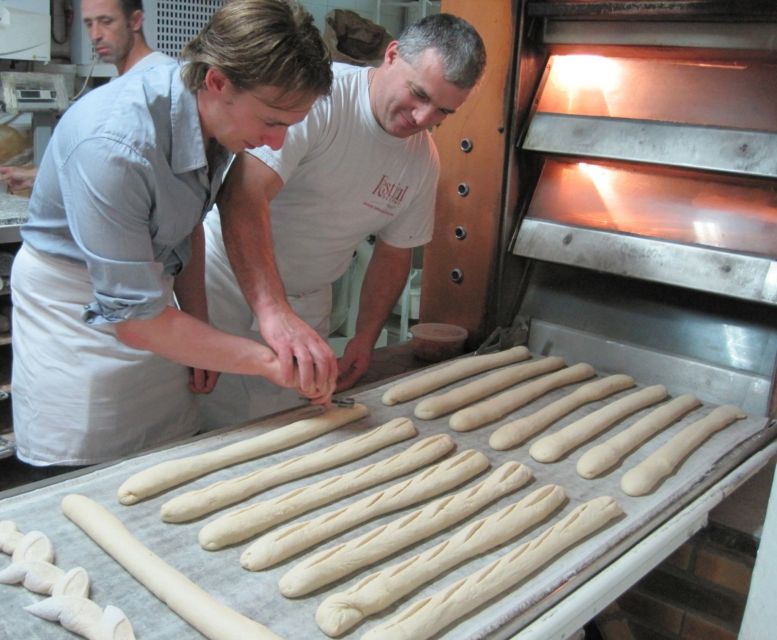
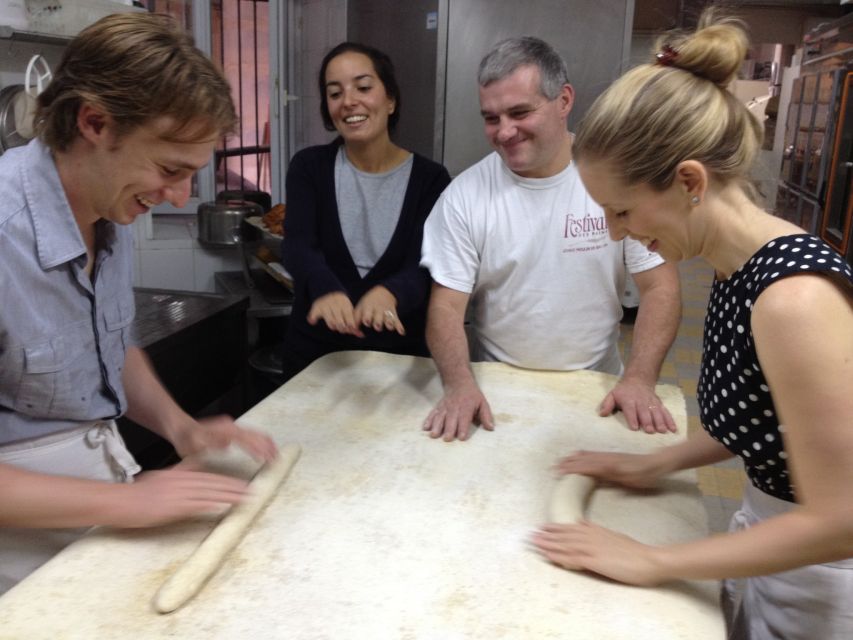
The class begins by bringing you close to the process, not by handing you a finished loaf and calling it a lesson. You get to handle the ingredients and work with the dough, while Didier demonstrates the steps involved in making a baguette. The description promises a step-by-step look at the process, and the class is intended to be hands-on.
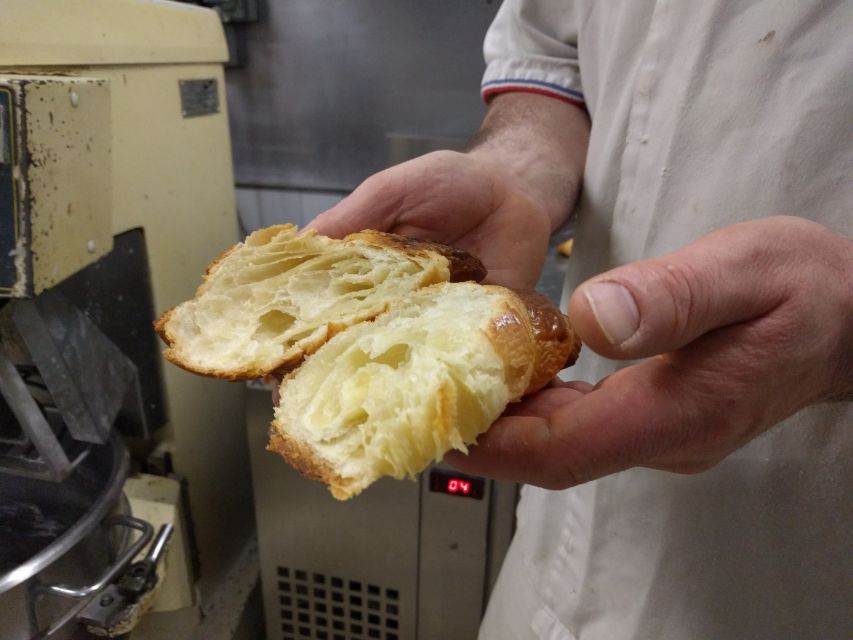
One of the most useful ideas is that a baguette’s contrast in texture comes from technique, not luck. The aim is a golden, crunchy exterior with a soft interior. You will see how the baker approaches shaping and handling the dough, and you can watch closely for the small details that are hard to pick up from a written recipe.
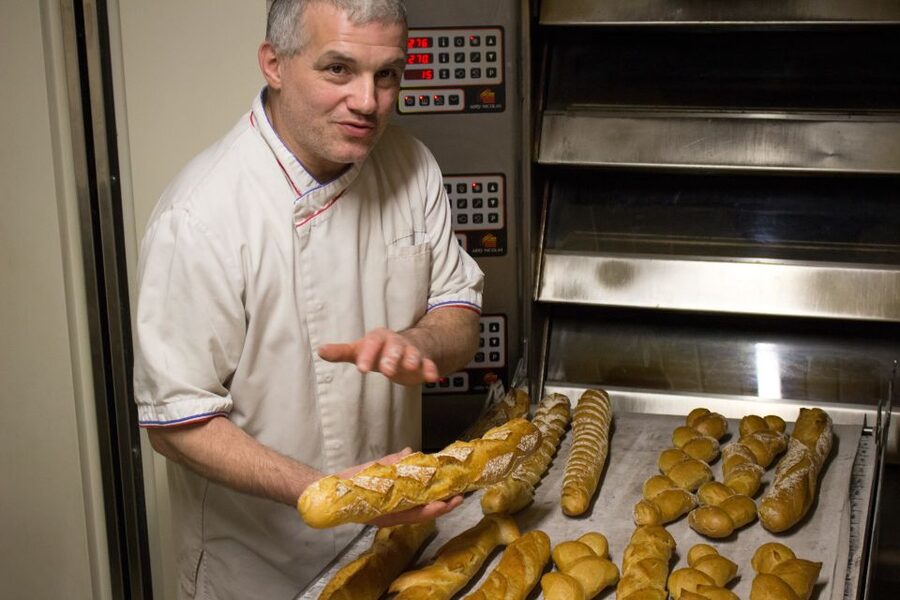
The lesson includes two baguettes: a classic French baguette and La Parisse, a special version associated with the bakery. That comparison gives the class a little more substance than practicing one standard shape. You can see how a baker’s own product sits alongside a familiar French staple, and learn why a local boulangerie may develop a signature loaf.
The baker’s experience is a practical asset. His family has been in baking for generations, and participants have described lessons that touch on ingredients, methods, bread styles, and the realities of running a bakery. Some sessions have also covered the baker’s own approach to sourcing and milling flour. That level of detail can help you understand why bread made by an artisan may differ from a loaf produced with a simpler home method.
There is a balance to keep in mind: this is a two-hour introduction, not a professional baking course. You can learn techniques and ask questions, but bread depends on factors such as timing and handling that take practice. Treat the class as a useful foundation and a close look at the craft, rather than a promise that your first home baguette will match the bakery’s.
Croissants, Shaping, and the Pleasure of Practice
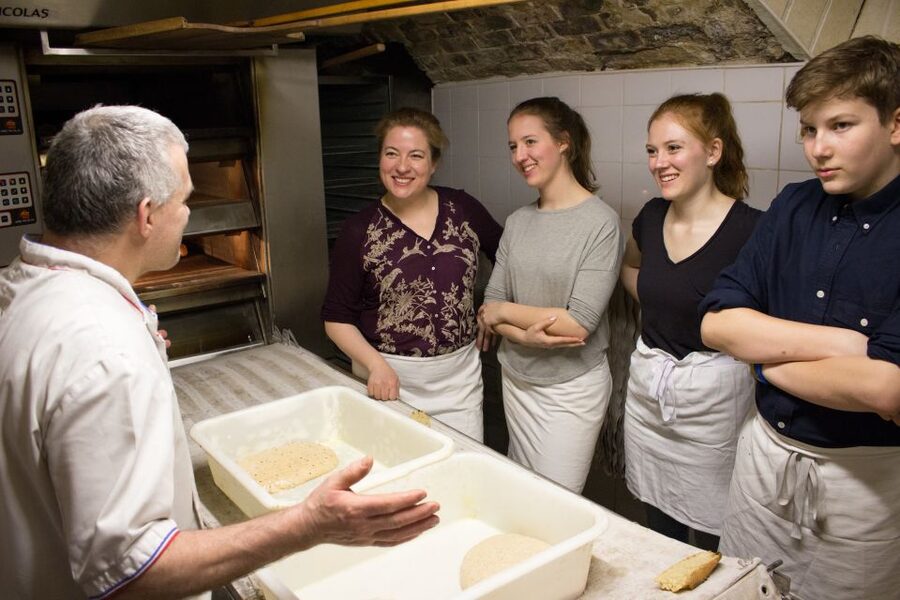
Croissants add a second set of skills to the session. You learn to make and shape them, which gives you a chance to work with a pastry as well as bread dough. The focus is not limited to watching a baker’s hands from across the room: the class is described as interactive, with participants encouraged to try techniques.
Croissants can be daunting to make at home, so even a short lesson can help you see how much care goes into the process. The class gives you a chance to observe the baker’s approach and practice the shaping stage. The available details do not specify every pastry step or promise that each participant completes every stage from scratch, so ask the instructor on the day if you want to know exactly which parts you will handle.
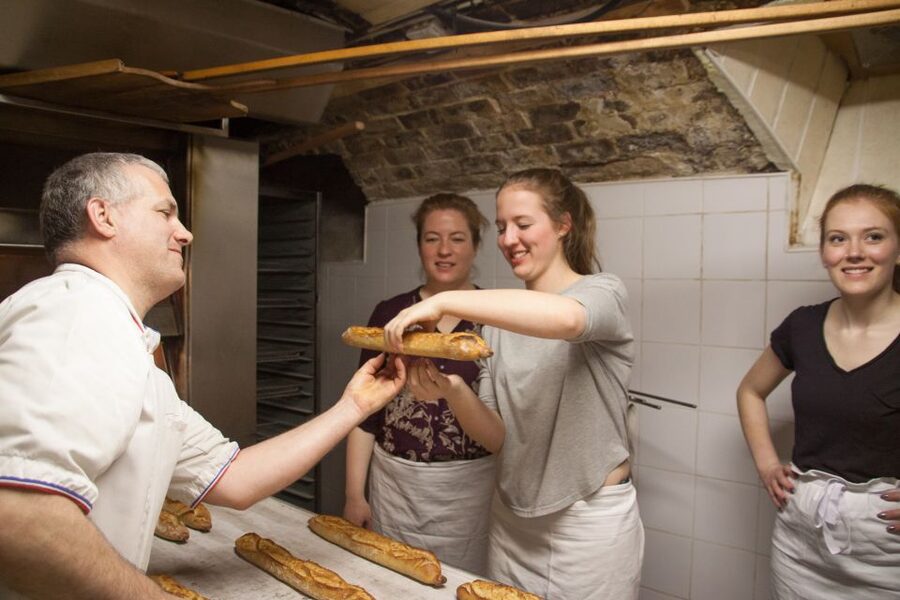
Tasting brings the lesson back to the finished product. You can sample bread and croissants made during the class, including warm baguette. This is more than a snack: tasting helps connect the dough and technique to the crust, crumb, and flavor you are trying to produce. Come hungry, as the class can include a good amount of bread to try, though the amount you take away is not specified.
A few participants have also left with bread to take home, but I would not book on the assumption that a particular quantity is included. The stated inclusions are ingredients, utensils, an apron, and a copy of the recipe sent by email. If bringing baked goods back to your accommodation matters to you, check what will be available during your session.
More Than a Recipe: French Bread and Bakery Life
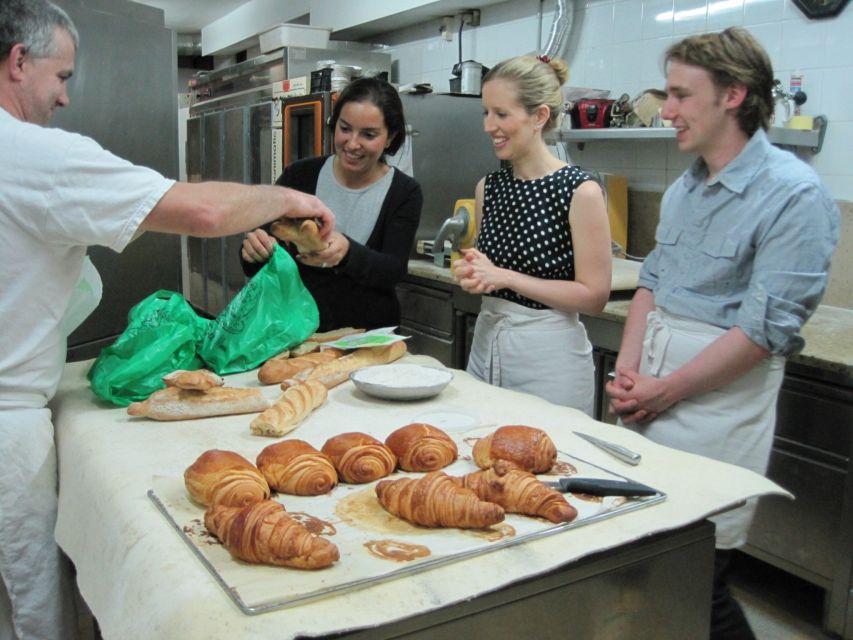
The class can be especially rewarding if you are curious about bread as part of French food culture. The baker’s demonstrations are accompanied by anecdotes and context about bread styles, pastry, and the place of baking in France. The lesson may also touch on the history of bread and the changes facing a bakery today.
That mix of craft and conversation helps the two hours feel less like a checklist. Didier is often described as energetic and funny, and interpreters have helped keep the pace lively for English-speaking participants. A good interpreter does more than translate words: they help carry the baker’s explanations and humor, and make technical details easier to follow.
The format is informal and personal, which suits visitors who want to meet the people behind a neighborhood business. It is also a nice contrast to the usual Paris routine of looking at monuments and eating in restaurants. Here, you use your hands, ask questions, and get a closer look at a trade that is woven into everyday life in the city.
Families have taken children aged eight and older and found the class engaging for both kids and adults. Children under six are not suitable, and this is not simply a passive bakery tour: there is flour, dough, and instruction to follow. For older children interested in food, it can be a shared activity with a tangible result. If you are booking for a child, keep in mind that the class is only two hours, but the pace includes listening as well as doing.
More hands-on workshops in Paris:
- Fragonard Paris: Mini Perfume Workshop
★ 4.5 · 1,924 reviews - Paris: 2-Hour Perfume Creation Workshop
★ 4.8 · 731 reviews - Paris: French Croissant Baking Class with a Chef
★ 4.9 · 712 reviews - Paris Cooking Class: Learn How to Make Macarons
★ 5.0 · 634 reviews
Is $258 Worth It?
At $258 per person, this is an expensive two-hour activity. The price is easier to justify if you are keen on baking, want direct instruction from an artisan baker, or are looking for a memorable activity to share with a child or partner. It is harder to justify if you mainly want a pastry tasting or a quick look inside a bakery; a visit to a neighborhood boulangerie will cost far less.
The value lies in the combination: a small group, practical work with dough, instruction on both baguettes and croissants, tasting, and recipes to use later. You are paying for access to the baker’s know-how in his own shop, as well as a class that connects food with French culture. The limited group size is a plus, though it does not make the experience inexpensive.
The recipe email is a useful follow-up, but it cannot capture everything you learn by watching and handling the dough. If you already bake at home, you may get more from the lesson because you can compare the baker’s methods with your own. If you are a beginner, the class still offers a friendly first introduction, but you will need to practice after Paris.
Who Should Book This Class?
I would put this class high on the list for home bakers, bread lovers, and curious eaters who want to understand how French staples are made. It is also a strong choice for a parent and an older child, or for two people looking for a hands-on break from sightseeing. The baker’s lively teaching style and the interpreter support can make it welcoming even if you are not fluent in French.
If your main goal is to learn a repeatable technique, the class offers useful instruction and recipes to take home. If you want an extended, technical course covering every stage of professional bread and pastry production, two hours will feel brief. And if you are simply after a cheap breakfast, this is the wrong way to buy a croissant.
The class lasts two hours, has a maximum of eight participants, and costs $258 per person. Children under six are not suitable. Ingredients, utensils, and an apron are provided, and the recipe is sent by email. You can cancel up to 24 hours in advance for a full refund, and the reserve-now, pay-later option is available.
Should You Book?
Book it if you want to do more than eat French bread: you want to handle dough, learn from a baker whose family has worked in the trade for generations, and take practical ideas home. The small group and the pairing of baguette and croissant make the session more useful than a simple demonstration.
Skip it if the price feels steep for a two-hour class, or if you would rather spend that money on several bakery breakfasts. For a food-focused Paris visit, though, this is a memorable way to get behind the counter and understand what goes into the loaf on your table.
FAQ
How long is the bread and croissant class?
The class lasts two hours.
Where does the class meet?
Meet at Le Petit Mitron, 8 rue Oberkampf, 75011 Paris.
What will I learn to make?
You will learn about making a classic French baguette and the bakery’s La Parisse baguette, as well as making and shaping croissants.
How many people can join?
The group is limited to eight participants.
Which languages are offered?
Instruction is offered in English, French, Japanese, and Spanish.
Is the class suitable for young children?
Children under six are not suitable for this activity.
What is included in the price?
Ingredients, utensils, and an apron are included. A copy of the recipe is sent by email.
Can I cancel for a refund?
Yes. You can cancel up to 24 hours in advance for a full refund.
Recently reviewed in Paris
- Private Paris WWII History Tour: Occupation & Resistance★ 4.4 · 3 reviews
- Private Highlights of Paris Bike Tour★ 4.9 · 12 reviews
- Paris: Louvre Museum Highlights Small-Group Guided Tour★ 4.8 · 157 reviews
- Private Orsay Museum Tour: 2h Highlights w/ Monet & Van Gogh★ 5.0 · 4 reviews
- Private Mont Saint-Michel trip from Paris Calvados tasting★ 5.0 · 4 reviews
- Highlights of Paris: Private 6-Hour Vintage 2CV Tour★ 3.9 · 19 reviews
- Private Giverny Monet’s House & Gardens Trip from Paris★ 4.9 · 11 reviews
- Private Guided Tour, The Louvre by night !★ 4.2 · 30 reviews
Paris Cooking Classes, compared.
Paris Cooking Class and Lunch with Wine plus Market Visit Option
Read our review →
Paris Croissant Small-Group Baking Class with a Chef
Read our review →
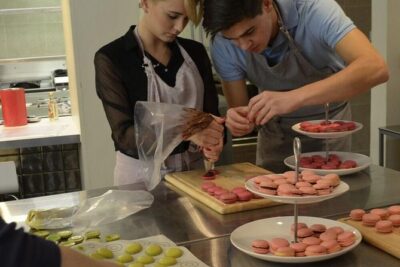
Paris Cooking Class: Learn How to Make Macarons
Read our review →
A Morning in Paris Food Tour: Croissants, Baguettes & Chocolate
Read our review →
Paris Evening Cooking Class French Dinner and Market Visit Option
Read our review →Browse the lists this tour appears in