
Reviewed · PARIS WALKING TOURS
Paris City Center Free Walking Tour (Tip-Based)
Paris’s center is a compact stage for two thousand years of history, and this walk links its old island heart to the Louvre and the Tuileries. Along the way, you hear about the Parisii, the Revolution, Napoleon and the city’s wartime past, with plenty of famous façades to put the stories in place.
I like the mix of big landmarks and smaller details, from Notre-Dame’s long construction to bullet holes on Pont Saint-Michel. I also like that guides such as Alberto, Sanna, Ezra and Bruce have been praised for clear storytelling, humor and a knack for keeping a group engaged.
The main trade-off is that this is an outdoor overview, not an inside tour: you do not enter Notre-Dame or the Louvre. The walk takes about two hours and fifteen minutes, and you should be ready to stand, walk and make do without a planned restroom break.
- The route ends in the Tuileries: You finish in the gardens, not back at the Fontaine Saint-Michel meeting point.
- History comes with a storyteller’s touch: French rulers, the Revolution and Napoleon are woven into the stops rather than delivered as a bare timeline.
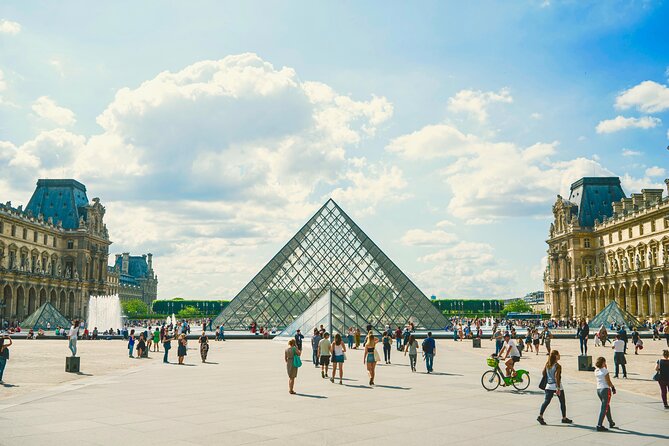
- The Louvre is an outside stop: You get views of the pyramid and hear about the palace and Mona Lisa, but museum admission is not part of the tour.
- The Eiffel Tower is a view, not a destination: The guide points it out from the Tuileries gardens; this is not a visit to the tower.
- The displayed price is not the whole cost: The tour is tip-based, and tips are accepted only by card or electronic payment, with VAT added to contributions.
- The group can be large: The stated maximum is 50, so sound equipment can matter. Some guides use a microphone and amplifier.
A two-hour route through Paris’s central chapters
The walk begins at Fontaine Saint-Michel, a convenient meeting point near public transportation. From there, the route takes you through the historic center and finishes in the Tuileries Garden. It is a useful orientation if you have limited time in Paris, or if you want an early overview before returning to selected sites on your own.
The itinerary names eleven stops, most lasting about twelve minutes, with a longer first stop on Île de la Cité. That rhythm keeps the tour moving while leaving room for explanations and questions. Expect a series of short pauses rather than a long visit at any one landmark.
The tour is offered in English and includes a guide. The maximum group size is 50, though some reported groups have been smaller. A microphone and amplifier have been used by some guides, which helps in busy areas, but equipment may vary by guide.
Île de la Cité and Notre-Dame’s long story
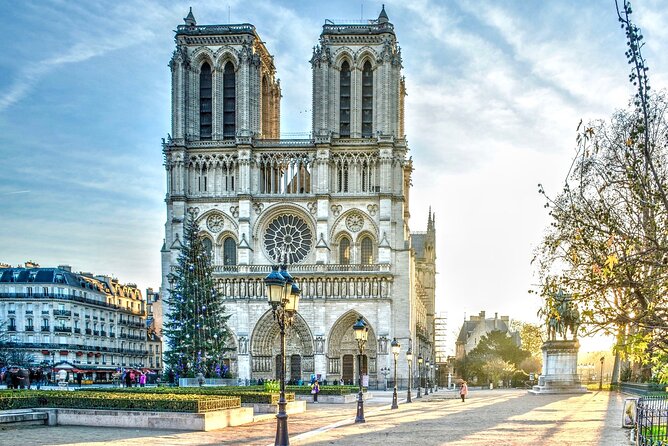
Île de la Cité is the historical anchor of the route. The Parisii tribe established temples here more than two thousand years ago, before Roman rule changed the city’s course. Starting on the island gives the walk a strong sense of place: Paris did not begin as a collection of grand boulevards, but around this river crossing and its early settlement.
Notre-Dame is the next major stop. Your guide covers the cathedral’s construction, which began in 1163, and the 2019 fire. The building also gives the tour a way into the French Revolution and Napoleon’s coronation, linking architecture to the political upheavals that shaped France.
You do not go inside the cathedral. That is worth knowing if seeing the interior is a priority, but an outside explanation can still help you read the building and understand its place in the city’s story. Plan a separate visit if you want to enter.
More walking tours in Paris:
- Paris Top Sights Half Day Walking Tour with a Fun Guide
★ 5.0 · 2,893 reviews - Montmartre Hidden Gems and Scenic Highlights Walking Tour
★ 5.0 · 2,684 reviews - Montmartre Hill French Gourmet Food and Wine Tasting Walking Tour
★ 5.0 · 2,588 reviews
Fountains, bridges and a glimpse of wartime Paris
At Fontaine Saint-Michel, the focus shifts to the grand reconstruction of Paris. The fountain gives you a visual pause and a chance to hear how the city’s public spaces changed over time. It also sits near the meeting point, so the tour begins in a lively, easy-to-find part of the center.
Pont Saint-Michel brings the story closer to the Second World War. The guide points out bullet holes on the bridge and explains why Paris was not destroyed during the war. It is a small, tangible detail, and one of the walk’s more memorable ways to connect a familiar crossing with a wider historical question.
These early stops show the tour’s main strength: it uses visible details to open up larger stories. You are not just passing monuments; you are being given a reason to look twice. If the group is large, stay close enough to hear the guide, especially at busy streets and bridges.
Place Dauphine, Henri IV and Pont Neuf
Place Dauphine offers a quieter change of scene. Built as one of Henri IV’s early projects, the square is known for its restaurants and has a calmer feel than the surrounding streets. It is also a practical place to remember if you want a meal after the walk.
Nearby, the equestrian statue of Henri IV gives the guide a chance to explain the king’s short but significant reign. From here, the river views help connect the political history to the geography of the city. You see how bridges and islands made this area the natural center of Paris.
Pont Neuf, despite its name, is the oldest bridge in Paris. The guide’s stories range from Henri IV, who completed the bridge in 1607, to the tooth pullers who once worked in the city. That combination of royal history and everyday street life keeps the walk from feeling like a string of dates and statues.
The bridge is also a strong photo stop, with views over the Seine. Keep in mind that the tour is moving on a schedule: you will have time to take in the surroundings, but this is not a long, unstructured riverfront break.
The Louvre from the outside
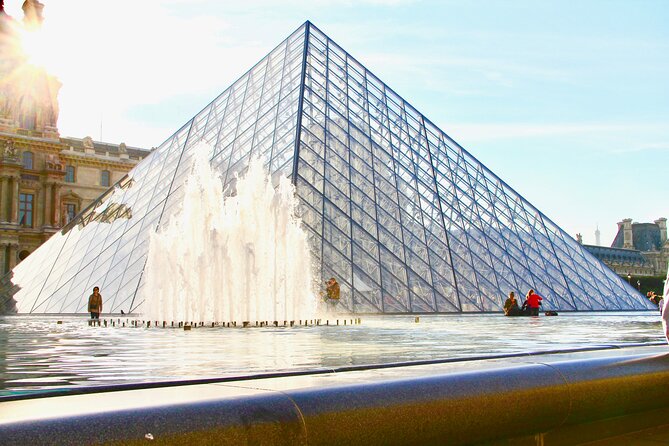
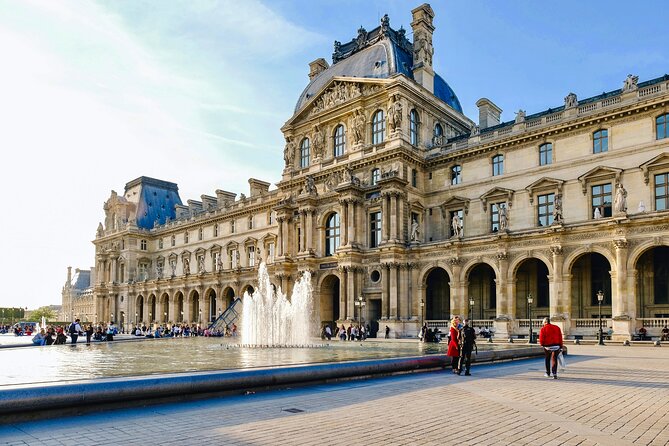
At the Louvre, the guide explains the building’s beginnings as a fortress and palace under Francis I, then turns to Leonardo da Vinci and the Mona Lisa’s fame. The glass pyramid offers a modern counterpoint to the older palace buildings, and the guide helps put that contrast into context.
You do not enter the museum. That makes this a useful introduction, not a substitute for a Louvre visit. If you plan to go inside, set aside separate time: the museum is too large for a quick stop, and the walking tour does not include admission.
The stop is valuable even if you are not planning a museum visit. It helps you understand why the Louvre looks the way it does and gives you a starting point for deciding what you want to see later. The guide’s explanations can also help make the pyramid feel less like a stand-alone photo backdrop.
More tours and experiences in Paris:
- Paris: 1-Hour Seine Cruise departing from the Eiffel Tower
★ 4.4 · 77,472 reviews - Paris: Louvre Museum Timed-Entrance Ticket
★ 4.6 · 71,977 reviews - Disneyland® Paris 1-Day Ticket
★ 4.6 · 49,412 reviews - Paris: Versailles Palace and Gardens Full Access Ticket
★ 4.6 · 41,579 reviews
Napoleon’s arch and the Tuileries gardens
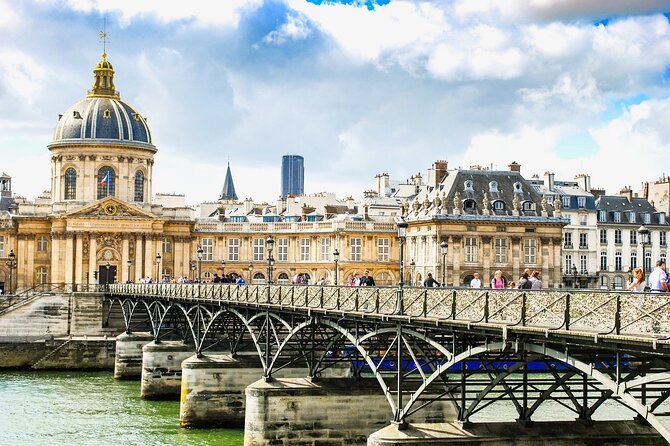
The Arc de Triomphe du Carrousel is a reminder of Napoleon’s rise as a European power. It is smaller than the better-known Arc de Triomphe, but it fits naturally into this route, where the focus is on how rulers left their mark on central Paris.
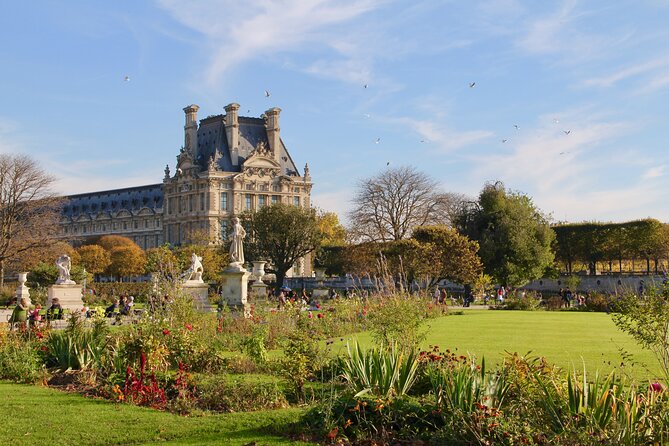
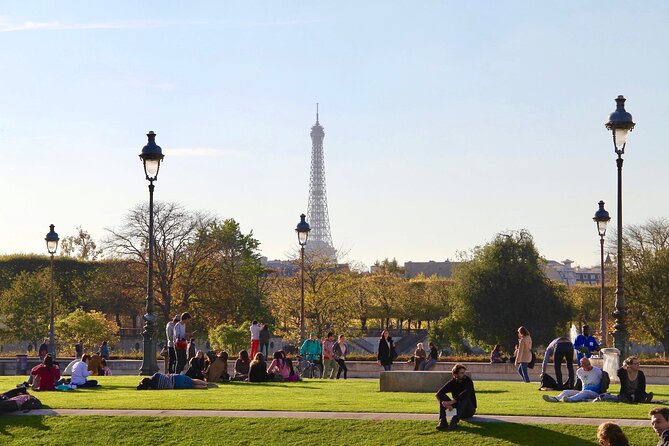
The walk then moves into the Tuileries Garden, once linked to a tile factory and later shaped into royal grounds. The gardens feature statues, sculptures and fountains. They were designed by the same landscape artist who created the gardens of Versailles, with an aim to create a sense of grandeur and mystery.
From the Tuileries, you get a view of the Eiffel Tower, and the guide explains Gustave Eiffel’s construction of the tower for 1889. The tower is not the final destination of the walk. The tour ends in the garden, where you can pause, continue exploring or make your way back by public transportation.
That route ending matters for planning. You do not return to the Fontaine Saint-Michel, so check your next stop before the tour begins. The Tuileries are also a handy place to decide whether you want to continue toward the Louvre, linger in the garden or head elsewhere.
The guide makes the difference
The clearest strength of this tour is its storytelling. Guides named in past sessions include Ezra, Alberto, Sanna, Bruce, Kiara and Michael. Their style is described as engaging, funny and approachable, with explanations that bring French history into everyday language. You cannot count on a particular guide being assigned, but the tour’s format leaves room for questions and conversation.
Several guides have used microphones, helping people at the back of groups hear in noisy places. One guide also extended a session to allow extra discussion. That kind of flexibility can make the walk feel more personal, though timing and group conditions will vary.
The subject matter suits people who want an accessible introduction to Paris, especially if the French Revolution and Napoleon interest you. Families with teenagers have found the format engaging, and the pace has been described as manageable by older participants. Still, a walking tour means time on your feet, and explanations can involve standing in one place.
What the tip-based price really means
The listed booking price is $3.62 per group of up to nine, but the experience is tip-based. Treat that amount as a booking charge, not the full price of the guide’s work. Tips are accepted only by credit or debit card and electronic payment, and VAT is added to contributions.
The model can offer good value if you want a guided introduction without committing to a fixed tour fee. It also puts the final contribution in your hands. Decide in advance what the experience is worth to you, and bring a payment method the tour accepts.
The tour includes the walking experience and an expert guide. It does not include entrance to Notre-Dame or the Louvre, and there is no stated food or drink inclusion. For a short visit to Paris, the value lies in getting a route, context and practical orientation in one session, not in access to paid attractions.
A few practical points before you go
The tour lasts about two hours and fifteen minutes, though some sessions have run closer to two and a half hours. Arrive prepared for a walk with stops and standing. Reports range from less walking than expected to a lengthy outing, so it is sensible to wear comfortable shoes and leave a little breathing room in your schedule.
Use the restroom before the start. One participant found there was no convenient break until the area near the Louvre, and the route does not promise a scheduled restroom stop. The walking pace has been described as gentle and the terrain as flat by some participants, but individual comfort will depend on your needs and the group.
The meeting point is Fontaine Saint-Michel, Place Saint-Michel, in the 5th arrondissement. The tour ends at Tuileries Garden, in the 1st arrondissement. Confirmation is provided at booking, service animals are allowed, and the activity is described as suitable for most people. It requires good weather; if poor weather cancels it, you are offered another date or a full refund.
Should you book this Paris walking tour?
Book it if you want a lively first look at central Paris, enjoy history told through buildings and street details, and are comfortable paying a tip rather than a set tour fee. The route gives you a solid framework for Île de la Cité, Notre-Dame, the Seine bridges, the Louvre and the Tuileries, with helpful historical context along the way.
Skip it if you need to enter the cathedral or museum as part of the experience, want a small-group guarantee, or prefer a tour with a fixed price and included admissions. For many first-time visitors, though, this is a practical way to get oriented and spot places worth revisiting.
FAQ
Where does the tour start?
It starts at Fontaine Saint-Michel, Place Saint-Michel, 75005 Paris.
Where does the tour end?
It ends at Tuileries Garden, 75001 Paris. You do not return to the starting point.
How long is the walking tour?
The stated duration is approximately two hours and fifteen minutes. Some sessions have lasted about two and a half hours.
What language is the tour offered in?
The tour is offered in English.
Does the tour go inside Notre-Dame Cathedral?
No. The guide discusses Notre-Dame from outside, but the tour does not enter the cathedral.
Does the tour include entrance to the Louvre?
No. The Louvre is an outside stop, and museum admission is not included.
How large can the group be?
The stated maximum is 50 participants. Some guides have used a microphone and amplifier so people can hear in larger groups.
How are tips paid?
Tips are accepted only by credit or debit card and electronic payments. VAT is added to contributions.
What happens if bad weather cancels the tour?
You are offered a different date or a full refund. The experience requires good weather.
Recently reviewed in Paris
- Private Paris WWII History Tour: Occupation & Resistance★ 4.4 · 3 reviews
- Private Highlights of Paris Bike Tour★ 4.9 · 12 reviews
- Paris: Louvre Museum Highlights Small-Group Guided Tour★ 4.8 · 157 reviews
- Private Orsay Museum Tour: 2h Highlights w/ Monet & Van Gogh★ 5.0 · 4 reviews
- Private Mont Saint-Michel trip from Paris Calvados tasting★ 5.0 · 4 reviews
- Highlights of Paris: Private 6-Hour Vintage 2CV Tour★ 3.9 · 19 reviews
- Private Giverny Monet’s House & Gardens Trip from Paris★ 4.9 · 11 reviews
- Private Guided Tour, The Louvre by night !★ 4.2 · 30 reviews
Paris Walking Tours, compared.
Paris Top Sights Half Day Walking Tour with a Fun Guide
Read our review →
Montmartre Hidden Gems and Scenic Highlights Walking Tour
Read our review →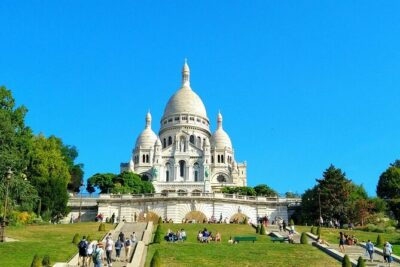
Montmartre Hill French Gourmet Food and Wine Tasting Walking Tour
Read our review →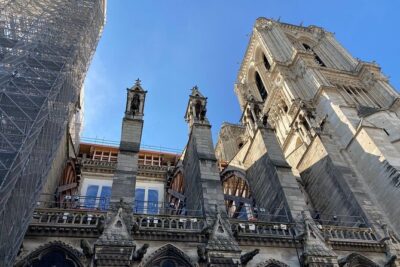
Paris Île de la Cité and Notre-Dame Walking Tour With Crypt
Read our review →
Montmartre Cheese, Wine & Pastry Guided Walking Tour
Read our review →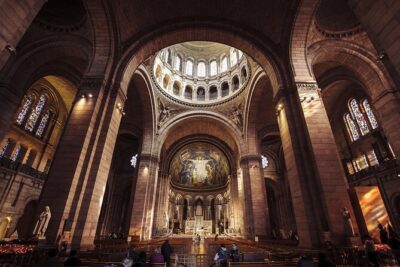
Paris in a Day: Louvre or Orsay, Eiffel Tower, City Walk & Cruise
Read our review →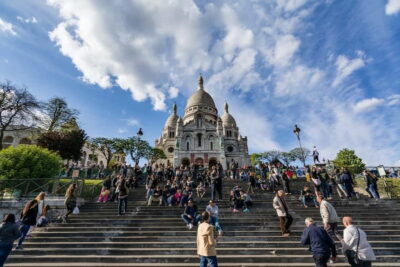
Montmartre Highlights Walking Tour with a Local Guide
Read our review →
Browse the lists this tour appears in