
Reviewed · LE MARAIS TOURS
Le Marais/Paris – The Historic, Trendy, Jewish, LGBT district
Le Marais makes a good case for slowing down in Paris. This walk links grand Place des Vosges and former aristocratic mansions with narrow lanes, courtyards, Jewish food shops, and a neighborhood shaped by changing French society. Guides Jill and Eric bring the history into view, from royal Paris to Jewish and LGBT life.
I like two things in particular: the route connects architecture to the people who lived here, rather than treating old buildings as scenery, and the small group limit of 10 leaves room for questions and a more personal pace. Jill is often praised for adapting the walk to different interests, and Eric has also led tours.
One consideration: the walk lasts about 90 minutes to two hours, but the listed stops account for only 55 minutes, so expect time on foot between them and some variation in the pace. The tour is outdoors, and snacks and coffee are not included.
- Place des Vosges: See the former Place Royale and Victor Hugo’s residence, with galleries around the square.
- Aristocratic Marais: Walk narrow streets lined with French urban mansions, known as hôtels particuliers.
- Jewish quarter: Visit streets with food shops and kosher pastry, alongside the district’s Jewish heritage.
- History with room for questions: Guides Jill and Eric are praised for tailoring the walk to interests, including architecture, family questions, Jewish history, and LGBT culture.
- Small group: The maximum is 10 people, a useful size for hearing the guide and stopping to look closely.
A walk through several layers of Paris
Le Marais is a neighborhood where a short walk can touch on royal ambition, private wealth, art, Jewish life, and contemporary identity. That mix is the point of this tour. Instead of focusing only on famous monuments, it uses streets and courtyards to explain how the area changed and what its buildings reveal.
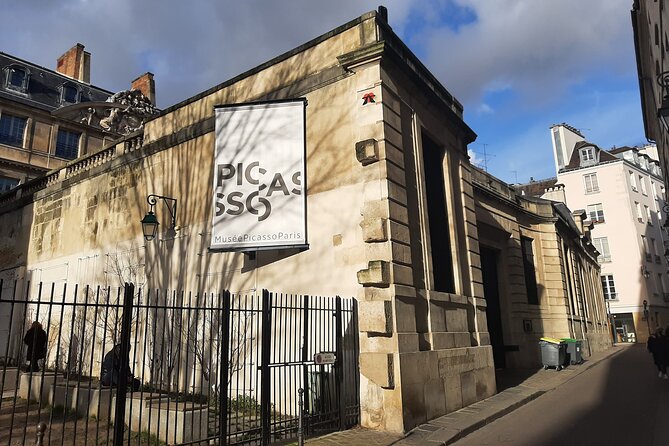
The tour is offered in English and takes roughly 90 minutes to two hours. It starts at Paroisse Saint-Paul Saint-Louis, at 99 Rue Saint-Antoine, and ends at the Musée des Archives Nationales, at Hôtel de Soubise, 60 Rue des Francs Bourgeois. The route’s listed stops are Place des Vosges, the broader Marais streets, and the Jewish quarter.
This is a walking tour, so the value comes less from checking off a long list of sights than from having someone explain what you are looking at. A façade, courtyard, or tucked-away garden can be easy to pass without noticing. A guide can give those places a story and help you connect one part of the neighborhood to another.
The group is capped at 10. That is small enough to ask questions without having to call across a crowd, and it suits the tour’s emphasis on conversation. Jill is particularly associated with adjusting the walk to people’s interests. Eric has also led it, including for a family of seven who wanted to focus on the Jewish quarter.
Place des Vosges: royal design and Victor Hugo
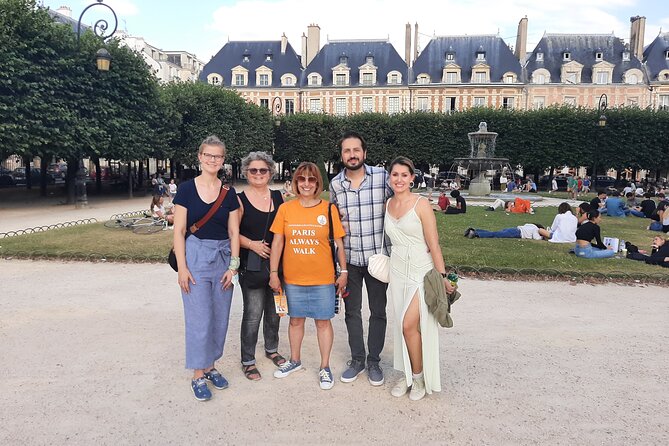
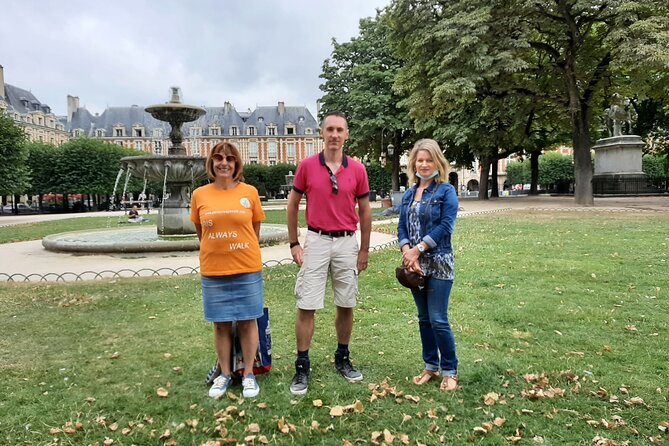
The first stop is Place des Vosges, once called Place Royale. The square gives you an immediate sense of the Marais at its most formal: an ordered public space framed by handsome historic buildings, with art galleries nearby. It is a striking place to begin because the architecture makes the neighborhood’s connection to French royalty and aristocratic life visible.
The tour allows about 20 minutes here. That is enough to take in the square and hear its main stories, though it is not a long gallery visit or a detailed architectural seminar. If you are drawn to the buildings, ask questions. Architecture is a recurring interest among people who take this walk, and Jill is praised for explaining details of buildings, plazas, and streets.
Victor Hugo’s residence is another anchor. The famous French writer lived at Place des Vosges, and the tour connects the square with Notre-Dame de Paris. Knowing that a celebrated writer lived here gives the place a personal dimension: this was not only a setting for public ceremony, but also a home and a working neighborhood.
The surrounding galleries add an art angle, but admission to the square is free and the tour does not include separate gallery entry. Think of this stop as an introduction to the neighborhood’s architecture, history, and cultural life, not a dedicated museum visit.
More Marais tours in Paris:
- Award-Winning Paris French Bakery Experience — Le Marais, 4th Arr
★ 4.5 · 1,186 reviews - Paris Le Marais Food Tour With 10+ Tastings, Cheese, Wine & More
★ 5.0 · 985 reviews - Paris Le Marais District Original Food and Wine Tasting Tour
★ 4.5 · 880 reviews
Narrow streets and the hôtels particuliers
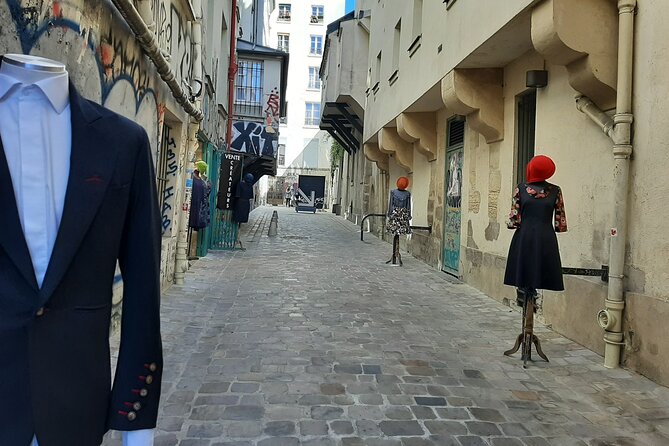
From the square, the walk moves through the Marais’s narrower streets, with about 15 minutes assigned to this part of the route. The focus is on the French architecture of aristocracy and royalty, especially the hôtels particuliers: urban mansions built for wealthy families.
The word mansion can suggest a detached country house, but here the important feature is how grand private residences fit into the city’s tight street pattern. As you walk, look for the contrast between broad, formal façades and the narrow lanes around them. The guide helps you read these buildings as part of the neighborhood’s social history, not just as attractive backdrops.
This section should suit you if you enjoy architecture or want context for how Paris developed beyond its grand boulevards and best-known monuments. An architect couple, for example, appreciated the attention to building details. But if your main goal is to enter several interiors, this walk may not be the right format: the route is built around streets, public spaces, and exterior viewing.
The pace and route can be adjusted to the group’s interests, according to the guide’s approach described by people who have taken the tour. That flexibility is useful if you want to linger over architecture, ask about French history, or spend more attention on the neighborhood’s Jewish and LGBT heritage. It is still wise to set expectations at the start, since a tour of this length cannot cover every subject in depth.
The Jewish quarter: history with everyday details
The tour then leads to the Jewish quarter, with about 20 minutes planned here. Rather than treating the area as a label on a map, the walk links its history to its streets, food shops, and kosher pastry. Those everyday details make the neighborhood easier to understand: heritage is not only found in dates and buildings, but also in the businesses and foods that form part of local life.
The guide connects the Marais to Jewish immigration and to wider events in French history, including World War II. The available information does not specify every site visited or the exact subjects covered at each stop, so you should think of this as an introduction rather than an exhaustive account. If a particular period or family history matters to you, bring it up with the guide.
The food shops are a practical highlight, especially if you like to get a sense of a district through what people buy and eat. Snacks, coffee, and tea are not included, though you can browse the shops along the way. Don’t count on the tour itself as a meal stop; plan your own food before or after if you want a proper break.
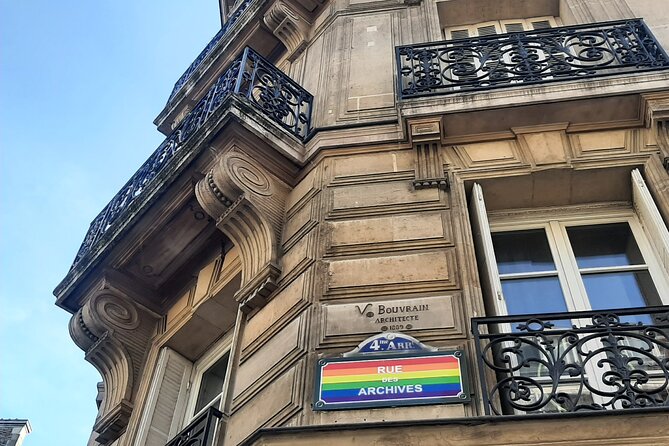
The walk also addresses LGBT history and culture in the Marais. That gives the tour a broader social frame than a route focused only on kings and mansions. If Jewish or LGBT history is a major reason you are considering the walk, say so at the beginning. Jill is frequently described as tailoring the content, and one guide has been praised for adapting the route for a group specifically interested in the Jewish area.
Guides Jill and Eric: conversation matters
The guide is central to the value here. Jill’s approach is repeatedly described as energetic, personable, and responsive to questions. She often asks what people want from the walk and adjusts the emphasis, a useful feature when a group includes different ages or interests. Families have found that she can engage children, including a 10-year-old, and one family said she spent extra time with them.
Eric has also led the walk. His style is described as warm and informative, with a knack for linking the Marais to wider French history, including monarchs, revolutions, and the establishment of the Republic. A family of seven appreciated that he changed the focus to suit their interest in the Jewish quarter.
That flexibility does not mean every tour will follow the same script. A smaller group may have more opportunity to explore side streets or talk through particular questions, but the exact route and content can vary. If you have a particular interest, mention it early rather than hoping the guide will guess.
There has been at least one reported failure in which the guide did not arrive because of a technical issue, followed by an apology. It is a serious inconvenience, even if the tour is otherwise very highly rated. Keep your booking details handy and contact the operator if you have trouble confirming the meeting point or finding the guide.
More history tours in Paris:
- Paris: Louvre Museum Entry with History of Mona Lisa
★ 3.9 · 2,823 reviews - Paris: Dark History and Ghostly Guided Walking Tour
★ 4.7 · 1,000 reviews - Paris City of Fashion History Private Guided Walking Tour
★ 5.0 · 221 reviews - Paris: Le Marais & Montmartre Jewish History Walking Tour
★ 4.8 · 170 reviews
Is $48.39 a fair price?
At $48.39 per person, this is not a bargain-priced stroll. You are paying for a guide who can connect architecture, French history, Jewish life, and LGBT culture, and for a group limited to 10. If you are likely to ask questions or want local context, that can be a fair trade for a short guided walk.
The price is harder to justify if you mainly want a quick orientation or prefer to explore at your own pace. The main sights named on the route are public places, and snacks and drinks are extra. The tour’s value depends on how much you want interpretation and conversation, rather than admission to attractions.
It is typically booked around 47 days ahead, so this is worth planning before your Paris days fill up. Free cancellation is available up to 24 hours before the start time. Cancellations or changes made later are not accepted for a refund under the stated policy.
Who will enjoy this walk most?
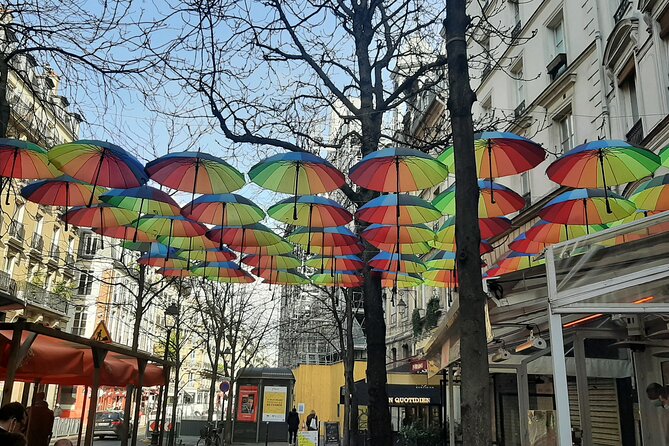
I would choose this tour if you want an informed introduction to the Marais and value stories behind buildings as much as the buildings themselves. It makes particular sense for anyone curious about French royal and aristocratic history, Jewish heritage, LGBT culture, or the way those subjects intersect in one neighborhood.
It is also a good fit for a family or a small group with mixed interests, especially if you are comfortable speaking up about what you want to learn. The maximum group size of 10 supports conversation, and guides have adapted the content for children and for people with specific interests.
If you prefer a fast-paced checklist of major attractions, or want a long stop for food and shopping, this may feel too focused on explanation. You will have time to notice shops and galleries, but this is a guided walk, not a tasting tour or a shopping excursion. Wear comfortable walking shoes and plan a meal separately.
The starting point is near public transportation, and most people can participate. Service animals are allowed. The tour ends at the Musée des Archives Nationales, which gives you a clear endpoint in the Marais, but no onward transport or additional visit is included.
Should you book the Le Marais walk?
Book it if you want more than a pretty stroll: the strongest reason to go is the guide’s ability to make the neighborhood’s streets and buildings speak to French history, Jewish life, and LGBT culture. Jill is especially noted for adapting the tour, while Eric has also led engaging walks.
Skip it if you want a food-focused outing, a long museum visit, or a guaranteed fixed itinerary with detailed stops at every site. For a short, small-group introduction to a complicated and fascinating part of Paris, though, this walk offers a useful mix of architecture, local detail, and conversation for the price.
FAQ
How long does the tour last?
It lasts approximately 90 minutes to two hours.
What language is the tour offered in?
The tour is offered in English.
Where does the tour start?
It starts at Paroisse Saint-Paul Saint-Louis, 99 Rue Saint-Antoine, 75004 Paris.
Where does the tour end?
It ends at the Musée des Archives Nationales, Hôtel de Soubise, 60 Rue des Francs Bourgeois, 75003 Paris.
Which places are included on the route?
The named stops are Place des Vosges, the streets of Le Marais, and the Jewish quarter.
Are snacks or drinks included?
No. Snacks, coffee, and tea are not included.
How large is the group?
The tour has a maximum of 10 participants.
Can I cancel for a refund?
Yes, if you cancel at least 24 hours before the start time. Cancellations made less than 24 hours before the tour are not refundable.
Recently reviewed in Paris
- Private Paris WWII History Tour: Occupation & Resistance★ 4.4 · 3 reviews
- Private Highlights of Paris Bike Tour★ 4.9 · 12 reviews
- Paris: Louvre Museum Highlights Small-Group Guided Tour★ 4.8 · 157 reviews
- Private Orsay Museum Tour: 2h Highlights w/ Monet & Van Gogh★ 5.0 · 4 reviews
- Private Mont Saint-Michel trip from Paris Calvados tasting★ 5.0 · 4 reviews
- Highlights of Paris: Private 6-Hour Vintage 2CV Tour★ 3.9 · 19 reviews
- Private Giverny Monet’s House & Gardens Trip from Paris★ 4.9 · 11 reviews
- Private Guided Tour, The Louvre by night !★ 4.2 · 30 reviews
Le Marais Tours, compared.

Award-Winning Paris French Bakery Experience — Le Marais, 4th Arr
Read our review →
Paris Le Marais Food Tour With 10+ Tastings, Cheese, Wine & More
Read our review →
Paris Le Marais District Original Food and Wine Tasting Tour
Read our review →
Paris Bike Tour Hidden Secrets in the Latin Quarter & Le Marais neighborhoods
Read our review →
Food and Wine Tasting Walking Tour in Le Marais
Read our review →
Le Marais District & Jewish Quarter Guided Walking Tour 12ppl Max
Read our review →
Paris Le Marais Food & Wine Tour with Eating Europe
Read our review →
Browse the lists this tour appears in