
Reviewed · MUSÉE D'ORSAY TOURS
Paris: Musée d’Orsay Skip-the-Line Tour with Expert Guide
The Musée d’Orsay is not just a place to tick off Monet and Van Gogh. It is a grand former railway station, and its art tells the story of how painters challenged the rules of 19th-century France. This tour gives you a guide to connect those changes rather than leaving you to guess what makes each canvas matter.
I like two things in particular: reserved entry through a special entrance saves time, and an expert guide can explain the rivalries and changing tastes behind the paintings. Then you have free time to return to your favorites or explore rooms the tour did not cover.
One consideration: 1 hour 45 minutes is a short visit to a large museum, and some past participants found the pace brisk. You will get an overview, not a full survey, so plan to stay afterward if you want time with the collection.
At a glance
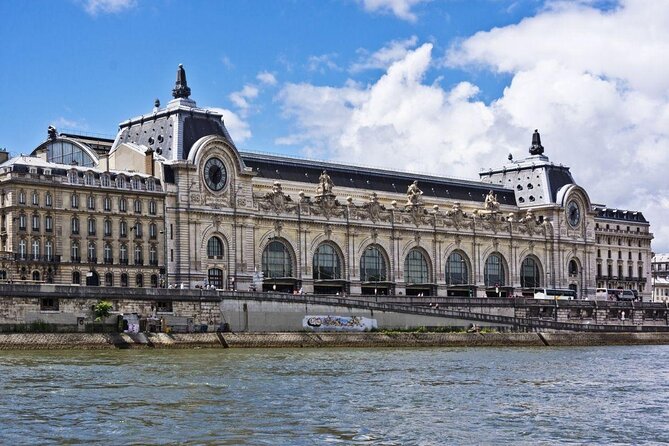
- A former railway station sets the scene: The Beaux-Arts building is part of the experience, not just a container for the art.
- The tour traces a change in art: Learn how Impressionist and Post-Impressionist painters departed from earlier conventions.
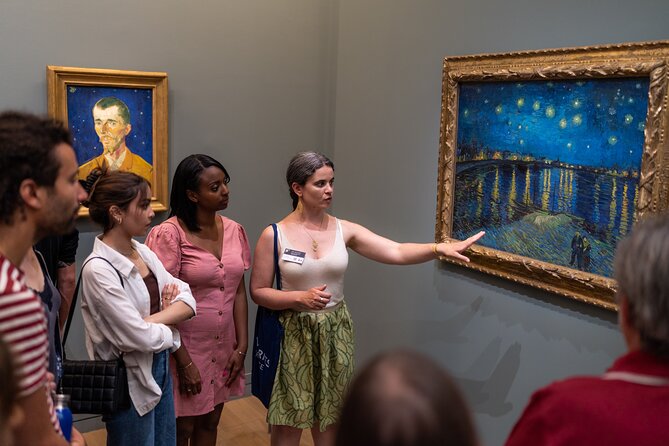
- You get a guide and headsets: The group is capped at 20, which helps keep explanations audible and the visit focused.
- Reserved entry is included: Your admission and entry through a special entrance are covered in the price.
- The tour ends inside the museum: Use the remaining time to revisit works or explore independently.
- Plan for frank subject matter: 19th-century art discussions may include nudity, prostitution, and sexual exploitation of minors.
The station is part of the story
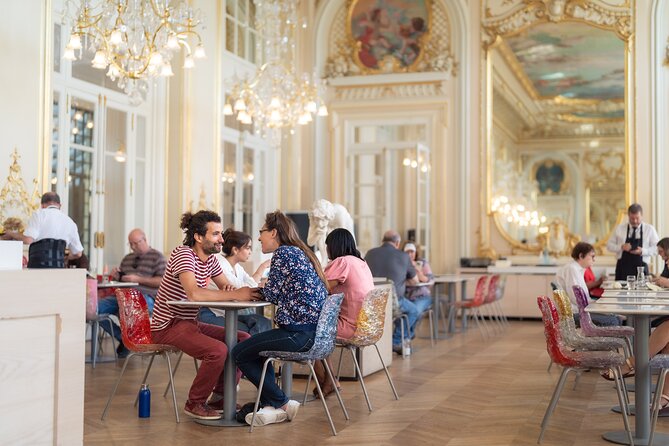
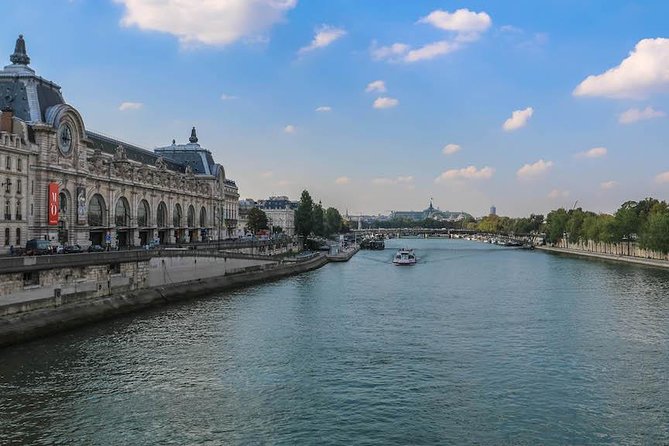
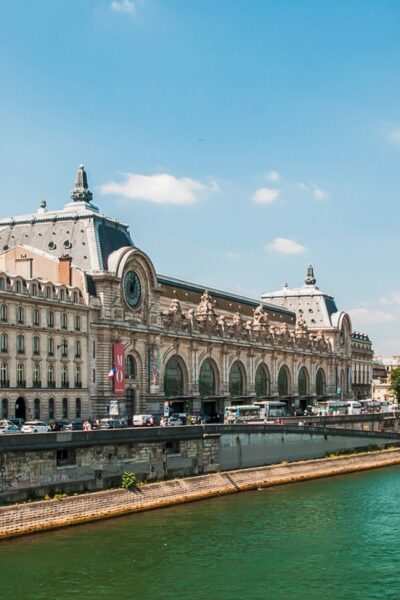
The Musée d’Orsay occupies a former Beaux-Arts railway station, and its scale and architecture make a memorable first impression. You meet your guide outside at 2 Rue de la Légion d’Honneur, then enter with the group. The tour ends inside the museum, at the Esplanade Valéry Giscard d’Estaing.
That setting helps make the Orsay feel different from a conventional gallery. You are seeing art in a building designed for movement and spectacle, a reminder that Paris’s cultural landmarks have often taken on new lives. The tour specifically includes the building’s architecture, so you are not asked to focus only on paintings.
The guide is there to help you make sense of a museum with a great deal to see. Rather than trying to cover every room, the visit selects works that show how French painting changed over the 19th century. That approach suits a first visit, or anyone who wants a clear introduction before exploring alone.
More Orsay visits in Paris:
- Paris: Orsay Museum Entry Ticket
★ 4.7 · 25,647 reviews - Paris: Orsay Museum Entry Ticket and Digital Audio Guide App
★ 4.4 · 3,170 reviews - Paris in a Day: Louvre or Orsay, Eiffel Tower, City Walk & Cruise
★ 5.0 · 1,956 reviews
From earlier traditions to Impressionism
The first hour is devoted to the museum visit and its art-historical context. Your guide leads you through the collection, explaining how artists moved away from established conventions and why the new work could provoke such a strong response.
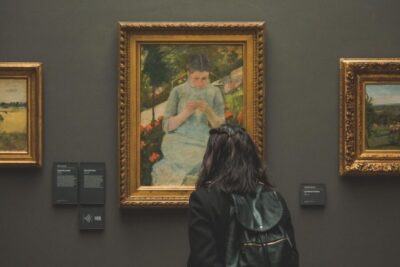
The useful part is the explanation of what you are looking at. Bold color, visible brushwork, and modern subjects were not simply stylistic choices. They marked a break with the expectations of critics and audiences, and the tour places those choices within the artistic and social climate of the period.
You can expect the guide to bring artists’ lives, ambitions, and rivalries into the discussion. Monet, Manet, Renoir, Degas, and Van Gogh are among the names featured. That context can turn a sequence of famous paintings into a story about people trying to make work on their own terms.
The tour also looks beyond the most familiar names. That matters in a museum where it is easy to stop at the paintings you already recognize and miss how one style led to another. The guide’s selection gives you a framework for reading the collection, even if you later wander through different rooms.
The paintings that give the tour its shape
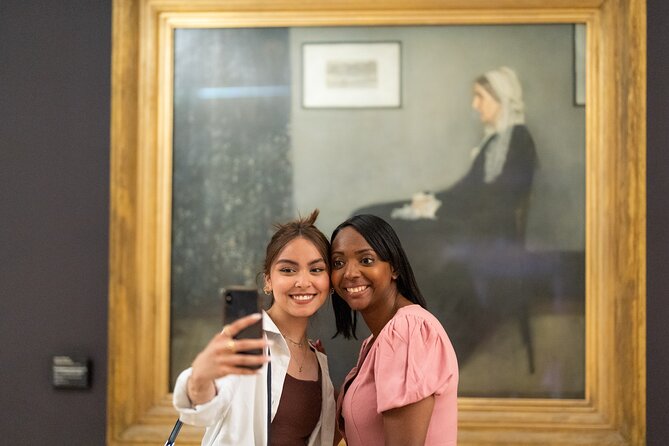
The second part lasts about 45 minutes and continues inside the Musée d’Orsay. The tour calls attention to major works including Monet’s Water Lilies and Manet’s Olympia, using them to explain what made the artists’ choices startling and influential.
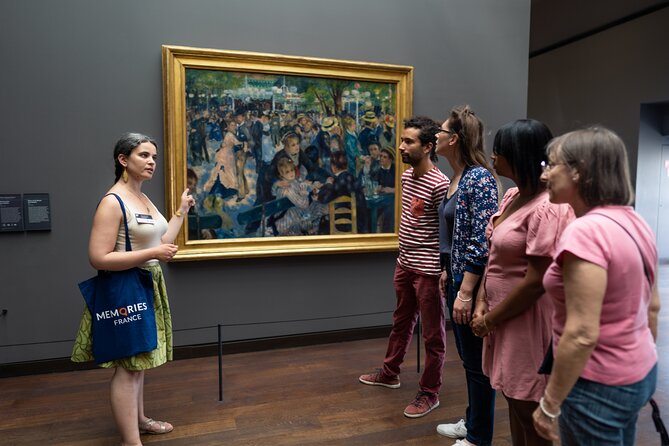
A guide can point out more than a painting’s subject. You hear why a work challenged expectations, what kind of response it drew, and how it fits into the shift toward modern art. If you have previously looked at Impressionist paintings without knowing what to make of them, that framing is one of the tour’s strongest reasons to book.
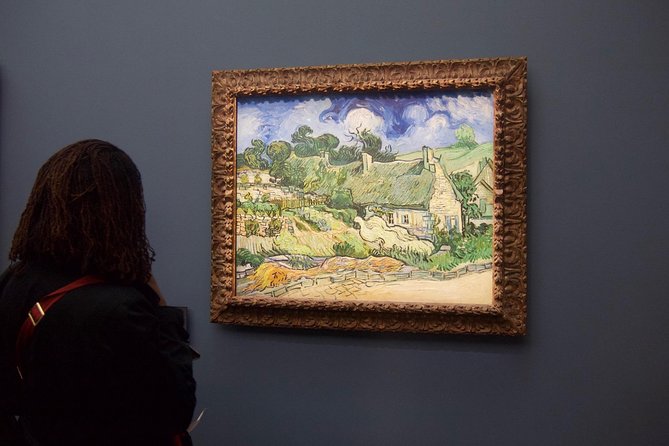
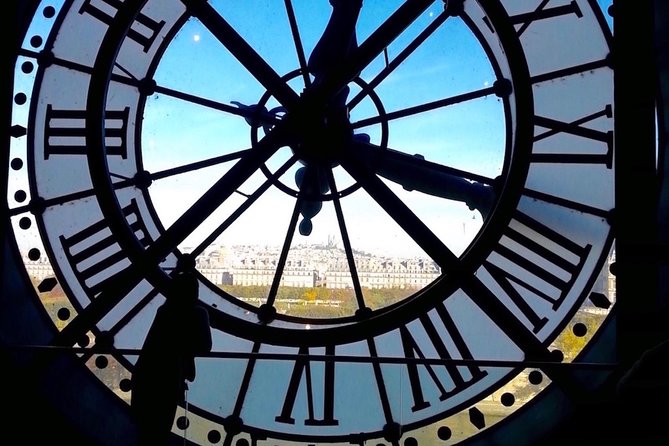
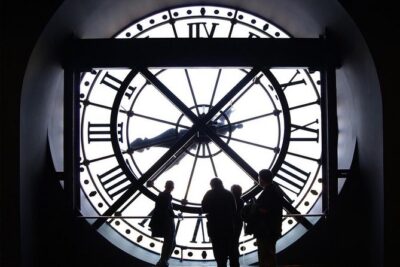
Van Gogh is another central name in the collection. The museum also offers plenty to hold your attention beyond the guided route. One painting that has made a strong impression on visitors is Van Gogh’s Starry Night Over the Rhône, while Renoir’s dance scene is often remembered for its sense of movement and pleasure. The famous giant clock is worth noticing too, especially if you want a striking photograph.
Keep in mind that a highlights tour is selective by design. You will not have long at every work, and the guide may need to keep the group moving through crowded rooms. If you have a particular artist or painting in mind, ask about it during the tour, then return to it after the group portion ends.
A focused tour, then time on your own
The stated duration is approximately 1 hour 45 minutes, with the guided experience split into an hour and a further 45 minutes. The format is designed to make a large collection manageable, not to replace a full museum day.
Past participants have described the tour as a good way to get oriented and understand the museum’s major works. Some also found the pace quick. Those impressions can fit together: a guide can move efficiently through carefully chosen highlights while still explaining the larger story, but you may want more time at individual paintings than the group schedule allows.
That is why the free time afterward is important. You can revisit the rooms that caught your attention, seek out works the guide mentioned, or slow down and look without having to keep pace with the group. I would treat the guided portion as a structured introduction, then allow extra time for your own visit.
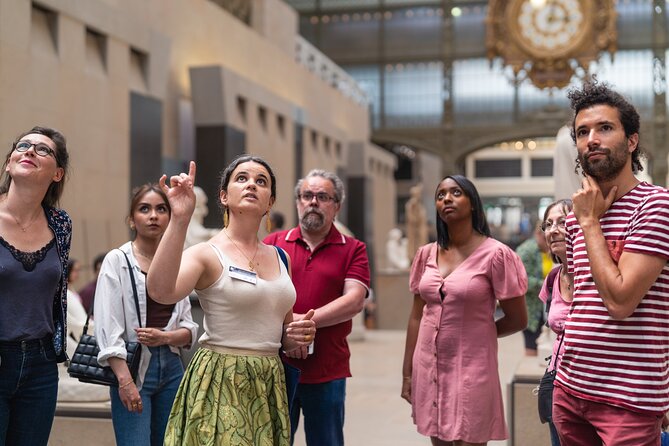
The group is limited to 20 people, and headsets are included. A maximum of 20 is not the same as a private tour, but it does put a ceiling on group size. Headsets help you follow the guide in busy galleries, where it can be hard to hear a normal speaking voice.
More skip-the-line entries in Paris:
- Versailles: Skip-the-Line Tour of Palace with Gardens Access
★ 4.7 · 9,778 reviews - Versailles: Skip-the-Line Guided Palace Tour and Full Access
★ 4.6 · 5,214 reviews - Louvre Museum: Skip-the-Line Small Group Guided Tour
★ 4.6 · 3,960 reviews - From Paris: Versailles Skip-the-Line Tour & Gardens Access
★ 4.7 · 3,011 reviews
What the guide adds, and what to keep in mind
The tour’s appeal depends heavily on the guide. Several named guides have been praised for their art knowledge, storytelling, humor, and ability to keep a mixed-age group engaged. Names mentioned include Cecilia, Claire, Stephanie, Ivan, Caroline, Julie, and Christina. Your guide will depend on the date, so treat those names as examples rather than a promise.
The best kind of museum guide does more than recite dates. Here, the goal is to connect the paintings to the movements and social changes around them, while choosing examples that make the shift in style visible. One guide may lean into historical background, another may be especially animated, but the tour is built around expert interpretation.
There are limits. One dissatisfied participant felt the guide’s presentation lacked structure and professional depth. No guided experience is immune to variation in style, and a group tour cannot be tailored entirely to your personal interests. If you prefer to spend as long as you like in front of each work, an independent visit may suit you better.
Families should also consider the subject matter. The art and discussion can include nude figures, prostitution, and sexual exploitation of minors, particularly in the context of works such as Manet’s Olympia and Degas’s ballet scenes. The provider says discussions may be adjusted for younger ears when needed, but the material is not censored. If you are bringing children, decide in advance whether that conversation suits them.
Crowds are another practical factor. Skip-the-line entry can save time at the entrance, but it cannot make the museum’s galleries empty. Arriving earlier in the day may help you get ahead of later crowds, though the tour’s start time will depend on your booking.
Is $67.60 a fair price?
At $67.60 per person, this tour costs more than admission alone would. What you are paying for is reserved entry, an English-speaking art expert, a small-group format, headsets, and a guided route through the museum’s key works. The value is strongest if art history is not your specialty or if you want help choosing what to see in a large collection.
The guide can also save you from spending your visit moving between paintings without knowing why they matter. For a first visit, that structure may be worth the added cost. And because you can stay in the museum after the tour, the guided time does not have to be your entire visit.
If you already know the Orsay well, prefer to explore at your own speed, or want a long, quiet visit with just one artist, the price may be harder to justify. You could instead visit independently and use the museum’s own resources. But if the story behind the art matters as much as seeing the famous canvases, this is a practical way to make the collection more legible.
The tour is offered in English, uses a mobile ticket, and is typically booked around 36 days ahead. Hotel pickup and drop-off are not included. If you are going by taxi, allow extra time to find one in Paris. You can cancel for a full refund up to 24 hours before the start; missed tours are not refundable.
Who should book this Orsay tour?
I would book it for a first visit, especially if you want an informed overview of Impressionism and do not want to navigate the museum’s highlights alone. It also suits art lovers who enjoy learning about the arguments and social context behind famous works, not just recognizing names on wall labels.
It is less suited to anyone who wants a private, unhurried examination of a few paintings or a full-day museum experience with a guide. The pace and group format mean you should expect to keep moving. The best plan is to use the tour to understand the collection, then stay afterward to follow your own interests.
FAQ
How long is the Musée d’Orsay tour?
The tour lasts approximately 1 hour and 45 minutes. It includes about an hour in the first part and a further 45 minutes focused on the collection.
Is museum admission included?
Yes. Admission and pre-reserved entry through a special entrance are included in the tour price.
What language is the tour offered in?
The tour is offered in English.
Where does the tour start and end?
Meet outside at 2 Rue de la Légion d’Honneur, 75007 Paris. The tour ends inside the Musée d’Orsay, at the Esplanade Valéry Giscard d’Estaing.
Is there time to explore the museum after the guided tour?
Yes. The guided visit ends inside the museum, and you can stay afterward to explore on your own.
Can I cancel for a refund?
You can cancel at least 24 hours before the tour’s start time for a full refund. Cancellations or changes made less than 24 hours before the start are not accepted, and missed tours are not refundable.
Recently reviewed in Paris
- Private Paris WWII History Tour: Occupation & Resistance★ 4.4 · 3 reviews
- Private Highlights of Paris Bike Tour★ 4.9 · 12 reviews
- Paris: Louvre Museum Highlights Small-Group Guided Tour★ 4.8 · 157 reviews
- Private Orsay Museum Tour: 2h Highlights w/ Monet & Van Gogh★ 5.0 · 4 reviews
- Private Mont Saint-Michel trip from Paris Calvados tasting★ 5.0 · 4 reviews
- Highlights of Paris: Private 6-Hour Vintage 2CV Tour★ 3.9 · 19 reviews
- Private Giverny Monet’s House & Gardens Trip from Paris★ 4.9 · 11 reviews
- Private Guided Tour, The Louvre by night !★ 4.2 · 30 reviews
Musée d'Orsay Tours, compared.
Orsay Museum Entry Ticket and Digital Audio Guide App
Read our review →
Paris in a Day: Louvre or Orsay, Eiffel Tower, City Walk & Cruise
Read our review →
Musée d’Orsay Entry Ticket and Seine River Cruise
Read our review →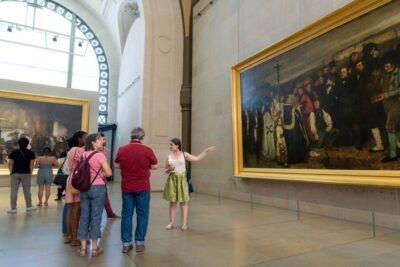
Musée d’Orsay Skip-the-Line Tour with Expert Guide
Read our review →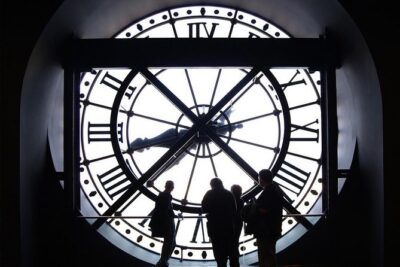
The Musée d’Orsay Guided Tour Orsay Museum Semi-Private 6ppl Max
Read our review →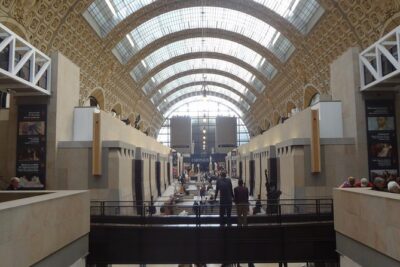
Orsay Museum – Exclusive Guided Tour (Reserved Entry Included)
Read our review →Browse the lists this tour appears in