
Reviewed · LOUVRE TOURS
Paris: Louvre Masterpieces Tour with Pre-Reserved Tickets
The Louvre can turn a day of sightseeing into a map-reading contest. This two-hour tour gives you a small group of no more than six and a guide to lead the way to headline works, from the Mona Lisa to The Raft of the Medusa. I like that the route pairs famous sculptures and paintings with stories about the eras that made them, and that your ticket lets you stay inside after the tour to keep exploring.
The main trade-off is the clock: two hours is enough for a strong introduction, not a full visit to a museum with 35,000 artworks. Reserved entry helps, but everyone still passes through security, and that line can take time in high season.
At a glance

- Six people maximum: A small group makes it easier to hear the guide, ask questions, and keep moving together.
- A route through eight departments: See celebrated works across different eras without trying to navigate the whole Louvre alone.
- Major names, with context: The Mona Lisa, Venus de Milo, Winged Victory, and The Wedding Feast at Cana are among the featured works.
- Two hours with a licensed guide: The visit is designed as an introduction, not an exhaustive survey.
- Stay after the tour: Your pre-reserved ticket allows you to continue exploring inside the museum at your own pace.
- Meet at Café Le Nemours: The meeting point is near Palais Royal metro station, at exit 5, Place Colette.
Starting at Café Le Nemours
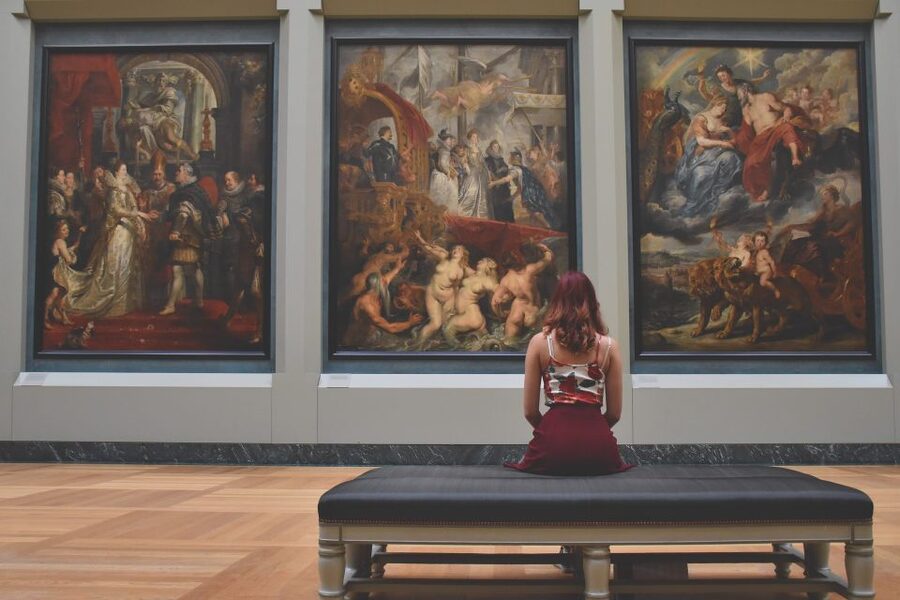
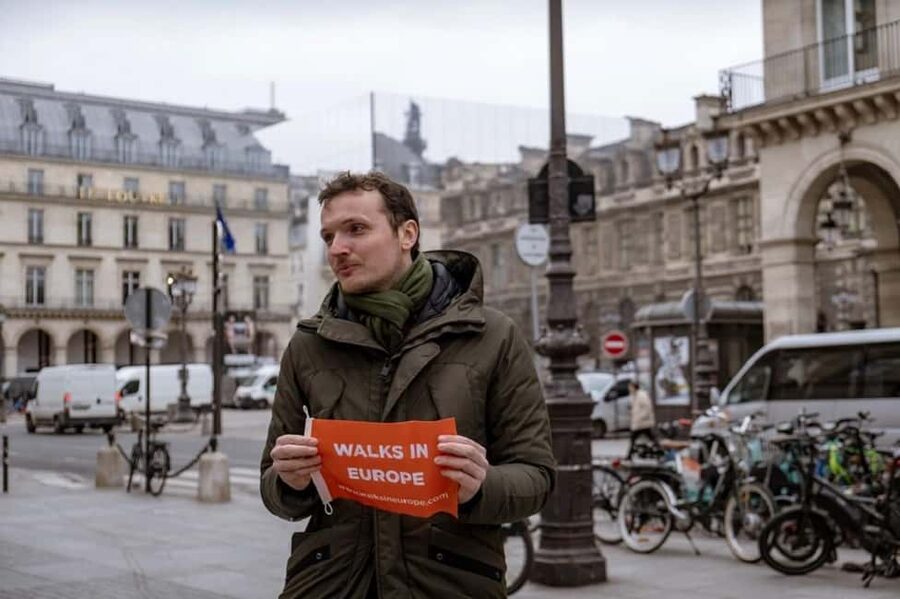
Meet your guide in front of Café Le Nemours, near the Louvre Pyramid. Look for a sign reading Walks In Europe. From Palais Royal metro station, take exit 5, Place Colette; once outside, turn around and the café should be in view.
Give yourself a generous margin to arrive. Paris traffic can be unpredictable, and the tour cannot wait for late arrivals. Tickets are timed and can expire within five to ten minutes, so arriving after the start is a real risk, not a small inconvenience.
Bring valid photo identification, such as a passport or ID card. Large bags, luggage, umbrellas, and mobility scooters are not allowed. If you have questions about what you can bring, check the current museum entry rules before setting off.
More Louvre visits in Paris:
- Paris: Louvre Museum Timed-Entrance Ticket
★ 4.6 · 71,977 reviews - Paris: Louvre Guided Tour with Reserved Access & Boat Cruise
★ 4.3 · 16,353 reviews - Louvre Museum Masterpieces Guided Tour with Access
★ 4.5 · 12,023 reviews
Reserved entry helps, but security still applies
Pre-reserved tickets and a separate entrance are valuable at a museum where ordinary entry queues can stretch a long way. The group can avoid the standard ticket line, which saves both time and the uncertainty of trying to secure entry on the day.
That does not mean you walk straight from the café into the galleries. Security checks still apply to everyone, and the security line may be long during the high season. The ticket is also tied to a narrow entry window, so a late arrival can jeopardize the visit.
The distinction matters when you plan your day: this tour reduces one major source of delay, but it cannot promise an instant entrance. Strikes are another uncertainty. The museum may close without notice, and the stated policy says there is no refund if that happens.
Two hours, eight departments, and a sensible route
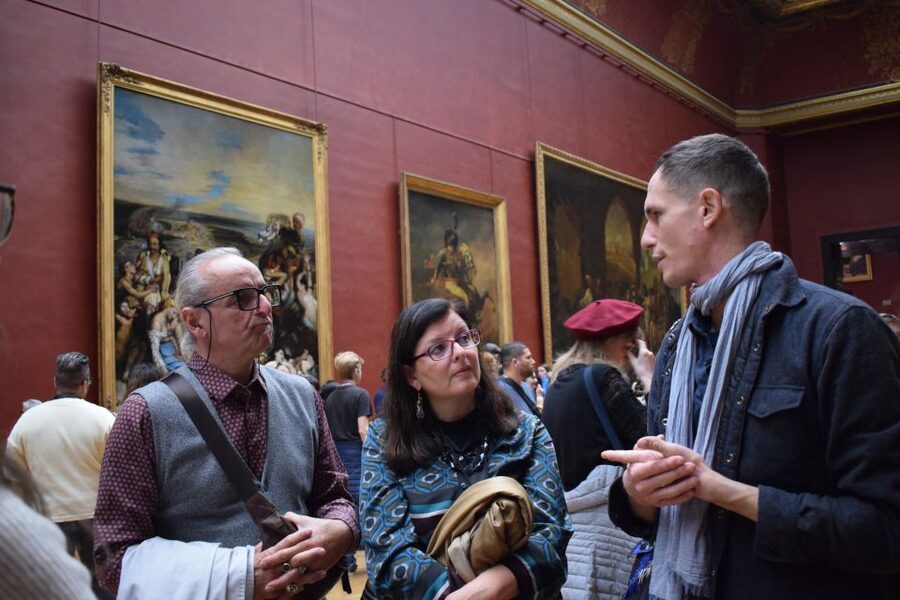
Once inside, the guide leads a planned route through eight departments and a collection of extraordinary scale. You are not expected to cover all 35,000 artworks. Instead, the point is to see a selected set of famous works while learning enough to understand why they matter.
That approach is especially useful if this is your first Louvre visit. The building and collection can be disorienting, and the most famous pieces are not always close together. A guide handles the navigation and supplies a thread connecting objects from different periods, leaving you free to look rather than constantly check a map.
The route includes art from the Italian Renaissance, French Romanticism, and the neoclassical period, along with celebrated ancient sculpture. The exact pace can depend on the crowd and the group’s interests. The tour’s strength is its focus; its limitation is that any highlight route must pass by many rooms you might also want to see.
The Mona Lisa, Venus de Milo, and Winged Victory
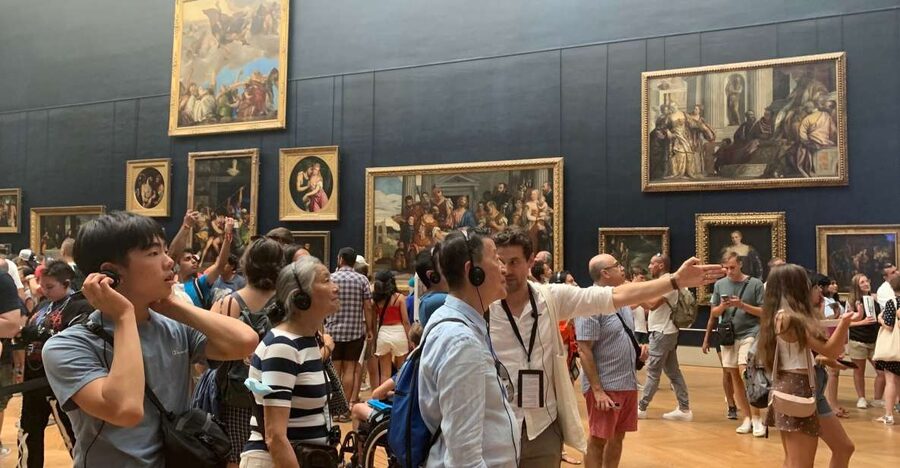
The Mona Lisa is the most familiar stop, and often the most crowded. Seeing it in person is a different experience from seeing the image reproduced everywhere, but you should expect a crowd around the painting, particularly at busy times. A guide helps you reach the work and gives the moment context rather than leaving you to face the crowd without a plan.
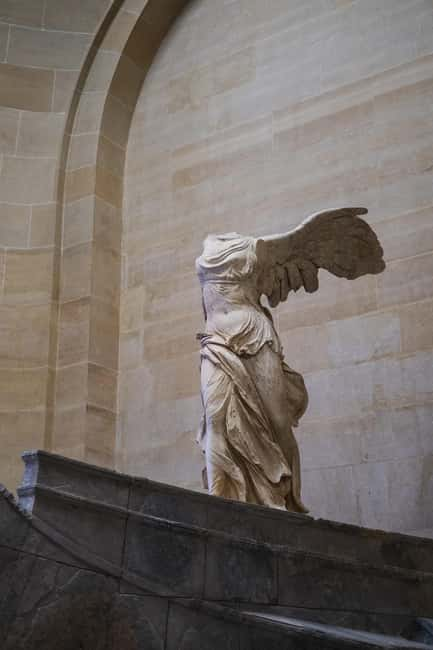
The Venus de Milo and Winged Victory of Samothrace offer a welcome change of pace. Both are monumental sculptures, but they make very different impressions: Venus is famous for her missing arms, while Winged Victory seems to surge forward across the staircase. A guide can point out details that are easy to miss when you are simply trying to keep your place in a busy room.
The tour’s value is not only the famous names. It is also the chance to connect the works to the museum’s broader story. Several visitors have praised guides for explaining the history of the Louvre itself alongside the art, helping the vast building feel less like a maze of rooms and more like a place with a readable past.
More tickets in Paris:
- Disneyland® Paris 1-Day Ticket
★ 4.6 · 49,412 reviews - Paris: Versailles Palace and Gardens Full Access Ticket
★ 4.6 · 41,579 reviews - Paris: Arc de Triomphe Rooftop Tickets
★ 4.6 · 34,264 reviews - Paris: Orsay Museum Entry Ticket
★ 4.7 · 25,647 reviews
Renaissance painting and a striking contrast
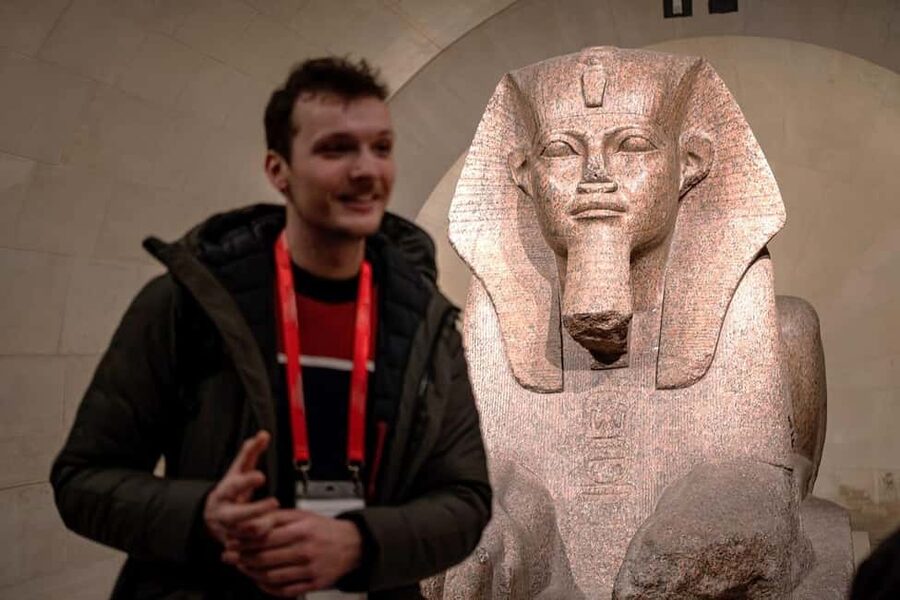
The Italian Renaissance section includes The Wedding Feast at Cana, a vast painting by Paolo Veronese. Its scale and crowded scene reward a pause: there is a lot to take in, from the central gathering to the many figures and details spread across the canvas. It is also often singled out as a highlight, so it is a welcome counterpoint to the Mona Lisa’s compact fame.
Michelangelo’s Slaves bring you from painting to sculpture. The unfinished figures are striking partly because they seem to strain out of the stone. Their incomplete state invites questions about the artist’s process and the way a sculpture can suggest movement without a fully polished surface.
A guide can make these works more approachable by explaining what to notice and why the pieces belong in a larger art-historical story. Visitors have particularly valued explanations of symbolism, politics, and cultural context. That sort of interpretation can help you look at later works with a more informed eye, even after the guide has moved on.
French Romanticism: drama on a grand scale
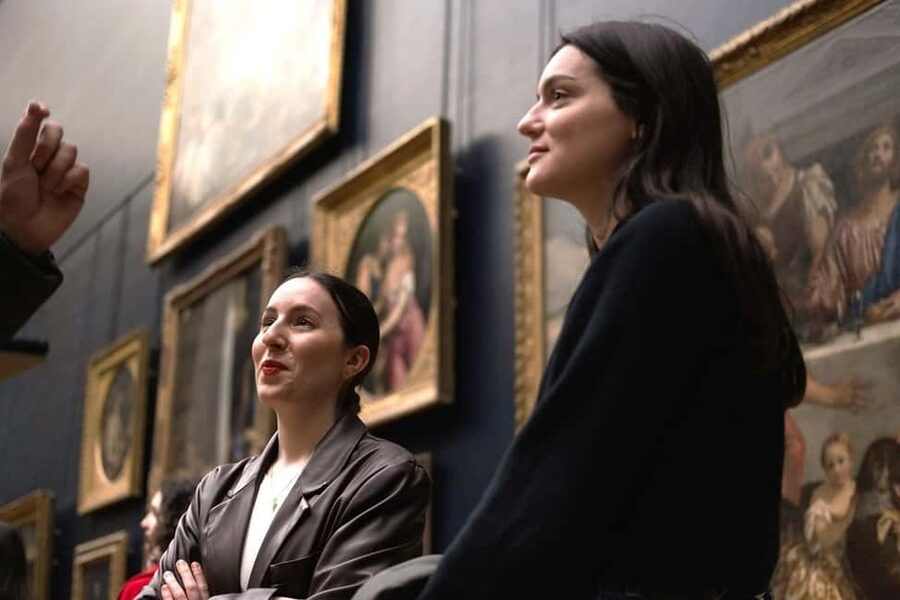
The French paintings include The Raft of the Medusa and Liberty Leading the People. Both bring a strong sense of drama, but their subjects and visual impact differ. The Raft of the Medusa draws you into a scene of shipwreck and survival; Liberty Leading the People turns political upheaval into an image of movement and collective struggle.
The Coronation of Napoleon adds a different kind of spectacle. Its large canvas and formal detail make it a useful stop for understanding how art could serve power and public image. Together, these paintings give you a compact introduction to French history through the subjects artists chose to put on a monumental scale.
You do not need to arrive with a background in French politics or art to follow the visit. The guide’s role is to make those connections clear in plain terms. One reason this tour can work well for a mixed-age family is that stories, characters, and visual drama offer several ways into the subject.
Neoclassical details and rooms worth noticing
Psyche Revived by Cupid’s Kiss is a neoclassical sculpture known for its graceful pose and careful carving. It provides a quieter contrast to the monumental paintings and lets you focus on the figures’ expression and movement.
The tour also passes The Caryatids and the refined Salon Carré. These stops widen the picture beyond individual famous canvases: architecture, sculpture, and the design of the rooms all contribute to the Louvre experience. A guide can help you notice the setting as well as the objects displayed within it.
The route is described as an elegant way to see essentials without feeling overwhelmed. That is a useful promise to keep in mind, but the museum can still be crowded and the pace brisk. If you want long, unhurried time with each work, a guided highlights visit may feel too fast. If you want an organized first look, it is a practical trade.
What makes the six-person limit matter
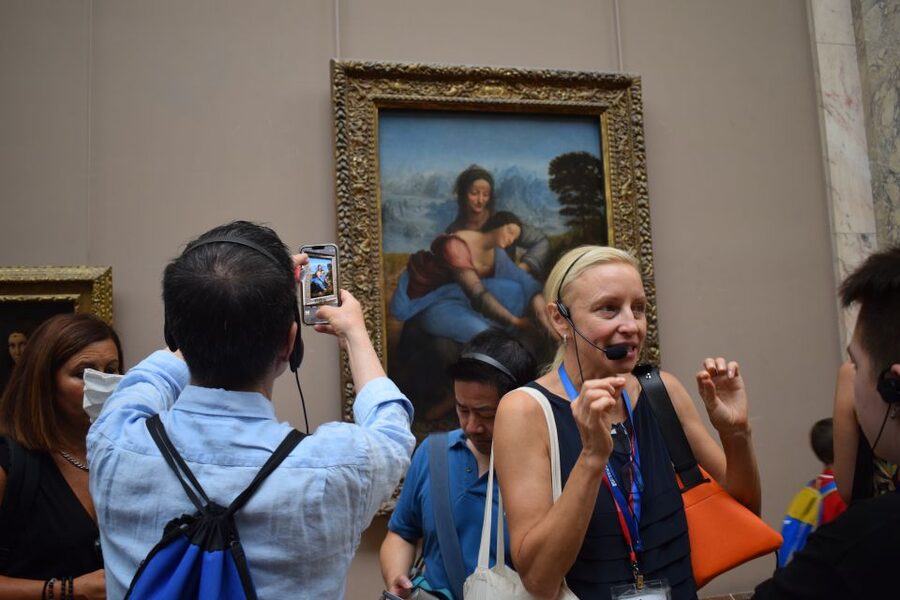
A maximum of six is more than a marketing detail in a museum this busy. It gives you a better chance of hearing the guide and asking a question without having to speak over a large crowd. It can also make it easier for the guide to adjust explanations to the group’s interests.
The small format has been a particular plus for families. Guides have been praised for keeping children around ten and eleven engaged, using stories and humor rather than treating the visit like a lecture. Some have also adapted the route to a group’s interests or made room for a request when time allowed, though you should not assume every requested work can be added.
The group may be split at the meeting point if more than six people are booked together, so each guide leads a group of six. Private and small-group options are available. If you want the most personal experience, check the precise option when booking rather than assuming every departure is private.
The guide is the main reason to book
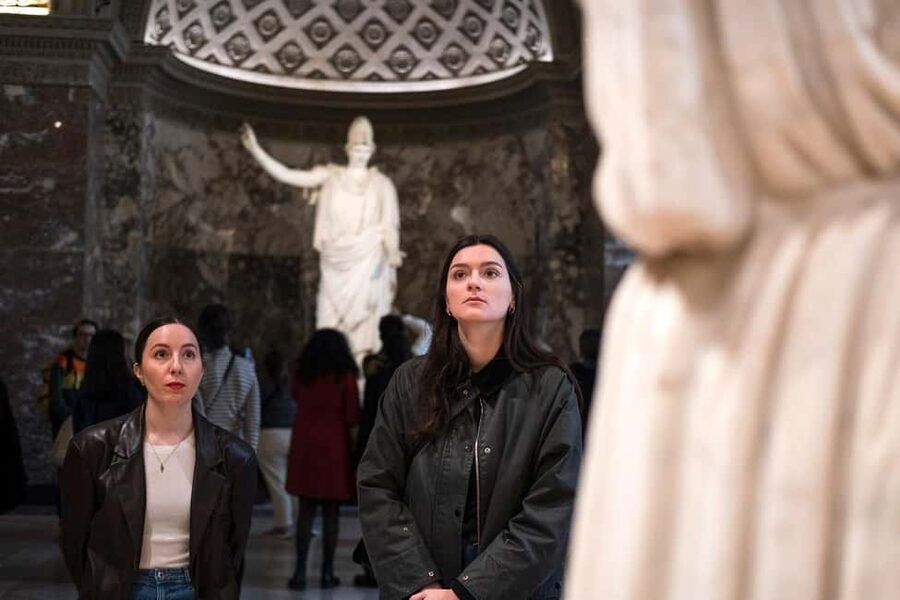
The artwork is the reason to go to the Louvre; the guide is what makes this particular visit different from buying a ticket and wandering on your own. Guides named by visitors include Jerome, Matteo, Laura, Patrick, Maryam, Ashkan, Alban, Valerie, and Iason. Those names do not guarantee who will lead your departure, but the range of praise points to the importance of the guide’s role.
The strongest descriptions focus on clear explanations, lively storytelling, humor, and a steady hand in a crowded museum. Matteo, for example, was praised for keeping children involved, while Alban was noted for connecting the art with politics and culture. Iason was described as willing to answer questions and continue discussing the collection after the formal tour.
A guide cannot make every room quiet or every painting easy to approach. But an engaging guide can help you spend your attention well, understand what you are seeing, and remember more than a sequence of famous names.
The price and what it buys
At $152 per person, this is a considered purchase, especially for a two-hour activity. You are paying for a licensed Louvre guide, pre-reserved entry, and a group capped at six, not simply for access to the building. The strongest value comes if you want help navigating, context for the art, and a clear route through a huge collection.
It may be less worthwhile if you already know the museum well, prefer to wander freely, or want to spend most of your day in one department. A self-guided visit gives you more control over pace, but requires more planning and leaves you to manage the route yourself. This tour makes the most sense when time is limited or the Louvre feels daunting.
After the guided portion, you can remain inside and continue exploring on your own. That flexibility improves the value: the two hours are a structured introduction, not a signal that you must leave when the guide finishes. Your ticket can only be used once, though, so do not assume you can leave and re-enter.
Who should book, and who might skip it
I would consider this tour a strong fit for a first visit, a short stay in Paris, or anyone who wants to understand the famous works without spending the morning lost among galleries. It also suits families who value a guide able to keep children involved, and people who want art explained in an accessible way.
It is not suitable for wheelchair users or people with mobility impairments, according to the activity information. The Louvre is large, and this is a walking tour, so consider your comfort with moving through the museum before booking. The guide can help with orientation, but that does not change the stated accessibility limits.
The tour is offered in English and German. Free cancellation is available up to 24 hours in advance, and you can reserve now and pay later. Those options add flexibility when plans are still taking shape, but they do not remove the need to arrive on time or the possibility of an unexpected museum closure.
Should you book this Louvre tour?
Book it if you want a focused, guided introduction to the Louvre, especially if the thought of navigating its scale alone sounds tiring. The small group, reserved entry, and time to stay afterward make a useful combination, and the art route covers a satisfying range from ancient sculpture to French Romantic painting.
Skip it if you prefer to set your own pace from the first room, need an accessible visit, or want to spend hours studying a single collection. For a first look at the museum’s headline works, though, this is a sensible way to turn a short visit into something more than a checklist.
FAQ
How long is the tour?
The guided tour lasts two hours. Afterward, you may stay inside the Louvre and continue exploring on your own.
How many people are in the small group?
The small group is limited to six people. If a booking party is larger, it may be split into separate groups of six at the meeting point.
Where do I meet the guide?
Meet in front of Café Le Nemours. The guide will hold a Walks In Europe sign. From Palais Royal metro station, take exit 5, Place Colette, then turn around after coming out.
Which languages are available?
The tour is offered in English and German.
Does the ticket let me skip every line?
The ticket provides reserved priority access through a separate entrance, but everyone still has to pass through security. The security line can be long in high season.
What identification should I bring?
Bring a valid passport or ID card for monument entry and security checks.
Can I bring luggage or an umbrella?
No. Luggage, large bags, umbrellas, and mobility scooters are not allowed.
Is the tour suitable for wheelchair users?
No. The activity is listed as unsuitable for wheelchair users and people with mobility impairments.
Recently reviewed in Paris
- Private Paris WWII History Tour: Occupation & Resistance★ 4.4 · 3 reviews
- Private Highlights of Paris Bike Tour★ 4.9 · 12 reviews
- Paris: Louvre Museum Highlights Small-Group Guided Tour★ 4.8 · 157 reviews
- Private Orsay Museum Tour: 2h Highlights w/ Monet & Van Gogh★ 5.0 · 4 reviews
- Private Mont Saint-Michel trip from Paris Calvados tasting★ 5.0 · 4 reviews
- Highlights of Paris: Private 6-Hour Vintage 2CV Tour★ 3.9 · 19 reviews
- Private Giverny Monet’s House & Gardens Trip from Paris★ 4.9 · 11 reviews
- Private Guided Tour, The Louvre by night !★ 4.2 · 30 reviews
Louvre Tours, compared.

Louvre Guided Tour with Reserved Access & Boat Cruise
Read our review →
Louvre Museum Masterpieces Guided Tour with Access
Read our review →
Louvre Museum Entry Ticket With Host and River Cruise
Read our review →
Priority Access Louvre with Host -Direct to Mona Lisa
Read our review →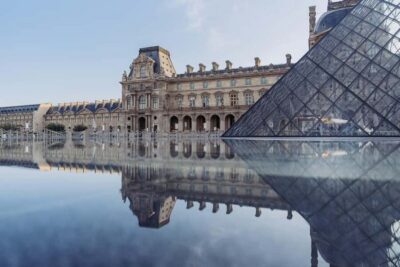
Mona Lisa & Louvre Masterpieces Tour with Reserved Access
Read our review →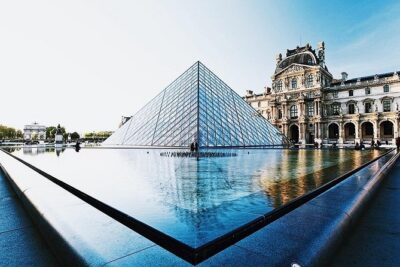
Louvre Museum – Exclusive Guided Tour (Entry Included)
Read our review →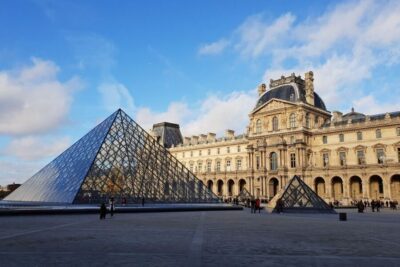
Louvre Reserved Ticket and River Cruise Combo
Read our review →Browse the lists this tour appears in