
Reviewed · PARIS WALKING TOURS
Paris: French Revolution Walking Tour
The Revolution feels less like a chapter in a textbook when you stand on Paris streets tied to its upheavals. This two-hour walking tour turns conspiracy, protest and execution into a city story, with stops that connect the struggle for freedom to the stones around you.
I like two things especially: the guide can make a complex period clear without flattening its competing viewpoints, and the walk reveals corners of central Paris you might otherwise pass without noticing. Guides such as François, Louis and Amber have led tours, and the strongest descriptions of the experience point to vivid storytelling and thoughtful answers.
One consideration: two hours is a tight frame for a revolution that lasted years. The route focuses on selected episodes and places, so you should not expect a complete account of every major event or a visit to every famous site.
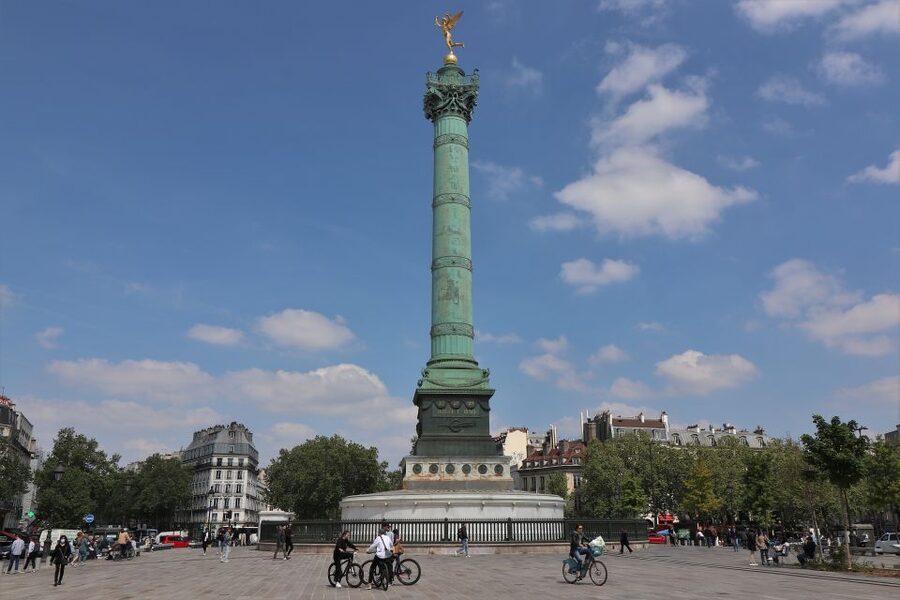
- The Bastille story gives the walk a dramatic spine: Follow the events that led to 14 July 1789 and the storming of the fortress.
- Revolutionary Paris comes into focus: Churches, streets and landmarks help connect political change with daily life.
- The guides make the difference: François, Louis, Fran, Amber and others have been praised for clear, engaging storytelling.
- Expect history with human stakes: The tour covers Louis XVI, Marie Antoinette, executions, intrigue and revolutionary violence.
- Plan for a brisk, focused visit: It lasts two hours, costs $46 per person and meets at Place du Châtelet.
Following the Revolution through central Paris
This is a walking tour built around place and sequence. Instead of meeting the Revolution only through dates and famous names, you hear about the streets where events unfolded and the decisions that brought Paris to a breaking point.
The subject is dense. The tour’s job is not to teach every faction, law and battle, but to give you a usable frame for understanding how the 1789 uprising took shape and how it changed the city. The guide links the events to physical surroundings, which can make a complicated political story easier to hold in your mind.
The tour describes itself as a kind of historical treasure hunt, with overlooked details and lesser-known tales alongside familiar episodes. That approach can be a welcome change if your school lessons left you with little more than a few dates and the guillotine. Expect a story with mystery and drama, but also room for nuance: the best guides distinguish between established accounts and changing interpretations.
The Revolution was not a single burst of anger, nor did its meaning stay fixed. A guide who can explain its changing stages and answer questions helps you see why the same period can be remembered in different ways in modern France. The walk’s focus on French perspectives is particularly useful if you already know the broad outline but want a clearer sense of how the past still shapes national identity.
Starting at Place du Châtelet
Meet your guide in front of the Fontaine au Sphinx on Place du Châtelet. It is a practical central meeting point, but arrive with enough time to identify the group and guide before the start. One past participant had trouble finding the guide because there was no obvious tour logo, so check your booking details and look carefully rather than assuming the group will be easy to spot.
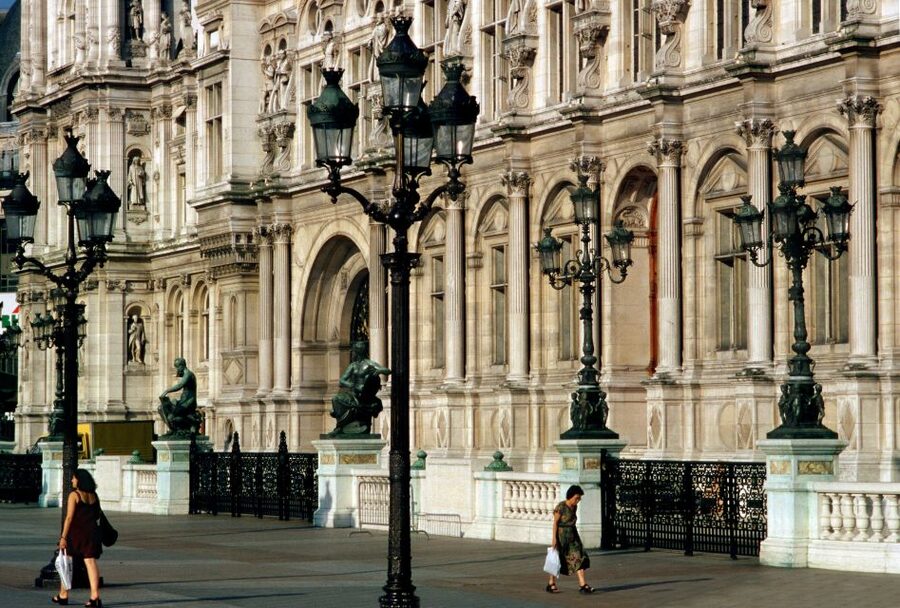
From there, the tour moves through the heart of Paris, using old streets and public spaces as prompts for the story. The walk has been described as including parts of the Marais and church sites, with stops that vary in character. That variety matters: a church can help explain how the Revolution challenged old institutions, while a street or square can bring political events closer to ordinary city life.
The route is not necessarily chronological in the way a textbook chapter is. That is not a flaw by itself. A city walk has to connect places as well as dates, and a strong guide can keep the timeline clear while moving between sites. If you prefer every event in strict order, listen for the guide’s signposts and ask questions when a jump in time feels abrupt.
More walking tours in Paris:
- Paris Top Sights Half Day Walking Tour with a Fun Guide
★ 5.0 · 2,893 reviews - Montmartre Hidden Gems and Scenic Highlights Walking Tour
★ 5.0 · 2,684 reviews - Montmartre Hill French Gourmet Food and Wine Tasting Walking Tour
★ 5.0 · 2,588 reviews
Making sense of the road to the Bastille
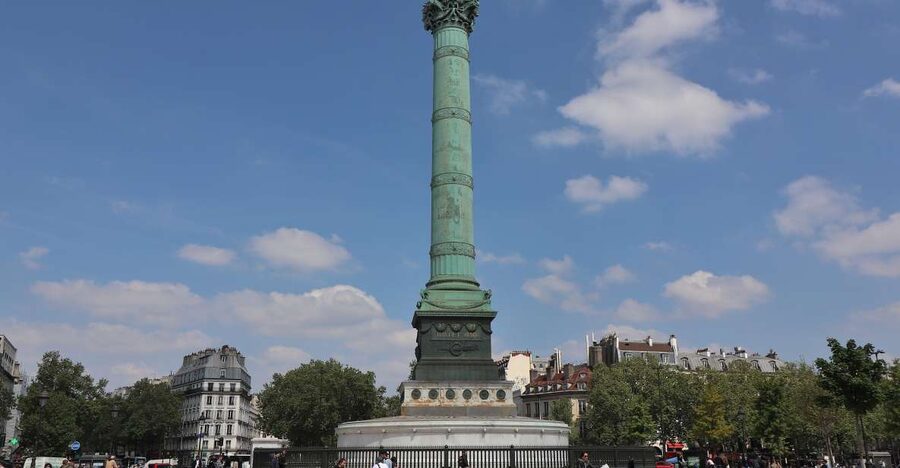
A key thread is the build-up to the storming of the Bastille. One approach described on the tour is to recount the days leading up to 14 July, helping you follow how tension grew rather than treating the event as an isolated explosion. That day-by-day framing can make the turning point feel less inevitable and more like the result of choices, fears and circumstances.
The Bastille also gives the walk a clear dramatic destination. A stop or story tied to the uprising can help you picture how the Revolution gathered force, while the guide explains what the event meant beyond its place in popular memory. You are not just collecting a famous date; you are learning how Paris became the setting for a political rupture.
The historical focus also reaches beyond the Bastille. Expect stories of Louis XVI and Marie Antoinette, the guillotine, revolutionary intrigue and the violence that followed. The material can be grim, and the tour does not disguise the human cost behind the words massacre and execution. If you are travelling with younger teens, the subject is suitable for those interested in history, but the details may be intense.
A story about a dark prophecy connected to the demise of a revolutionary adds a more mysterious thread. Treat that kind of anecdote as one part of the narrative, rather than the whole explanation. The tour’s most useful moments are likely to be where the guide balances vivid storytelling with the competing ideas and events that shaped the period.
Churches, streets and the city’s changing identity

The walk’s value lies partly in what it asks you to notice. Churches and other landmarks are not simply scenic pauses; they can help show how the Revolution affected institutions and beliefs as well as rulers. Seeing such places in context gives the history a local scale that a museum label or book page cannot quite provide.
The Marais adds another layer to the experience. Its streets offer a sense of older Paris and make a useful setting for discussing how the city’s political and social life changed. You may come away with a better eye for the small features that hint at the city before and during the Revolution, even if the tour does not stop at every major monument.
The route’s limits are worth understanding. Place de la Concorde and the Champs de Mars have been suggested as relevant sites, but covering more ground would require a longer tour. If those locations are your priority, this walk may not satisfy that specific wish. Think of it as a focused introduction to revolutionary Paris, not a complete circuit of every landmark connected to the period.
There is also a practical benefit to walking with a guide: you can ask questions as the story unfolds. The guides have been described as willing to follow a range of questions, including ones that stray beyond the Revolution. That makes the tour more useful for curious visitors who like to connect a new fact to something they have already seen elsewhere in Paris.
A guide-led story, not a lecture
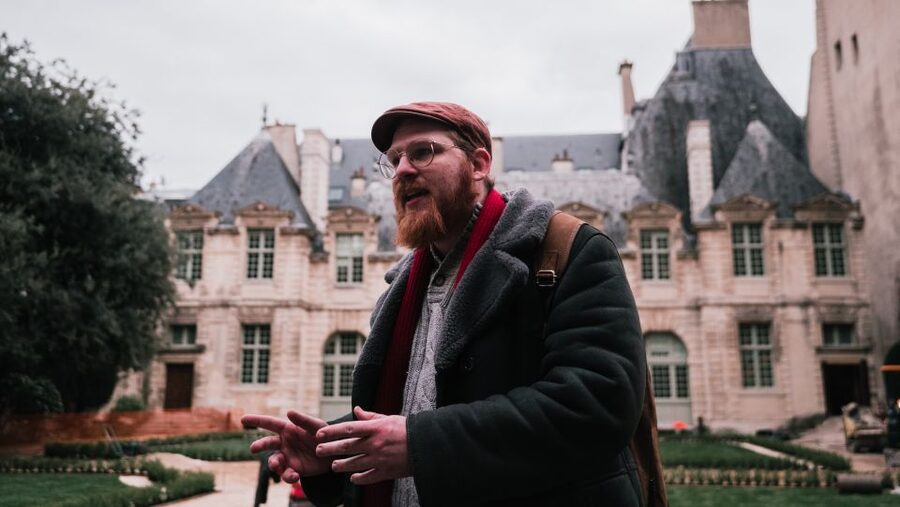
The guide is central to the experience. François, also referred to as Fran, Louis or Louie, Amber, Sam, Guillaume and Ilan are among the names associated with tours. The specific guide can vary, so do not book on the assumption that one named person will lead your date.
The qualities that matter most are clear communication, pace and the ability to make a complicated subject accessible. Strong guides have been described as enthusiastic without turning the past into a simple good-versus-evil tale. Some use first-person narration to bring a scene to life, while others emphasize careful, unbiased explanation and newer interpretations alongside older accounts.
That range is a strength, though delivery may vary from one departure to another. One past participant found the guide harder to connect with, despite his command of the subject, and had difficulty locating the group beforehand. If interaction matters to you, introduce yourself at the start and ask questions during the walk. A tour becomes more rewarding when you help steer it toward the parts of the history you most want to understand.
The pace has generally been described as comfortable, with varied stops and, on one occasion, a short comfort break. Still, this is a two-hour outdoor walk, not a seated talk. Wear comfortable shoes and be ready to stand while the guide explains each site. Street noise can also make it harder to hear, so stay close enough to the guide and speak up if you miss a point.
More tours and experiences in Paris:
- Paris: 1-Hour Seine Cruise departing from the Eiffel Tower
★ 4.4 · 77,472 reviews - Paris: Louvre Museum Timed-Entrance Ticket
★ 4.6 · 71,977 reviews - Disneyland® Paris 1-Day Ticket
★ 4.6 · 49,412 reviews - Paris: Versailles Palace and Gardens Full Access Ticket
★ 4.6 · 41,579 reviews
Is $46 fair for two hours?
At $46 per person, this is not a bargain-basement stroll, but the price includes a live English-speaking guide and a focused account of a difficult period. You are paying for interpretation as much as for walking: a guide can connect the locations, explain the sequence and respond to your questions in real time.
The value depends on your interest. If the French Revolution is a major reason you came to Paris, two hours of guided context can make later visits to landmarks and museums more meaningful. If you mainly want a general city walk or a long list of monuments, another tour may give you more of what you want for the same time.
You also need to account for what is not included. There is no hotel pickup or drop-off, so you make your own way to Place du Châtelet. The tour is wheelchair accessible, and the booking offers free cancellation up to 24 hours before the start, as well as a reserve-now, pay-later option. Check available start times for your date.
Who should book this walk?
I would choose this tour if you want history connected to real places, especially if the Revolution has always felt like a blur of names and violence. It is also a good fit for visitors who appreciate lively guides but want more than theatrical storytelling. The best version of the experience combines vivid scenes with careful explanation, and that balance is a recurring strength.
Families with older children or teens may find it a useful shared outing. A family with a 13-year-old and an 18-year-old enjoyed the tour, but the subject includes murder, executions and mass violence. Use your judgment about whether those themes are right for your group.
If your schedule is tight, the two-hour length is manageable and the central meeting point is convenient. If you want to explore the Revolution in exhaustive detail, or specifically visit the Concorde and Champs de Mars, look for a longer or more site-specific option. This walk gives you a concentrated introduction, not the final word.
Should you book the Paris French Revolution Walking Tour?
Book it if you want to understand how the Revolution changed Paris and you value a guide who can turn a complicated timeline into a clear street-level story. The $46 price is easiest to justify when you are genuinely interested in the subject and plan to ask questions. For a broad sightseeing tour, or a complete tour of every revolutionary landmark, choose something else.
FAQ
How long is the tour?
The walking tour lasts two hours.
How much does it cost?
The listed price is $46 per person.
What language is the tour in?
The live guide speaks English.
Where does the tour meet?
Meet your guide in front of the Fontaine au Sphinx on Place du Châtelet.
Is hotel pickup included?
No. Hotel pickup and drop-off are not included.
Is the tour wheelchair accessible?
Yes, the activity is listed as wheelchair accessible.
What parts of the French Revolution does the tour cover?
It covers the events that transformed Paris in 1789, including the road to the storming of the Bastille, revolutionary intrigue, the guillotine and the fate of Louis XVI and Marie Antoinette.
Can I cancel for a refund?
Yes. You can cancel up to 24 hours in advance for a full refund.
Do I have to pay when I book?
The reserve-now, pay-later option lets you book without paying at the time of reservation.
Recently reviewed in Paris
- Private Paris WWII History Tour: Occupation & Resistance★ 4.4 · 3 reviews
- Private Highlights of Paris Bike Tour★ 4.9 · 12 reviews
- Paris: Louvre Museum Highlights Small-Group Guided Tour★ 4.8 · 157 reviews
- Private Orsay Museum Tour: 2h Highlights w/ Monet & Van Gogh★ 5.0 · 4 reviews
- Private Mont Saint-Michel trip from Paris Calvados tasting★ 5.0 · 4 reviews
- Highlights of Paris: Private 6-Hour Vintage 2CV Tour★ 3.9 · 19 reviews
- Private Giverny Monet’s House & Gardens Trip from Paris★ 4.9 · 11 reviews
- Private Guided Tour, The Louvre by night !★ 4.2 · 30 reviews
Paris Walking Tours, compared.

Paris Top Sights Half Day Walking Tour with a Fun Guide
Read our review →
Montmartre Hidden Gems and Scenic Highlights Walking Tour
Read our review →
Montmartre Hill French Gourmet Food and Wine Tasting Walking Tour
Read our review →
Paris Île de la Cité and Notre-Dame Walking Tour With Crypt
Read our review →
Montmartre Cheese, Wine & Pastry Guided Walking Tour
Read our review →
Paris in a Day: Louvre or Orsay, Eiffel Tower, City Walk & Cruise
Read our review →
Montmartre Highlights Walking Tour with a Local Guide
Read our review →
Browse the lists this tour appears in